21 Vinyl Siding Ideas For A Modern, Easy Upgrade
Introduction
Your home’s exterior says a lot before anyone even steps inside. If it feels tired, flat, or outdated, it’s usually not your landscaping or your front door. It’s the siding.
Vinyl siding remains one of the easiest ways to transform a home’s entire look without a full renovation budget. It’s durable, low-maintenance, and available in styles that suit almost any architecture, from modern farmhouses to cozy cottages.
In my experience, homeowners are often surprised how much one exterior change can shift a home’s entire personality. A new texture, a bolder color, or a simple accent wall can make a house feel brand new. I’ve noticed the biggest transformations rarely require the biggest budgets.
This list walks through 21 fresh, practical siding ideas. Each one is designed to be visually inspiring and genuinely achievable, whether you’re planning a full exterior update or a small, high-impact accent.
Board and Batten Accent
• Adds instant architectural texture without a full renovation
• Creates a striking contrast when paired with darker trim
• Works beautifully on gables, porches, or full front facades
• Gives a modern farmhouse look without the maintenance of real wood
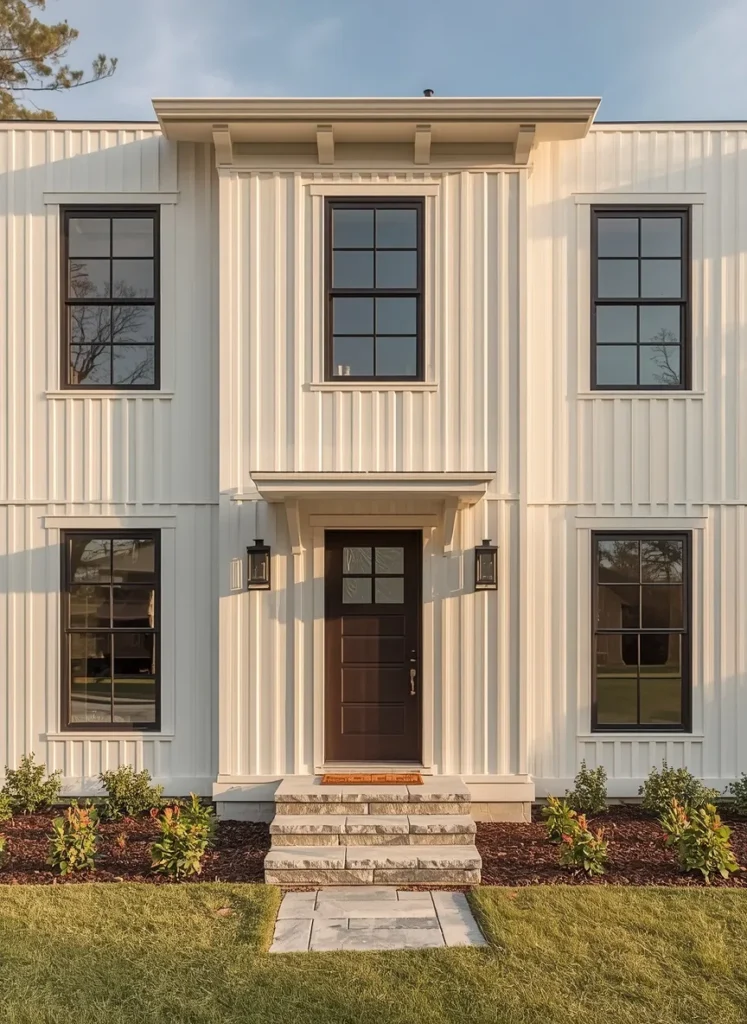
Board and batten siding instantly upgrades a flat, plain exterior. The vertical lines add height and visual movement. It feels custom, even though vinyl makes it affordable.
In my experience, this style photographs incredibly well for Pinterest. The shadow lines create depth that flat panels simply can’t match. Homeowners often use it on just one accent wall.
That’s why many designers recommend pairing it with black or matte trim. The contrast sharpens the whole exterior. It’s a small change that makes a big visual statement.

Coastal Blue Shingle Look
• Brings a beach-house feel to any neighborhood setting
• Shingle texture adds depth that flat siding can’t offer
• Blue tones stay timeless and don’t feel like a passing trend
• Pairs well with white trim for a crisp, clean finish
Shingle-style vinyl siding gives homes a relaxed, coastal charm. The layered texture catches light beautifully throughout the day. It feels soft, welcoming, and effortlessly stylish.
I’ve noticed blue shingle exteriors get saved constantly on Pinterest boards. The color feels calming without looking dated. It works just as well inland as it does near the coast.
This texture also hides small imperfections better than flat panels. Vinyl siding here holds color well over time. Homeowners love how low-maintenance the finish stays year-round.

Double Dutch Lap Panels
• Creates deeper shadow lines for a richer, more dimensional look
• Mimics the appearance of traditional wood clapboard siding
• Works well on both traditional and transitional home styles
• Adds subtle texture that elevates an otherwise plain facade
Double dutch lap panels add depth that standard siding often lacks. Each row creates a subtle shadow line. The result feels layered, textured, and intentional.
I’ve tried recommending this style to clients wanting a classic look. It reads as more premium than single-lap siding. Yet it still keeps the easy upkeep vinyl is known for.
This profile also works across many color palettes. Greige, white, and soft blue all look elevated here. It’s a simple upgrade that changes the entire curb appeal.
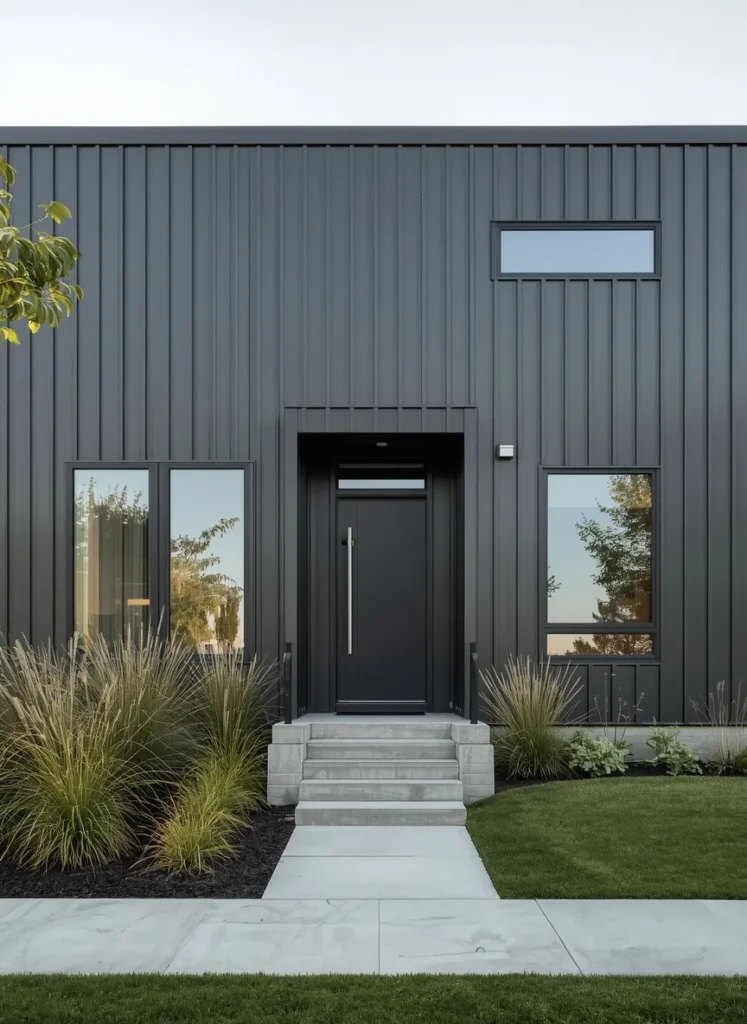
Vertical Panel Modern Front
• Delivers a sleek, minimalist look with almost no visual clutter
• Vertical lines make single-story homes appear taller
• Pairs perfectly with large windows and flat rooflines
• Feels current without following a short-lived design trend
Vertical panels give homes an instantly modern silhouette. The clean lines feel architectural rather than decorative. It’s a favorite among homeowners chasing a minimalist exterior.
I’ve seen this work especially well on ranch-style homes. The upward lines add height where the roofline feels low. It balances the whole facade without any structural changes.
Charcoal and deep gray tones make this style pop. Vinyl siding in this shade resists fading well. The finish stays sharp and modern for years with little upkeep.

Warm Cedar Wood-Look
• Gives the warmth of real wood without the sealing or staining upkeep
• Blends beautifully with stone, brick, or natural landscaping
• Adds a cozy, cabin-like feel to modern or traditional homes
• Holds color better than natural wood exposed to weather
Wood-look vinyl siding brings warmth that gray tones can’t replicate. The grain texture looks convincingly natural up close. It softens a home’s exterior instantly.
Based on what I’ve seen, this style suits wooded or mountain settings best. It blends into the landscape rather than standing apart from it. Homeowners often pair it with stone skirting for extra texture.
This finish also resists the cracking real cedar faces over time. Vinyl siding here keeps its rich tone through every season. It’s a low-maintenance way to get a high-end rustic look.

Crisp White Farmhouse Siding
• Creates a bright, timeless look that suits nearly any neighborhood
• Reflects light well, keeping the home looking fresh year-round
• Pairs effortlessly with black shutters, doors, or metal roofing
• Never feels outdated, even as design trends shift
Crisp white siding remains one of the most requested exterior looks. It feels fresh, clean, and endlessly versatile. Almost any trim color works beautifully against it.
In my experience, white exteriors photograph the best for listing photos. Natural light bounces off the panels, making the whole home glow. Buyers consistently respond well to this classic finish.
Vinyl siding in white also resists yellowing better than older versions. Modern formulas keep their brightness for years. It’s a safe, high-impact choice for lasting curb appeal.

Textured Stone and Siding Mix
• Adds visual weight and grounds the home to its landscape
• Mixing materials creates a custom, high-end appearance
• Stone accents work well around entries, garages, or lower levels
• Breaks up large wall spaces so the exterior feels less flat
Mixing stone with siding instantly elevates a home’s presence. The contrast in texture draws the eye naturally downward. It grounds the structure and adds architectural interest.
I’ve noticed builders use this combination on nearly every upscale new build. It signals quality without a full stone exterior cost. Vinyl siding above keeps the project budget-friendly.
This pairing also adds durability where homes take the most wear. Lower walls near landscaping stay protected and easy to clean. It’s a practical upgrade that looks far more expensive than it is.
Soft Sage Green Exterior
• Brings a fresh, nature-inspired look that stands out subtly
• Pairs beautifully with cream, white, or warm wood trim
• Feels calming and organic against green landscaping
• Offers a unique alternative to common gray or white exteriors
Sage green siding gives homes a soft, garden-inspired charm. It feels calm without disappearing into the background. This tone works especially well on cottage-style homes.
From my perspective, muted greens are becoming one of the most saved exterior colors. They photograph beautifully against natural landscaping. Buyers often describe the look as warm and inviting.
Vinyl siding in this shade also hides pollen and dust well. It stays looking fresh between cleanings. It’s a quiet color choice that still makes a lasting impression.

Mixed-Panel Gable Accent
• Adds dimension to plain gable ends without extra cost
• Creates a custom, craftsman-inspired look on standard builds
• Draws the eye upward, balancing the home’s proportions
• Works well on both new builds and renovation projects
Mixing panel styles on the gable adds instant character. It breaks up a flat roofline in a subtle way. The upper accent draws attention without overwhelming the design.
I’ve seen this work well on homes that felt too plain from the street. Adding shingle texture just to the gable changes the whole silhouette. It’s a small detail with a noticeably bigger impact.
This combination also keeps the project cost reasonable. Vinyl siding covers the main walls while the accent stays contained. It’s an easy way to add craftsman charm affordably.
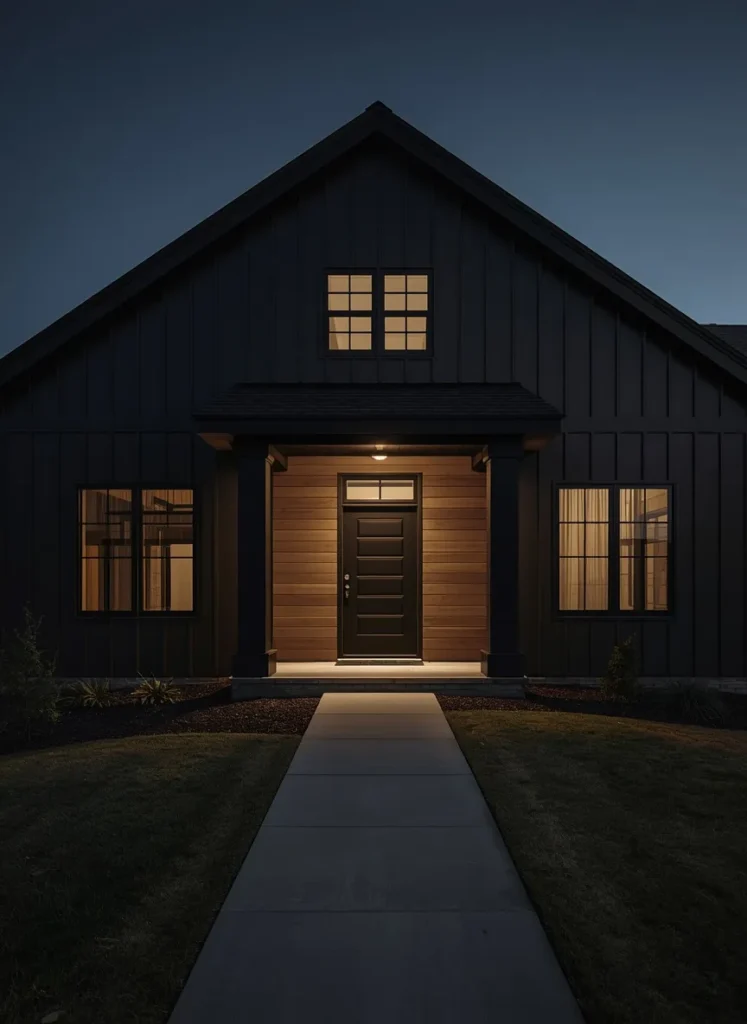
Deep Charcoal Modern Contrast
• Creates a bold, dramatic look that stands out in any neighborhood
• Wood accents soften the darker tone and add warmth
• Hides dirt and weather marks better than lighter shades
• Feels high-end without requiring custom exterior materials
Deep charcoal siding gives homes an undeniably bold presence. The dark tone feels modern, moody, and intentional. It pairs beautifully with warm wood accents near the entry.
I’ve tried suggesting this combination to clients wanting a dramatic exterior. The contrast between dark siding and wood always photographs well. It feels custom-built, even on standard vinyl panels.
This color also holds up better than expected against fading. Vinyl siding formulas today resist sun damage well. It’s a striking choice that still stays practical long-term.

Classic Colonial White Trim
• Highlights architectural details like windows and rooflines
• Creates strong curb appeal through classic symmetry
• White trim keeps the exterior looking crisp and well-kept
• Suits traditional neighborhoods without feeling overly formal
Classic colonial exteriors rely on clean lines and strong symmetry. White trim makes every window and detail stand out. It’s a timeless look that never feels dated.
In my experience, this style appeals to a wide range of buyers. It feels polished without looking overly formal. Vinyl siding keeps the maintenance simple compared to painted wood.
This combination also photographs beautifully in daylight. The contrast between siding and trim stays crisp year-round. It’s a dependable choice for lasting curb appeal.

Warm Taupe Transitional Look
• Offers a neutral base that works with almost any trim color
• Feels warmer than gray without looking outdated
• Suits both modern and traditional architectural styles
• Creates a calming, well-balanced first impression
Warm taupe siding sits perfectly between modern gray and traditional beige. It feels neutral but never boring. This tone flatters almost every architectural style.
I’ve noticed this color choice rarely goes out of style. It photographs warmly in both morning and evening light. Homeowners often pair it with black fixtures for contrast.
Vinyl siding in taupe also blends well with natural stone and brick. It keeps the exterior feeling cohesive and calm. It’s a safe, versatile choice for long-term appeal.

Board and Batten Gable Pop
• Adds architectural interest to an otherwise flat gable end
• Creates a clear visual separation between floors
• Works well on modern farmhouse or transitional homes
• Draws the eye upward for a taller, more dramatic look
Board and batten on the gable alone creates instant contrast. It separates the home into two distinct visual zones. The upper texture feels intentional, not accidental.
I’ve seen this work especially well on two-story new builds. It keeps the lower level simple while adding detail above. Vinyl siding makes the combination affordable to install.
This layout also photographs beautifully from the street. The vertical lines balance a wide, flat facade. It’s a subtle upgrade that adds real architectural value.

Muted Blue-Gray Palette
• Feels calming and versatile across nearly every home style
• Pairs beautifully with white, navy, or black accents
• Stays neutral enough to suit changing exterior trends
• Reads as sophisticated without being a bold statement color
Blue-gray siding strikes a balance between cool and warm tones. It feels calm, collected, and quietly sophisticated. This shade suits nearly any trim color choice.
That’s why many designers recommend it for resale-focused updates. It appeals to a wide range of buyer tastes. Vinyl siding in this tone rarely feels like a risk.
This color also stays consistent in different lighting conditions. It looks just as good on cloudy days as sunny ones. It’s a dependable, low-risk choice for lasting curb appeal.

Textured Shake Accent Wall
• Adds cottage-style charm to just one section of the home
• Creates texture contrast without redoing the entire exterior
• Works especially well above porches or entryways
• Gives budget-friendly homes a custom, high-end detail
A shake-style accent wall adds charm without a full exterior overhaul. It highlights just one section, usually near the entry. The texture instantly makes the home feel more custom.
I’ve tried this approach on smaller renovation budgets with great results. It concentrates the visual impact where guests notice it most. Vinyl siding keeps the accent affordable compared to real wood shake.
This detail also ages well against weather and sun exposure. The texture hides minor wear better than flat panels. It’s a small addition that makes a noticeably big difference.

Black Trim Modern Farmhouse
• Creates a striking, high-contrast look that photographs beautifully
• Black trim makes windows and doors stand out clearly
• Works well with metal roofing or dark shutters
• Feels current without losing farmhouse warmth
Black trim against white siding creates one of the most requested exterior combinations. The contrast feels sharp, clean, and undeniably modern. It works on nearly every home shape or size.
I’ve noticed this pairing dominates Pinterest boards for a reason. It photographs well in every lighting condition. Vinyl siding keeps the white tone bright without constant repainting.
This combination also ages gracefully over time. Black trim hides small marks better than lighter colors. It’s a bold choice that still feels timeless years later.

Layered Horizontal Panels
• Adds subtle texture without overwhelming a simple home design
• Suits ranch, cottage, and traditional architectural styles
• Wide panels reduce visible seams for a cleaner finish
• Offers a low-maintenance alternative to painted wood siding
Wide horizontal panels give homes a grounded, classic appearance. The subtle shadow lines add just enough texture. It never competes with landscaping or architectural details.
Based on what I’ve seen, this style suits single-story homes especially well. It keeps the roofline from feeling too heavy. Vinyl siding here stays simple to maintain year after year.
This panel width also reduces the appearance of seams. The finish looks smoother from a distance. It’s a practical, classic option for long-term curb appeal.
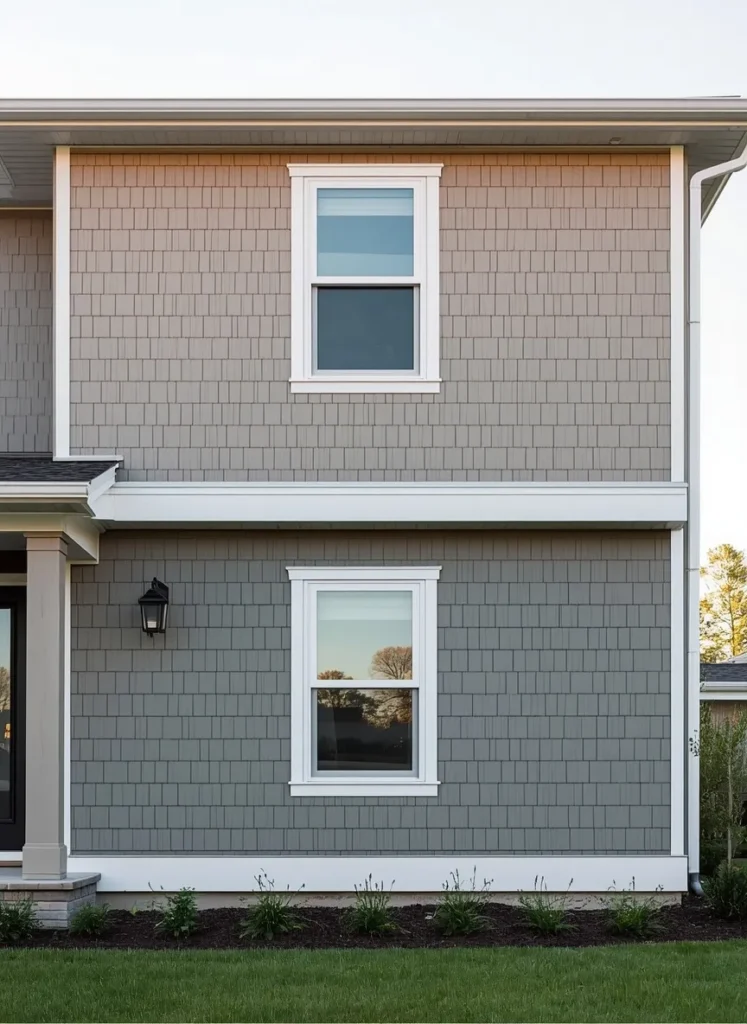
Warm Gray Two-Tone Facade
• Adds depth through subtle tone variation instead of bold color changes
• Creates a layered, architectural look without added materials
• Works well on larger homes needing visual balance
• Feels custom while staying within a cohesive color family
Two-tone gray siding adds depth without introducing a whole new color. The subtle shift between shades feels intentional and refined. It keeps the exterior visually balanced from top to bottom.
I’ve seen this work particularly well on taller, two-story homes. It breaks up height that can otherwise feel imposing. Vinyl siding makes the tonal transition easy to install cleanly.
This approach also stays flexible with changing trim trends. Both tones pair well with black, white, or wood accents. It’s a subtle upgrade that adds real architectural sophistication.
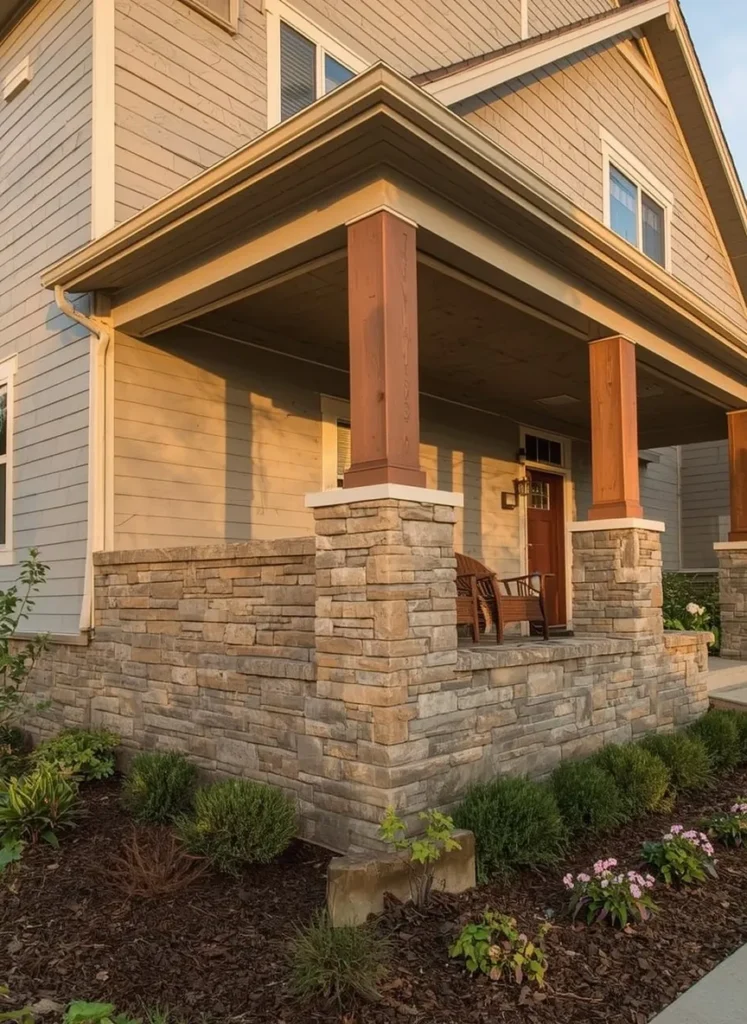
Rustic Stone Skirt Base
• Grounds the home visually and adds a sturdy, established look
• Protects lower walls from splashback and everyday wear
• Pairs beautifully with wood accents and covered porches
• Adds resale value through a high-end, layered appearance
A stone skirt base gives homes a grounded, established feel. It visually anchors the structure to its landscaping. This detail instantly reads as high-end, even on a modest budget.
In my experience, buyers consistently respond well to this combination. It photographs beautifully in real estate listings. Vinyl siding above keeps the overall project cost manageable.
This layout also offers practical protection where homes need it most. Stone resists splashback and everyday wear near the ground. It’s a smart pairing that balances beauty with function.

Soft Cream Cottage Charm
• Creates a warm, welcoming first impression from the curb
• Softer than white without losing brightness or freshness
• Pairs beautifully with flower boxes and greenery
• Suits smaller homes wanting a cozy, cottage feel
Cream siding softens a home’s exterior in a way pure white can’t. It feels warm, welcoming, and a little more forgiving. This tone suits smaller cottage-style homes especially well.
I’ve noticed this shade pairs beautifully with flower boxes and greenery. It creates a storybook feel without trying too hard. Vinyl siding keeps the cream tone consistent through every season.
This color also hides light dust and pollen well. It stays looking fresh between regular cleanings. It’s a gentle, charming choice for lasting cottage appeal.

Bold Navy Statement Siding
• Makes a bold, memorable statement on the street
• White trim keeps the dark tone from feeling too heavy
• Suits coastal, modern, and transitional home styles
• Stands out clearly in neighborhood or listing photos
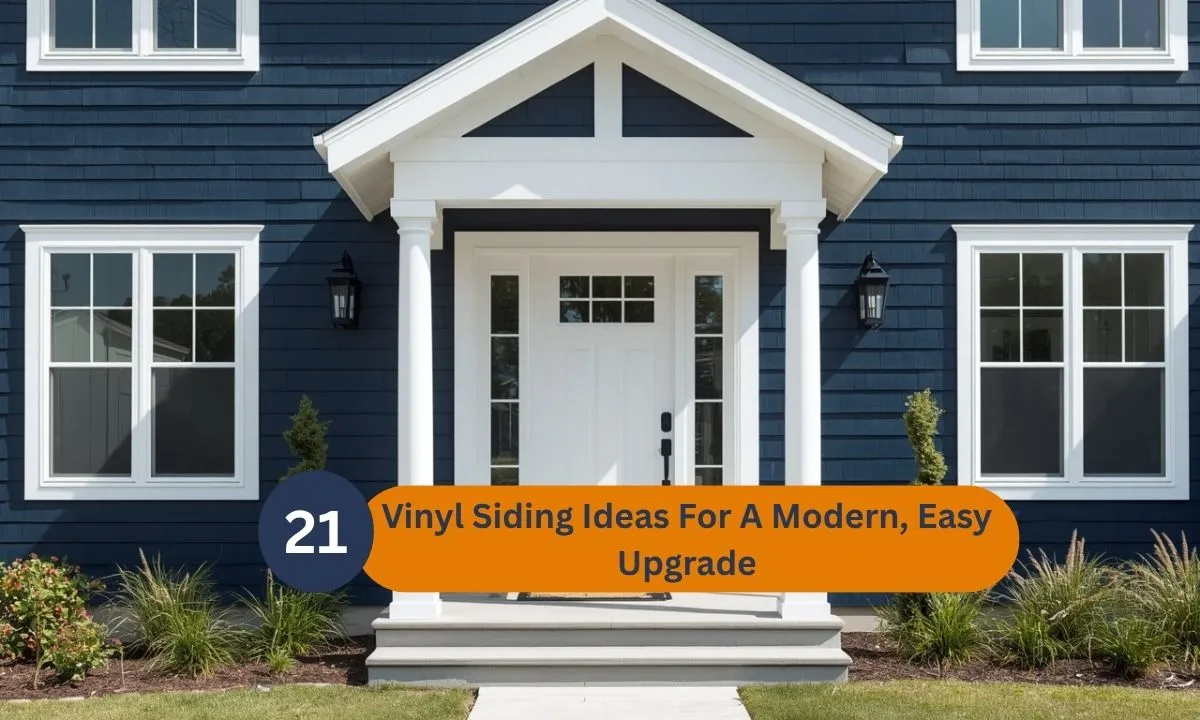
Navy siding makes a confident, memorable statement. It stands apart from the usual gray and white exteriors. White trim keeps the deep tone feeling fresh rather than heavy.
That’s why many designers recommend navy for homes wanting standout curb appeal. It photographs boldly in bright daylight. Vinyl siding in this shade holds its color well over time.
This combination also suits coastal and modern homes equally well. It feels current without following a fleeting trend. It’s a bold choice that still delivers lasting style.
Final Thoughts
Your home’s exterior deserves the same thought and care you put into every room inside it. These 21 ideas prove that vinyl siding can be modern, warm, textured, or bold, depending on the look you want to create.
I’ve seen how small exterior changes like these can completely transform how a home feels from the curb. You don’t need to redo everything at once. Start with one idea that speaks to you and build from there.
Save this post for later, and share it with anyone dreaming up their own exterior refresh. Your dream home might be closer than you think.