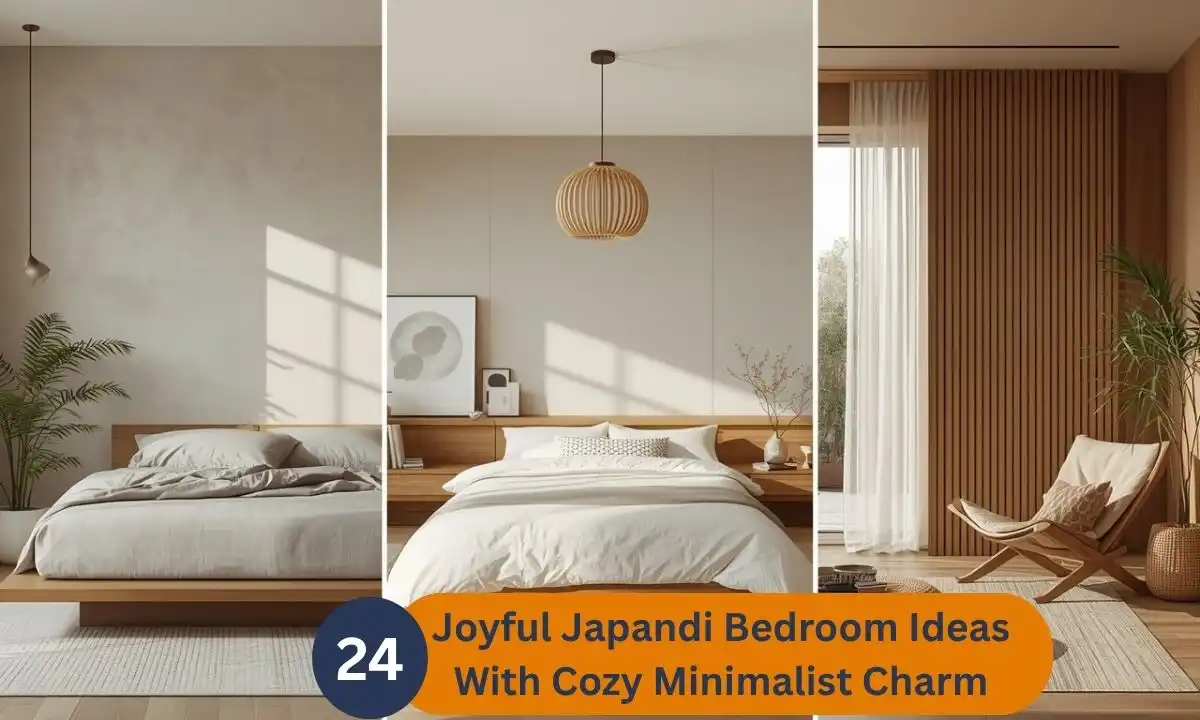
24 Joyful Japandi Bedroom Ideas With Cozy Minimalist Charm
Introduction
Your bedroom should feel like the most peaceful place in your home. If it feels cluttered, cold, or just uninspiring, a japandi bedroom transformation might be exactly what you need. This style blends the warmth of Scandinavian coziness with the calm simplicity of Japanese minimalism and the result is genuinely breathtaking.
I’ve noticed that most people assume creating this look requires a complete renovation or a huge budget. It doesn’t. In my experience, even three or four small intentional changes can shift the entire feeling of a room. The right textures, the right light, and the right simplicity do most of the work for you.
In this article you will find 24 beautiful, practical, and Pinterest-worthy ideas that show you exactly how to bring this style into your own space. Whether you are starting from scratch or refreshing what you already have, there is something here for every home and every budget. Get ready to fall in love with your bedroom all over again.
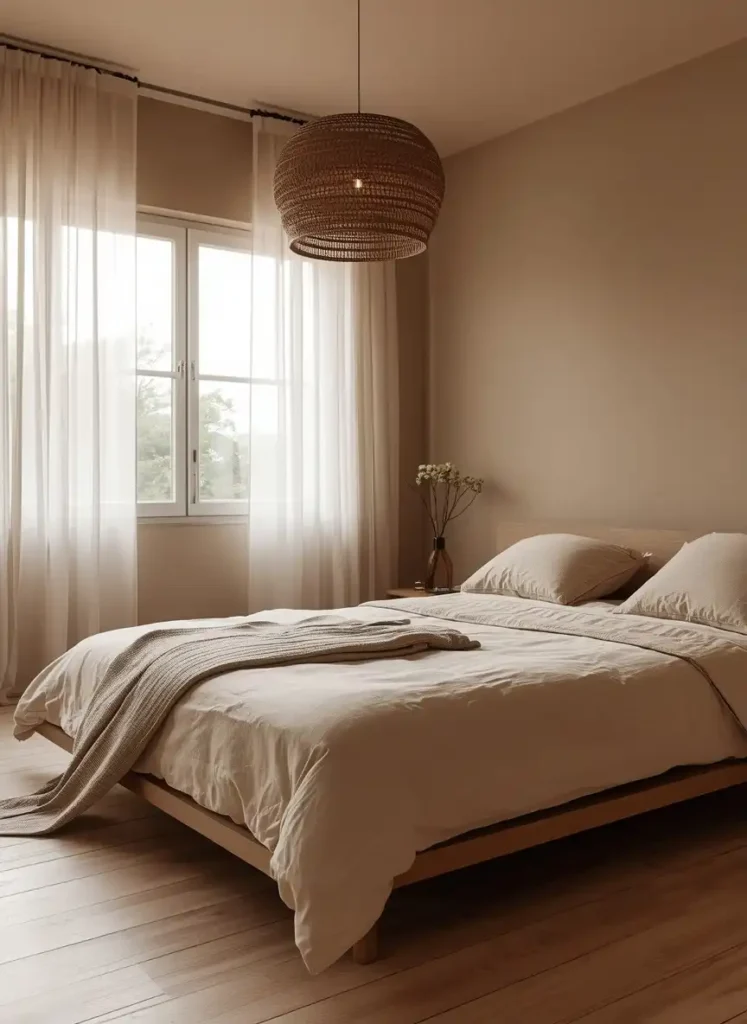
1. Warm Neutral Walls
- Warm neutral walls make a small bedroom feel open and calm instantly
- They pair beautifully with natural wood tones and linen textures
- The color acts as a visual base that ties every element together
- Neutral walls reduce visual noise, which is the core of minimalist design
- Even budget furniture looks elevated against a soft, warm backdrop
Bare white walls can feel cold and unfinished in a minimalist space. A warm greige or soft cream wall tone changes everything. It adds depth without adding clutter.
In my experience, this single change transforms a bedroom more than any furniture upgrade. The warmth makes the room feel intentional and lived-in. Natural light bounces off these tones beautifully throughout the day.
That’s why many designers recommend starting with the walls before buying anything else. The right wall color sets the entire mood of a japandi bedroom. Everything else simply falls into place around it.
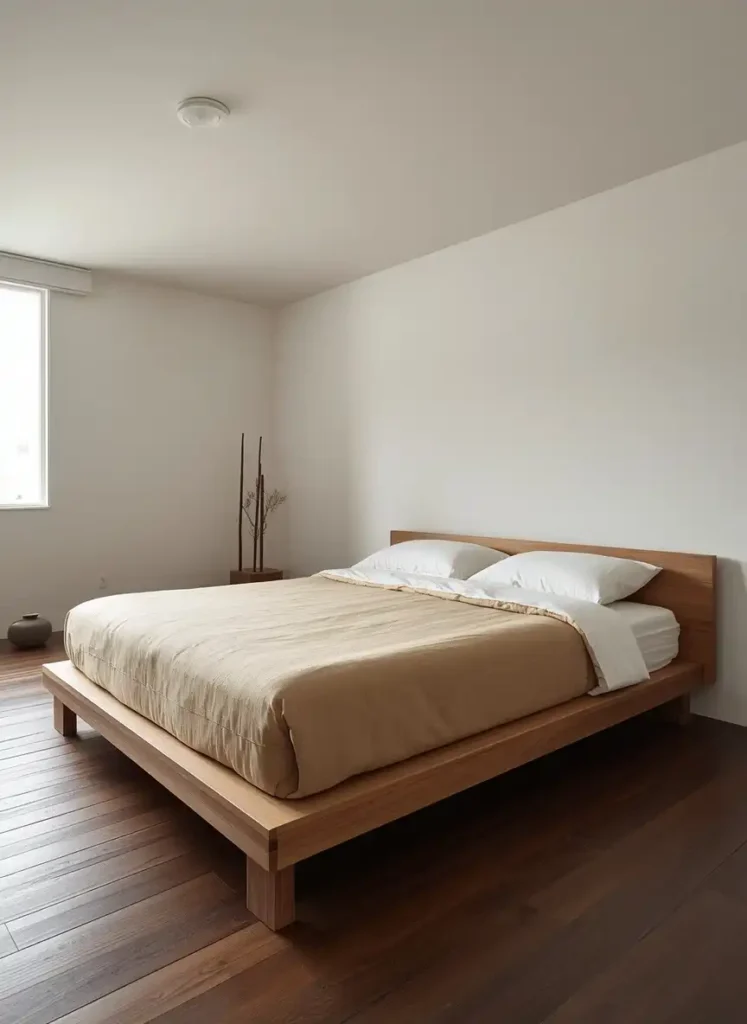
2. Low Platform Bed Frame
- A low bed frame instantly creates that grounded, close-to-earth Japanese aesthetic
- It makes ceilings appear higher and rooms feel more spacious
- Works perfectly with floor-level decor like trays, plants, and candles
- Solid wood frames add warmth and natural texture without visual weight
- Simple, clean lines keep the space looking uncluttered and intentional
The height of your bed changes how your entire bedroom feels. A low platform bed pulls the eye downward and creates a sense of calm groundedness. It’s one of the most defining features of Scandinavian-Japanese design.
I’ve noticed that people often underestimate how much bed height affects room energy. A lower profile opens up the upper half of the room visually. The space breathes better and feels more peaceful.
Pair it with floor-level elements like a small tray or trailing plant to complete the look. This setup requires almost no decoration to feel complete. The simplicity itself becomes the style statement.

3. Textured Linen Bedding
- Linen bedding adds instant texture that makes a minimalist bed look rich and inviting
- The slightly wrinkled, relaxed look is intentional and perfectly fits the wabi-sabi philosophy
- Layering two to three muted tones adds depth without breaking the color palette
- Linen also feels better with age, which aligns with the Japanese value of finding beauty in imperfection
- A single chunky throw at the foot adds warmth and visual interest effortlessly
Bedding is the first thing your eye lands on when you walk into a bedroom. Textured linen in earthy, muted tones immediately signals calm and comfort. It sets the entire emotional tone of the space.
I’ve tried both cotton and linen in minimalist bedrooms and linen always wins. It looks effortlessly styled even when slightly rumpled. That lived-in quality is exactly what this aesthetic celebrates.
From my perspective, linen bedding is the easiest and most affordable way to elevate a plain bedroom. You don’t need to redecorate. Just change what’s on your bed and the whole room shifts.
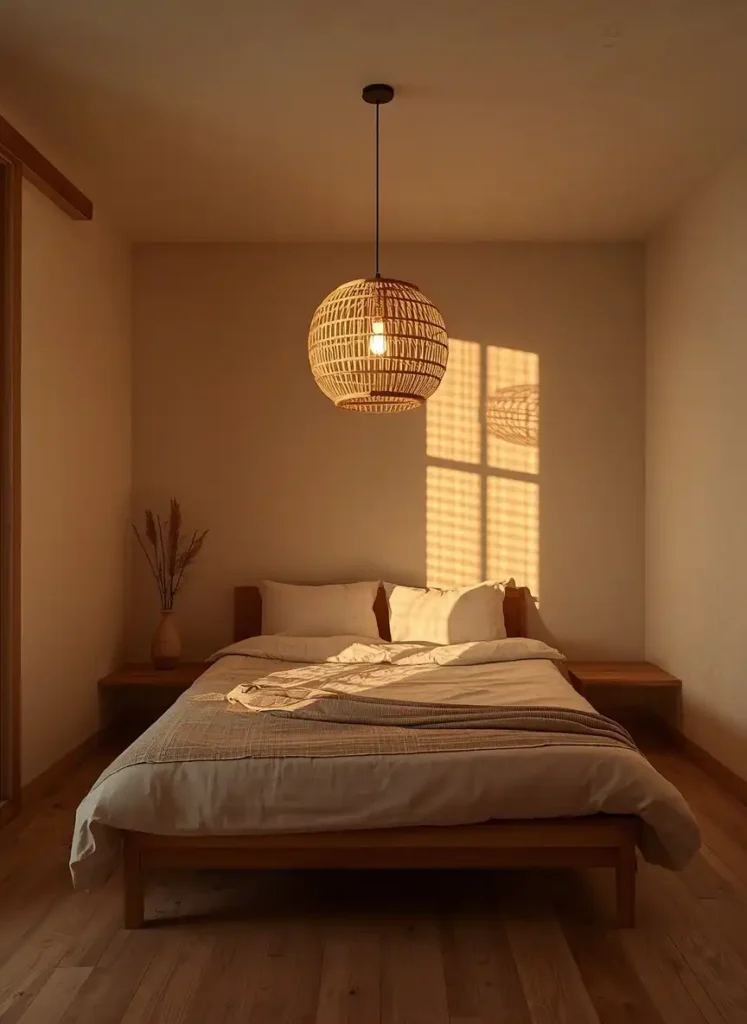
4. Rattan Pendant Light
- A rattan pendant light adds natural texture to the ceiling, an often-forgotten design zone
- The warm amber glow it creates feels softer and more intimate than harsh overhead lighting
- Handwoven details add an artisanal, imperfect quality that fits wabi-sabi perfectly
- It replaces a standard ceiling light with something that doubles as wall art
- Works beautifully in both small and large bedrooms without overwhelming the space
Lighting is what separates a beautiful room from a truly atmospheric one. A rattan pendant brings warmth, texture, and natural material into one single element. I’ve seen this work beautifully even in the most budget-friendly bedroom setups.
The shadows it casts on walls during evening hours add depth and visual interest effortlessly. No additional wall decor is needed when your light fixture already creates that effect. It becomes a functional art piece above your bed.
That’s why many designers recommend investing in one statement light over multiple small decorative items. One well-chosen pendant changes the entire feeling of a room. And rattan does this better than almost anything else.
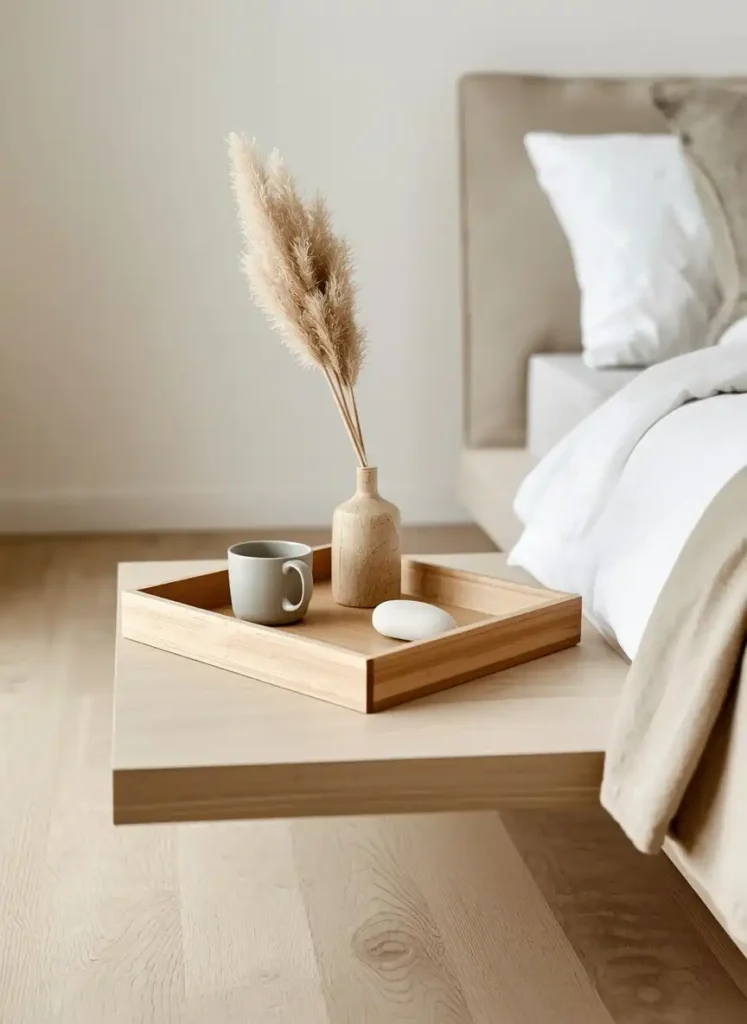
5. Japandi Bedside Tray Styling
- A floor tray beside the bed replaces a bulky nightstand without sacrificing function
- Keeping only three to four items on the tray maintains the minimalist visual rule
- Mixing textures like ceramic, wood, and natural fiber adds richness to a simple setup
- It creates a small intentional vignette that photographs beautifully for Pinterest
- Easy to restyle seasonally without spending anything
Floor-level styling is one of the most underused tricks in minimalist bedroom design. A simple wooden tray grounds the space and keeps essentials organized at the same time. It looks curated but takes less than ten minutes to style.
In my experience, the fewer items you place on the tray, the more intentional each one looks. One small plant, one candle, one object of meaning is all you need. Negative space on the tray is just as important as what you put on it.
This approach also keeps the room feeling open rather than crowded with furniture. It is practical, beautiful, and completely budget-friendly. Small details like this are what make a room feel genuinely designed.
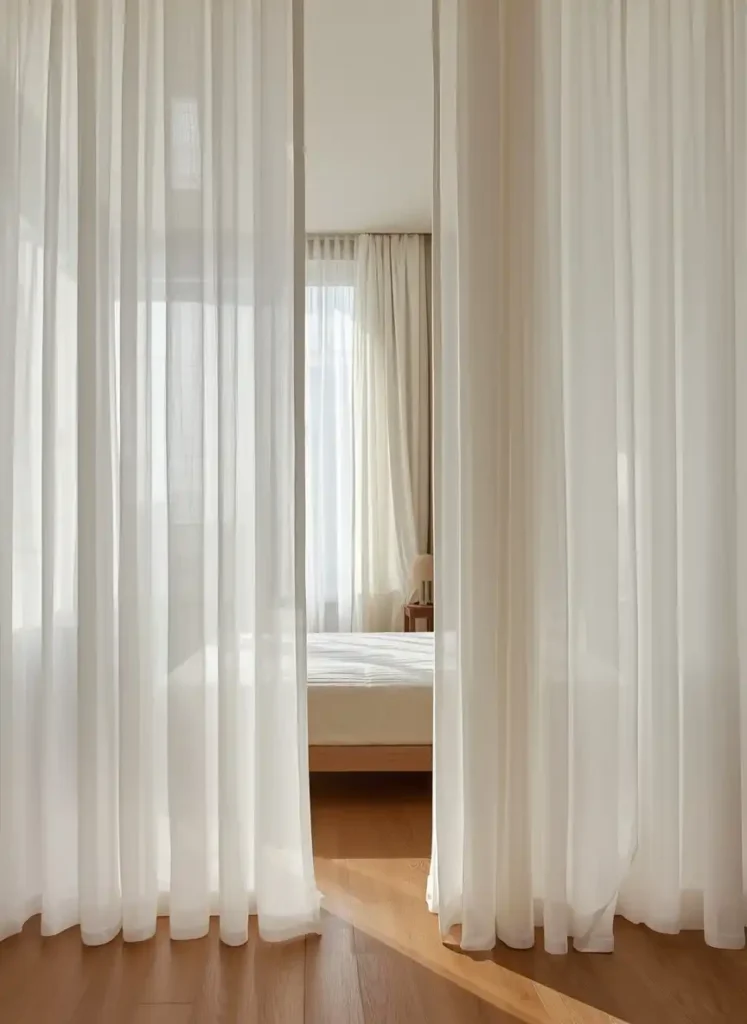
6. Sheer White Curtains
- Sheer white curtains soften harsh daylight into a warm, diffused glow throughout the day
- Floor-to-ceiling length makes ceilings feel taller and windows feel grander
- The gentle movement of sheer fabric adds life and softness to a minimal space
- They layer beautifully over blackout curtains for both style and function
- White sheers work with every wall color and wood tone in this aesthetic
Natural light is everything in a minimalist bedroom and how you filter it matters just as much as how much you let in. Sheer white curtains turn direct sunlight into something soft and painterly. The entire room glows differently when light passes through natural linen fabric.
I’ve noticed that rooms with sheer curtains always photograph better and feel more peaceful in person too. The softness they add is almost impossible to achieve with any other single element. They make even an ordinary window feel like a design feature.
Based on what I’ve seen, most people choose curtains last but they should actually choose them first. The way curtains handle light sets the mood for everything else in the room. Start here and the rest of the design becomes much easier to get right.
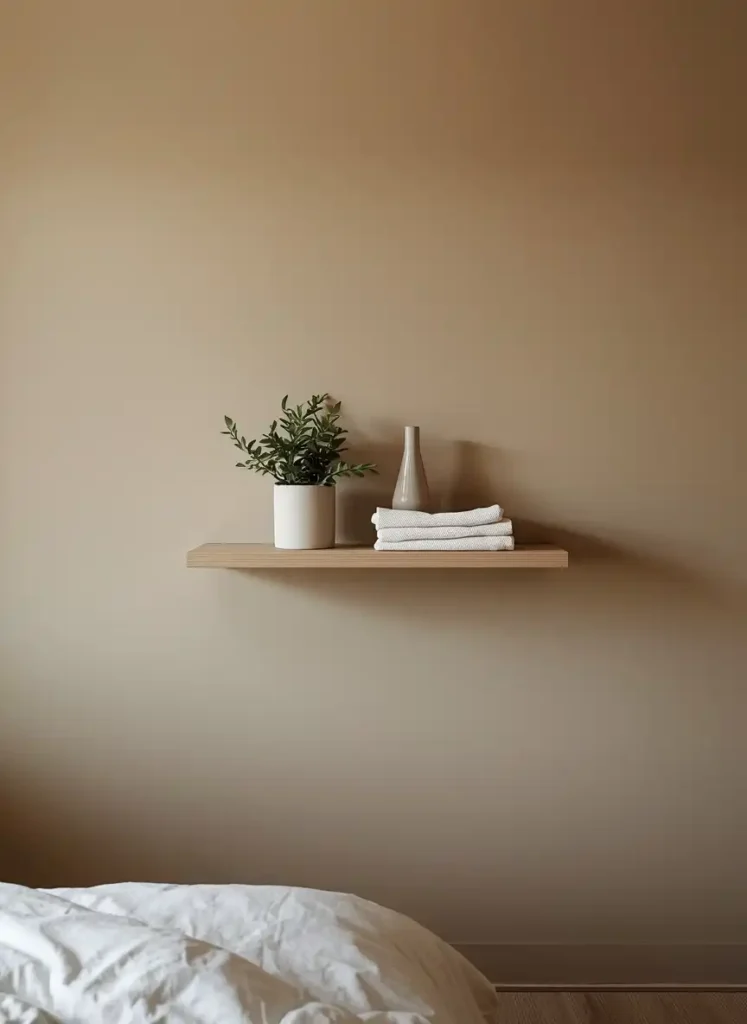
7. Minimalist Wood Shelf
- A single floating shelf adds storage and style without taking up any floor space
- Limiting items to three creates a curated look that feels intentional rather than cluttered
- Light oak wood tones connect the shelf visually to other natural wood elements in the room
- The empty wall space around the shelf is just as important as the shelf itself
- It draws the eye upward and adds gentle vertical interest to a low-profile room
A floating shelf in a minimalist bedroom should feel like a small gallery moment on your wall. The trick is restraint. Most people style shelves with too many items and lose the impact entirely.
I’ve noticed that three objects maximum is the sweet spot for this aesthetic. One living element, one ceramic piece, and one soft textile is all it takes. That combination hits every texture and tone the style calls for.
That’s why many designers recommend treating each shelf as a single composition rather than a storage solution. Think of it as a tiny vignette on your wall. Less is genuinely more here and the results speak for themselves.
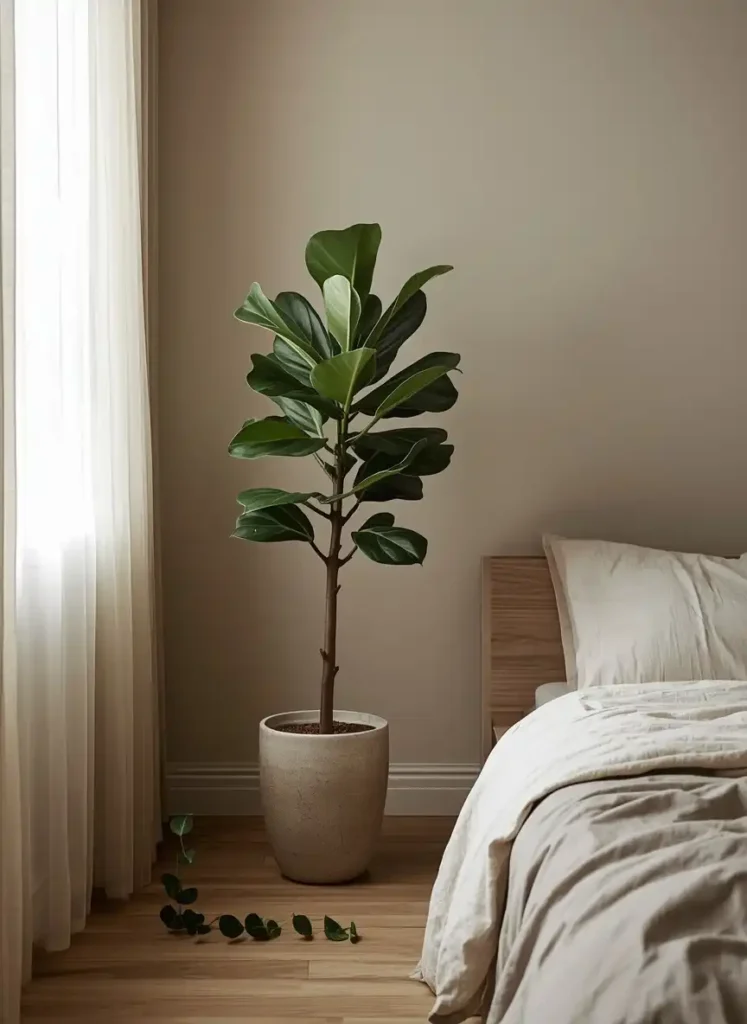
8. Indoor Greenery Corner
- A tall floor plant instantly adds life, color, and organic shape to a minimal space
- Plants break the monotony of straight lines and flat surfaces with natural curves
- A matte ceramic pot in stone or sand tones keeps the plant feeling part of the palette
- Even one plant in the right corner completely changes the energy of a quiet room
- Low-maintenance varieties like fiddle leaf fig or snake plant suit a calm, hands-off lifestyle
Every minimalist bedroom needs at least one living element to feel complete. Without it, the space can feel more like a showroom than a sanctuary. A single well-placed plant fixes that immediately.
In my experience, the corner beside the bed or near the window works best for floor plants. It fills dead space without blocking movement or cluttering the room. The plant becomes a natural focal point that requires zero wall decor around it.
I’ve seen this work in even the tiniest bedrooms where space feels tight. A tall, slim plant like a snake plant takes almost no floor space but adds enormous visual height. It earns its place in every room it enters.
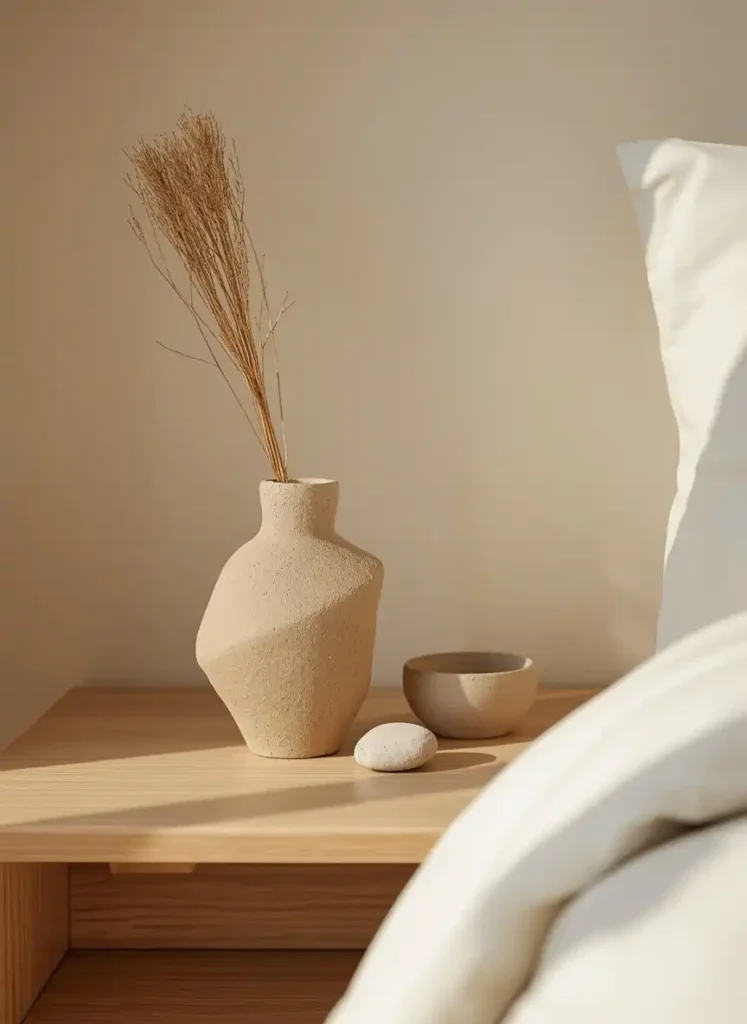
9. Wabi-Sabi Ceramic Decor
- Handmade ceramics bring beautiful imperfection that perfectly reflects the wabi-sabi philosophy
- Their irregular shapes and matte finishes add texture without adding color or visual noise
- A single dried stem in a narrow vase creates a complete decorative moment with minimal effort
- Grouping objects in odd numbers like three creates natural visual balance on any surface
- These pieces feel collected and personal rather than mass-produced and generic
Wabi-sabi is the Japanese concept of finding beauty in imperfection and ceramics express this better than anything else. A handmade bowl or vase with slight irregularities carries more character than any perfect store-bought piece. That imperfection is the point.
From my perspective, ceramic decor is one of the most powerful ways to add soul to a minimalist room. It costs very little but communicates a deep sense of taste and intentionality. Visitors always notice these small details first.
Pair matte sand, warm white, or stone-grey ceramics with a single natural element like a dried pampas stem or small smooth stone. The combination is effortlessly beautiful and requires no maintenance. Simple objects, styled with care, always outperform expensive decor.
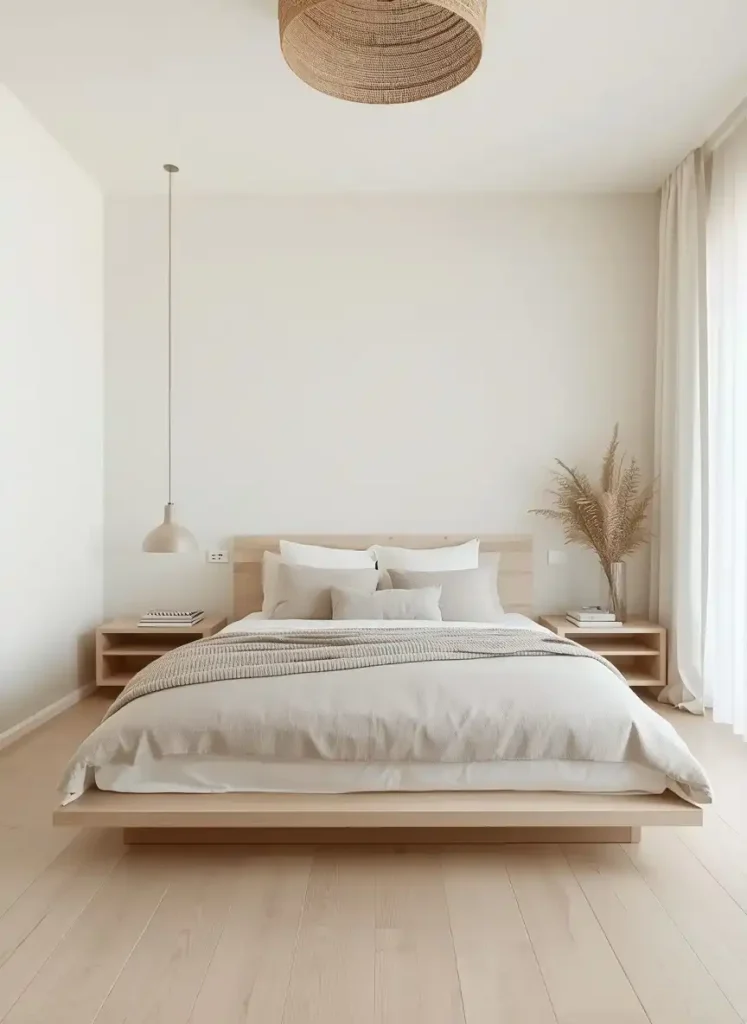
10. Neutral Color Palette
- A tonal neutral palette creates visual harmony that makes the entire room feel intentional
- Using four to five shades of the same undertone prevents the space from feeling flat or cold
- Warm whites, oatmeal, sand, and light oak all belong to the same color family naturally
- This palette never dates, never clashes, and always photographs beautifully
- Small variations in texture keep a neutral room feeling rich rather than boring
A neutral palette done well is one of the hardest things to achieve and one of the most rewarding. The secret is staying within the same undertone family throughout every element. Mixing cool grey with warm beige is where most people go wrong.
I’ve noticed that the most beautiful minimalist bedrooms use at least five different textures within the same color story. Linen, wood, ceramic, stone, and woven rattan all in similar tones create incredible depth. The eye stays engaged without being overwhelmed.
That’s why many designers recommend pulling all your bedroom elements together before committing to a palette. Lay fabric swatches, wood samples, and ceramic pieces side by side first. When they all feel like one quiet conversation, you have found your palette.
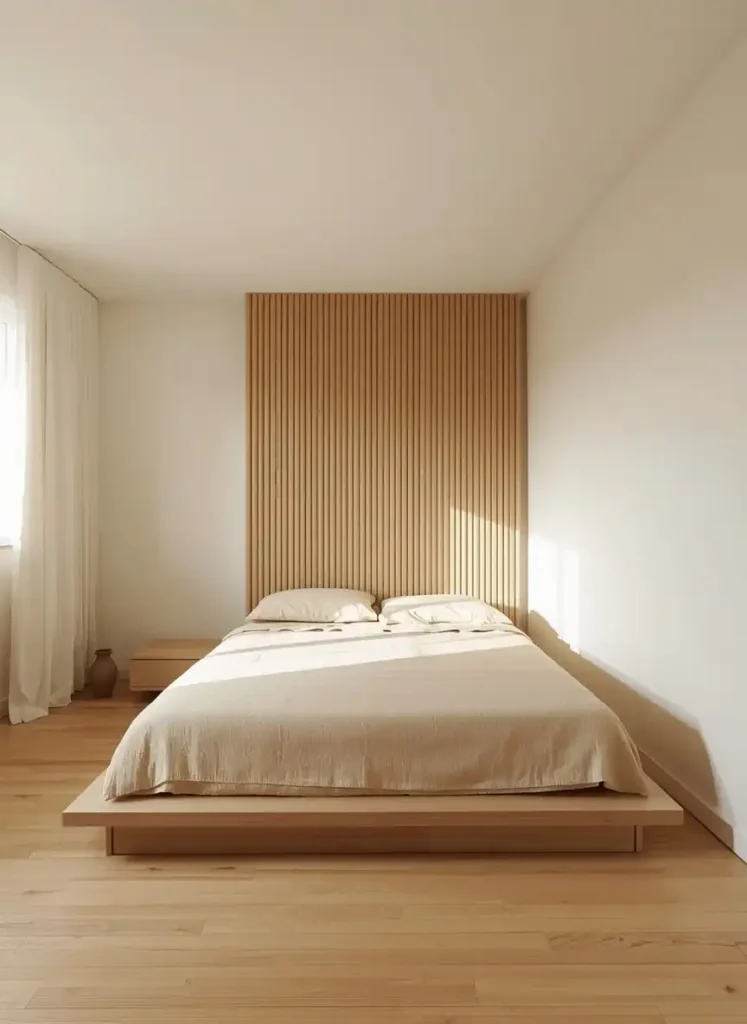
11. Bamboo or Wood Accent Wall
- A vertical bamboo or wood panel wall adds natural texture and architectural interest instantly
- It replaces the need for a headboard while creating a stronger visual anchor behind the bed
- Light bamboo tones warm up a white room without introducing color or pattern
- The natural grain and variation in wood panels reflects the wabi-sabi love of organic imperfection
- One accent wall keeps the space minimal while still feeling designed and intentional
An accent wall in a minimalist bedroom needs to earn its place without competing with anything else. Natural bamboo or wood paneling does exactly that. It adds richness through texture rather than color or pattern.
I’ve tried this in rooms where the bed wall felt empty and flat and the transformation was immediate. The paneling creates depth and warmth that paint simply cannot replicate. It makes the bed feel anchored and the room feel complete.
Based on what I’ve seen, vertical panels work better than horizontal ones in most bedrooms. They draw the eye upward and make the ceiling feel higher. That single directional choice changes the entire proportion of the room.
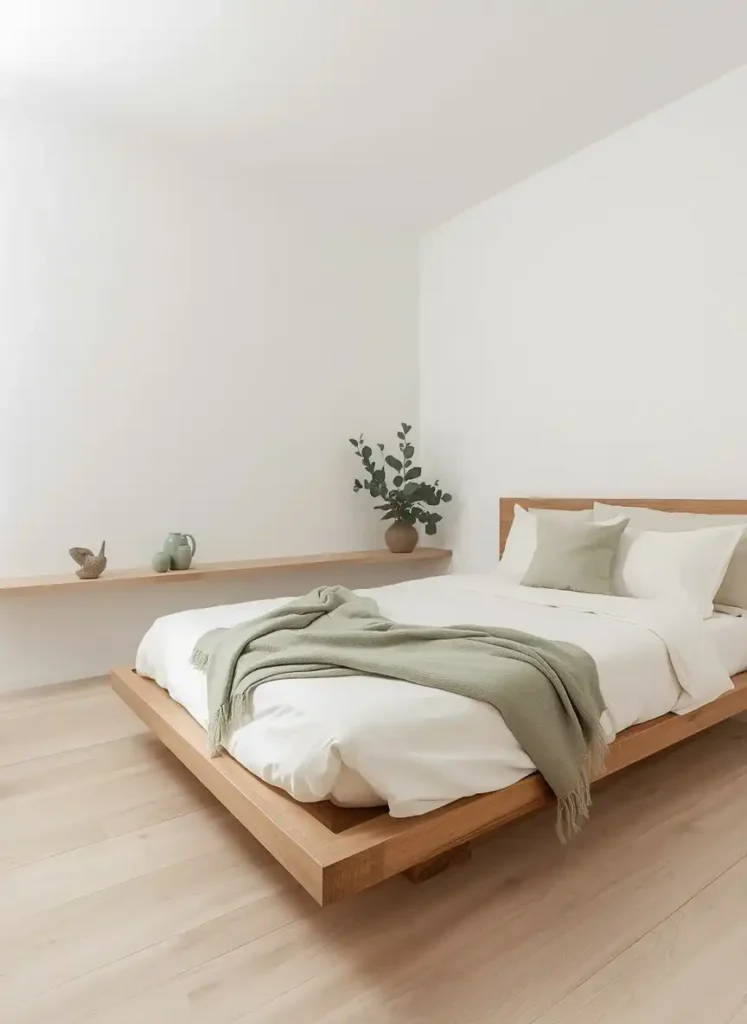
12. Soft Sage Green Touches
- Soft sage green is the one color that integrates into a neutral japandi palette without disrupting it
- It references nature directly, which aligns with the Japanese design philosophy of bringing the outside in
- Using sage as an accent in three places creates rhythm and cohesion throughout the room
- It pairs beautifully with warm white, oatmeal linen, and light oak wood tones
- Even a single sage green throw or vase shifts the room from purely neutral to gently alive
Introducing one gentle color into a neutral bedroom requires careful restraint. Sage green is the safest and most beautiful choice for this aesthetic. It feels natural rather than decorative, which is exactly the right distinction.
In my experience, the rule of three works perfectly here. One sage textile, one sage ceramic, and one living green plant create enough color presence without ever feeling overdone. The eye travels between the three points naturally and the room feels balanced.
I’ve seen this combination work in bedrooms of every size and style. Sage never competes and never overwhelms. It simply adds quiet life to a space that already knows how to be still.
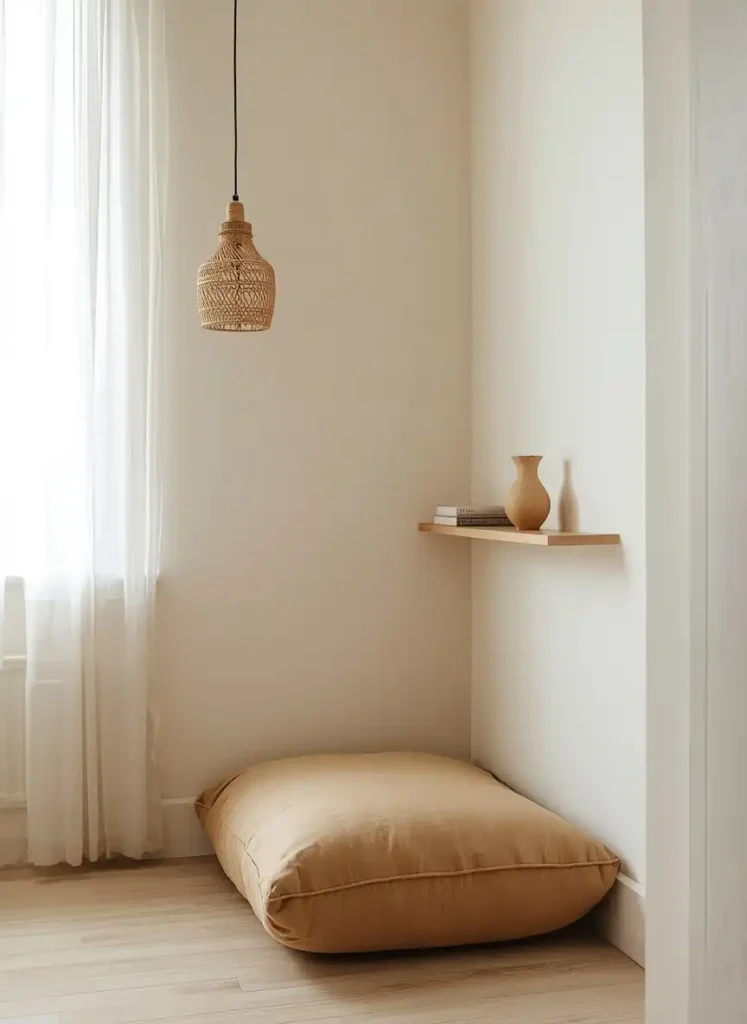
13. Japandi Reading Nook
- A floor-level reading nook fits perfectly into the low-profile aesthetic of Scandinavian-Japanese design
- It transforms an unused bedroom corner into a functional and beautiful purpose-driven space
- A single floor cushion in linen or cotton keeps the setup minimal and easy to restyle
- Natural light from a nearby window makes the nook feel like the most peaceful spot in the room
- Two or three books styled on a small shelf nearby complete the vignette without cluttering it
Every bedroom deserves one quiet corner that exists just for stillness. A reading nook does not require much space or money to create. Even a floor cushion and a good light source is enough to define the intention.
I’ve noticed that people who carve out a dedicated reading spot actually use it consistently. There is something about a purposeful corner that invites you to slow down. It signals rest in a way that the bed alone cannot always do.
That’s why many designers recommend creating at least one non-sleep zone within a bedroom. It gives the room a second function without adding furniture or complexity. A nook like this makes a bedroom feel layered, personal, and genuinely lived in.
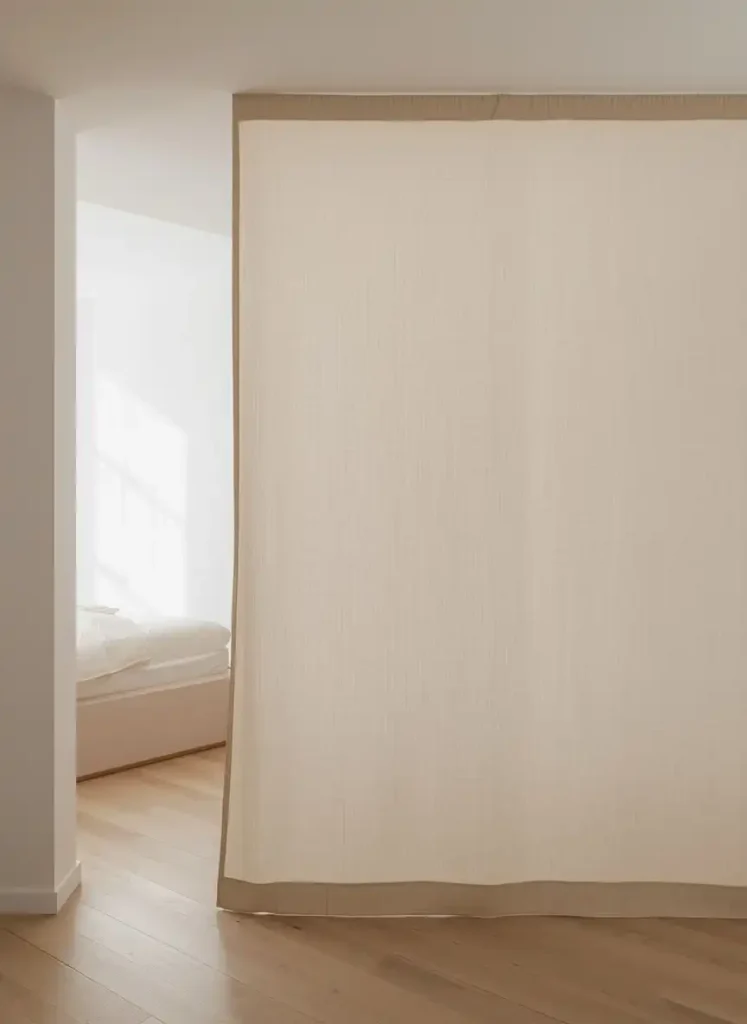
14. Linen Curtain Room Divider
- A linen curtain divider adds soft architectural structure without walls or permanent fixtures
- It creates a sense of zones within a single room while keeping everything feeling open and connected
- Natural linen fabric filters light beautifully and adds texture to an otherwise flat wall line
- This solution works especially well in studio apartments or open-plan bedroom layouts
- The curtain can be drawn open or closed giving flexible privacy and spatial control
Dividing a bedroom space does not always require building a wall or buying new furniture. A single floor-to-ceiling linen panel achieves the same result with far more elegance. It is one of those solutions that looks expensive but costs very little.
From my perspective, this idea works best when the curtain fabric matches or closely complements the existing bedding tone. When everything belongs to the same color family the divider feels like part of the design rather than an afterthought. Continuity is the key.
I’ve seen this transform studio bedrooms completely. Suddenly the sleeping area feels separate and intentional even within a single open room. That sense of definition changes how the entire space feels to live in every day.
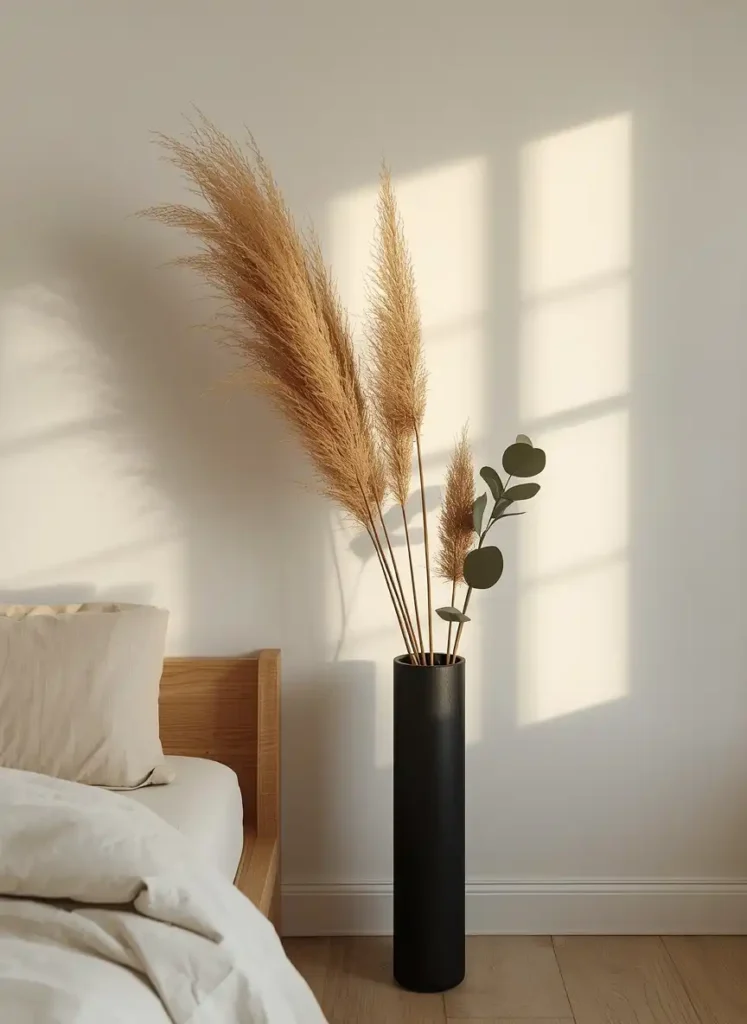
15. Dried Botanical Wall Art
- Dried botanicals add organic shape and gentle movement to a flat minimalist wall instantly
- They require zero maintenance while still bringing a natural living element into the room
- A tall floor vase with pampas or dried branches creates vertical interest without hanging anything
- The soft neutral tones of dried stems blend into a neutral palette while still standing out beautifully
- Shadows cast by dried botanicals on walls during golden hour add unexpected artistic depth
Dried botanicals have become a signature element of modern minimalist interiors for very good reason. They bring nature indoors without the upkeep of living plants. And in the right light they create wall art that no printed piece could replicate.
In my own experience, placing a tall dried arrangement in the corner nearest a window produces the most beautiful effect. The backlight catches every individual stem and the shadows it throws across the wall are genuinely stunning. No frame or canvas comes close to that kind of organic beauty.
I’ve tried both hanging arrangements and floor vases and the floor vase consistently wins. It grounds the arrangement, adds height, and feels more intentional than something pinned to a wall. One strong vertical element like this anchors an entire room corner effortlessly.
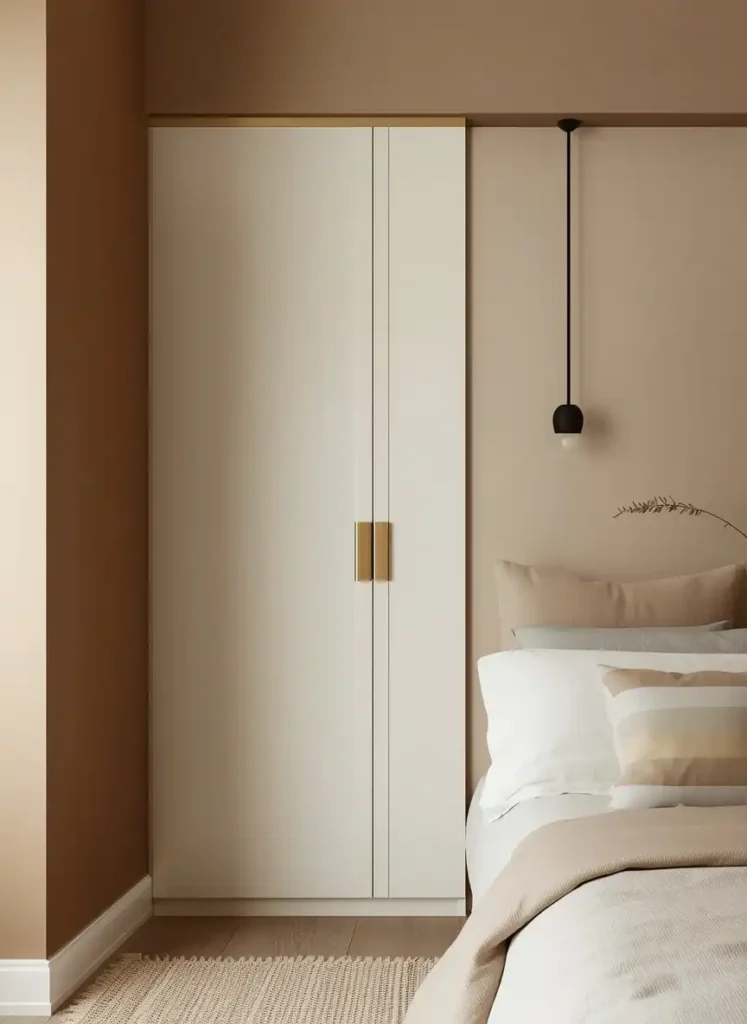
16. Japandi Wardrobe Styling
- Flat-front wardrobe doors with minimal or no hardware keep the walls feeling clean and uninterrupted
- Matte finishes in warm white or soft greige integrate the wardrobe into the wall rather than making it stand out
- Push-to-open mechanisms eliminate visual clutter of handles while adding a sleek modern detail
- A single object placed on top of the wardrobe turns dead space into a quiet design moment
- Choosing a wardrobe that matches the wall color makes even a large piece feel visually lightweight
Storage furniture is often the biggest visual disruptor in a minimalist bedroom. The wardrobe takes up the most wall space and demands the most careful consideration. Choosing the right finish and detail level makes the difference between a room that feels calm and one that feels busy.
I’ve noticed that wardrobes with visible handles and busy panel details immediately break the visual flow of a minimal space. A flat front with push-to-open hardware solves this completely. The wardrobe almost disappears into the room which is exactly what minimalist design asks for.
That’s why many designers recommend treating built-in or freestanding wardrobes as part of the wall rather than a piece of furniture. Match the color, simplify the surface, and let the rest of the room do the talking. When storage disappears visually the entire space opens up beautifully.
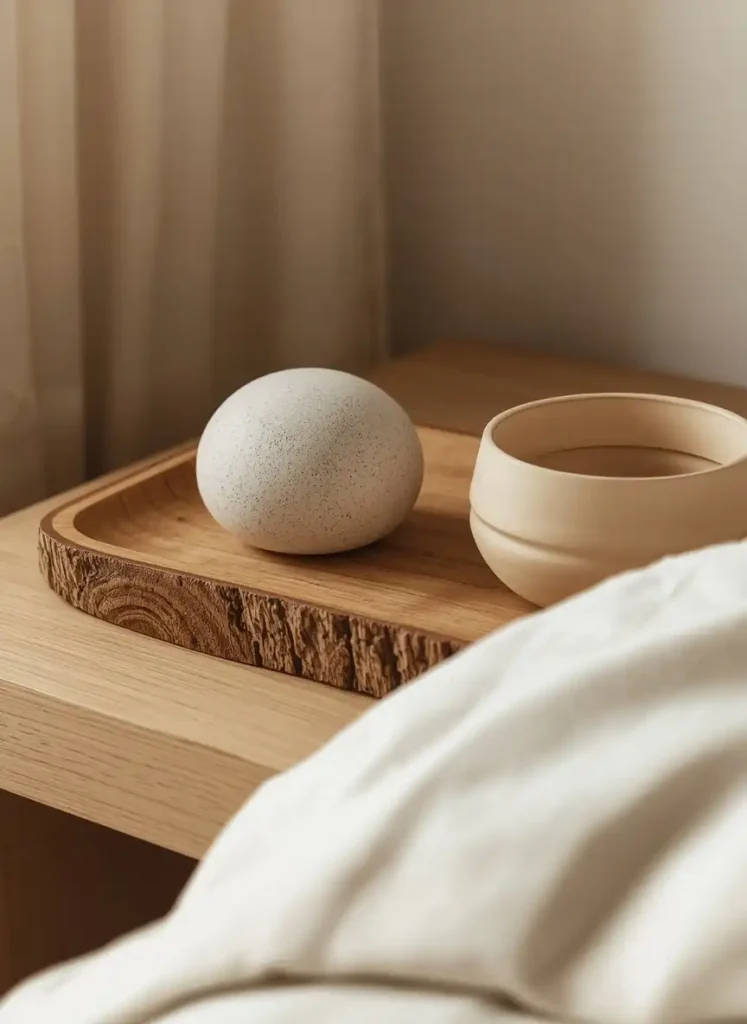
17. Stone and Wood Textures
- Combining stone and wood textures creates a tactile richness that purely visual decor cannot achieve
- Both materials are rooted in nature which keeps them perfectly aligned with Japanese design values
- Smooth stone against rough wood grain creates a satisfying contrast that draws the eye naturally
- These textures photograph beautifully and add depth to styled surfaces without adding color
- Even small stone objects like a single decorative rock carry significant visual weight in a minimal space
The most memorable minimalist rooms are never just visually interesting. They are texturally interesting too. Stone and wood together create a sensory combination that feels deeply grounding and completely natural.
From my perspective, this pairing works because both materials age beautifully. A wooden tray develops character over time and a smooth stone object remains timeless forever. Nothing about either element ever feels dated or out of place.
I’ve seen this combination styled on everything from bedside surfaces to floating shelves and bathroom counters. It works everywhere because nature already perfected the pairing long before interior design made it a trend. Trust the combination and keep everything else around it simple.
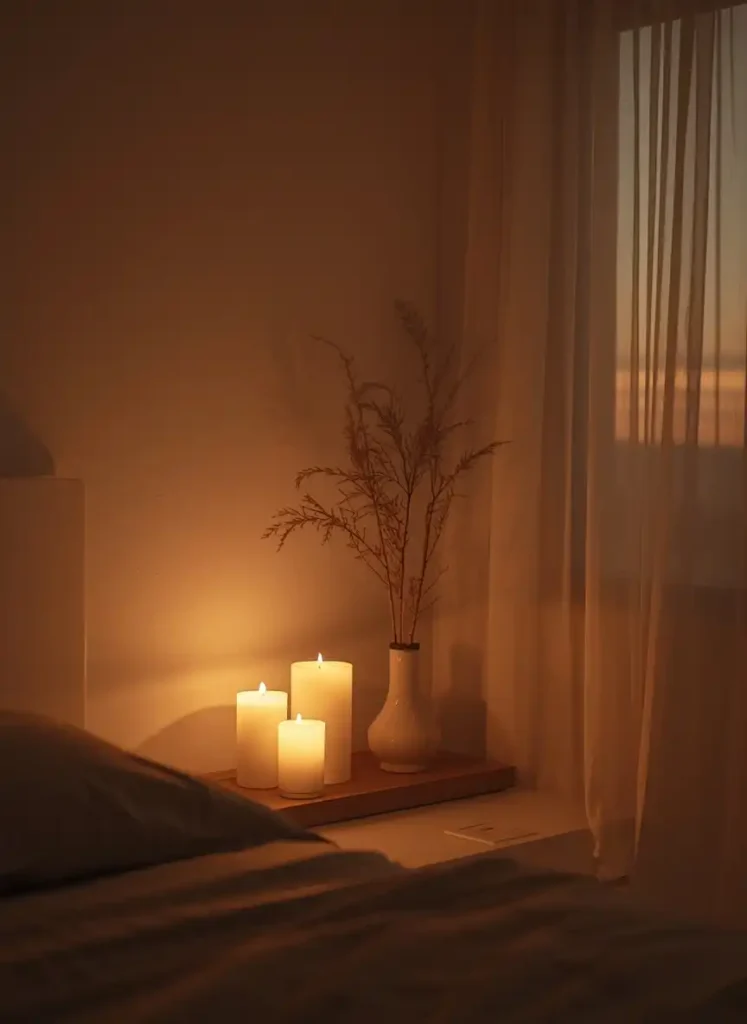
18. Candle and Soft Glow Styling
- Candles instantly shift a bedroom from daytime function to evening sanctuary within seconds
- Grouping candles in odd numbers and varying heights creates natural visual rhythm on any surface
- A wooden tray underneath unifies multiple candles into one intentional styled moment
- Unscented or lightly scented natural wax candles align with the sensory simplicity this aesthetic values
- The warm flickering light they produce cannot be replicated by any electric light source
Evening atmosphere in a minimalist bedroom is just as important as the daytime design. Candles create that transition from busy day to genuine rest better than anything else. The quality of light they produce is irreplaceable.
In my experience, three candles on a low tray beside the bed transform the entire emotional feeling of a room after dark. The overhead light goes off and suddenly the room feels like a completely different space. That shift is powerful and it costs almost nothing to create.
I’ve tried various combinations of electric mood lighting and nothing compares to real candlelight in a minimal bedroom. The warmth, the gentle movement, and the soft shadows it creates are uniquely calming. It is one of the simplest and most effective styling decisions you can make.
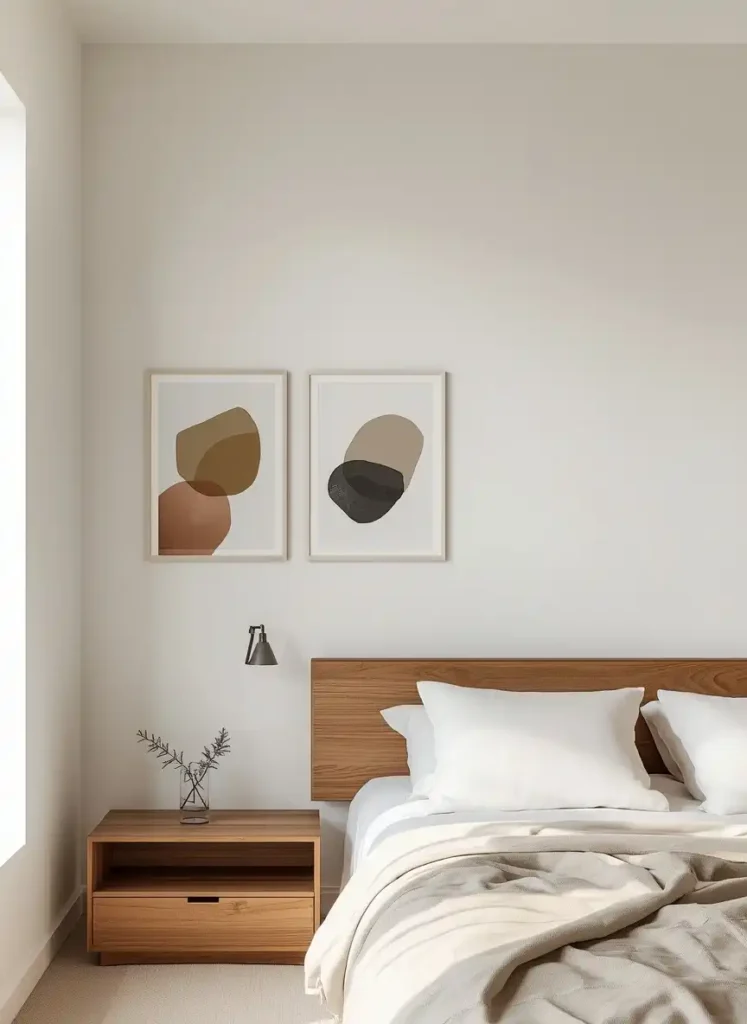
19. Japandi Gallery Wall
- Three prints maximum keeps a gallery wall feeling minimal rather than maximalist
- Frameless or simple thin natural wood frames maintain the clean uncluttered wall aesthetic
- Abstract organic shapes in muted earth tones add art without introducing competing color
- Equal spacing between pieces creates a sense of order and intentional curation
- This approach adds personality and visual interest without breaking the calm of the room
A gallery wall in a minimalist bedroom requires a completely different approach than in other design styles. The goal is restraint not abundance. Three carefully chosen pieces say more than ten casually collected ones ever could.
I’ve noticed that the biggest mistake people make with bedroom art is choosing pieces that are too small for the wall space. In a minimal room every object carries more visual weight so sizing up always works better. One medium print often outperforms three small ones grouped together.
That’s why many designers recommend treating bedroom art as a single considered decision rather than an evolving collection. Choose pieces that share a tonal family and a feeling. When the art feels like it belongs to the same quiet world as the rest of the room the wall becomes truly beautiful.
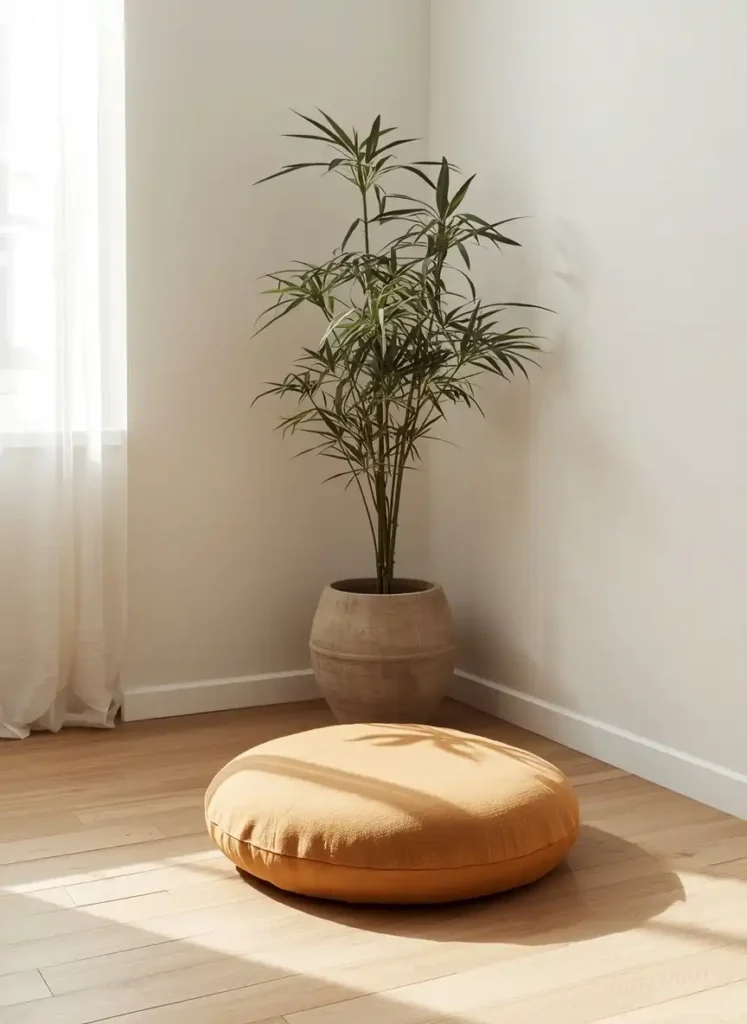
20. Japandi Meditation Corner
- A dedicated floor cushion corner creates a purposeful calm zone separate from the sleeping area
- Keeping this corner completely bare of wall decor amplifies the sense of stillness and space
- A single tall plant behind the cushion frames the spot without enclosing or crowding it
- Natural morning light makes this corner feel genuinely restorative at the start of each day
- The simplicity of one cushion and one plant communicates deep intentionality without any complexity
Not every corner of a bedroom needs to hold furniture or decor. Sometimes the most powerful design decision is choosing to leave a space deliberately empty and purposeful. A meditation corner does exactly that.
In my own experience, having one intentionally quiet corner in a bedroom changes how the entire room feels to inhabit. It creates a visual breathing space that the eye returns to for rest throughout the day. That sense of openness is genuinely calming even when you are not using the corner actively.
I’ve seen this work beautifully even in very small bedrooms where space is limited. A single floor cushion takes up almost no room but creates an enormous sense of intention. The corner becomes the most quietly powerful spot in the entire space.
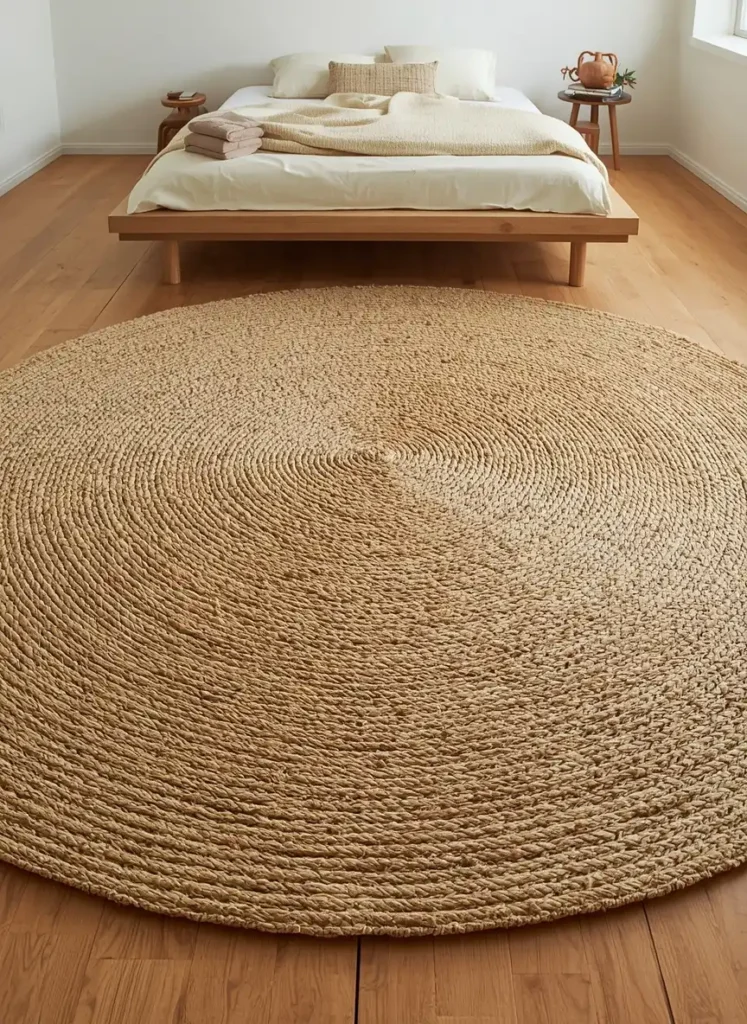
21. Natural Fiber Rug
- A natural fiber rug like jute or seagrass adds the warmest and most organic layer to any bedroom floor
- It defines the sleeping zone visually without using color contrast or bold pattern
- The rough woven texture of jute creates beautiful contrast against smooth linen bedding above
- Natural fiber rugs improve with age developing a softer patina that only adds to their character
- Sizing up always works better here as a larger rug makes the entire room feel more generous and grounded
The floor is one of the most underused design surfaces in a bedroom. A natural fiber rug changes that completely. It adds warmth, texture, and definition to the entire sleeping zone in one single move.
I’ve noticed that people consistently choose rugs that are too small for their bedroom space. The rug should extend well beyond the edges of the bed on all three sides. When it does the room immediately feels larger, more cohesive, and more intentionally designed.
Based on what I’ve seen, jute and seagrass are the two materials that most perfectly complement the japandi bedroom palette. Their natural undyed tones fit effortlessly into any neutral color story. And unlike synthetic rugs they genuinely improve in character and warmth with every passing year.
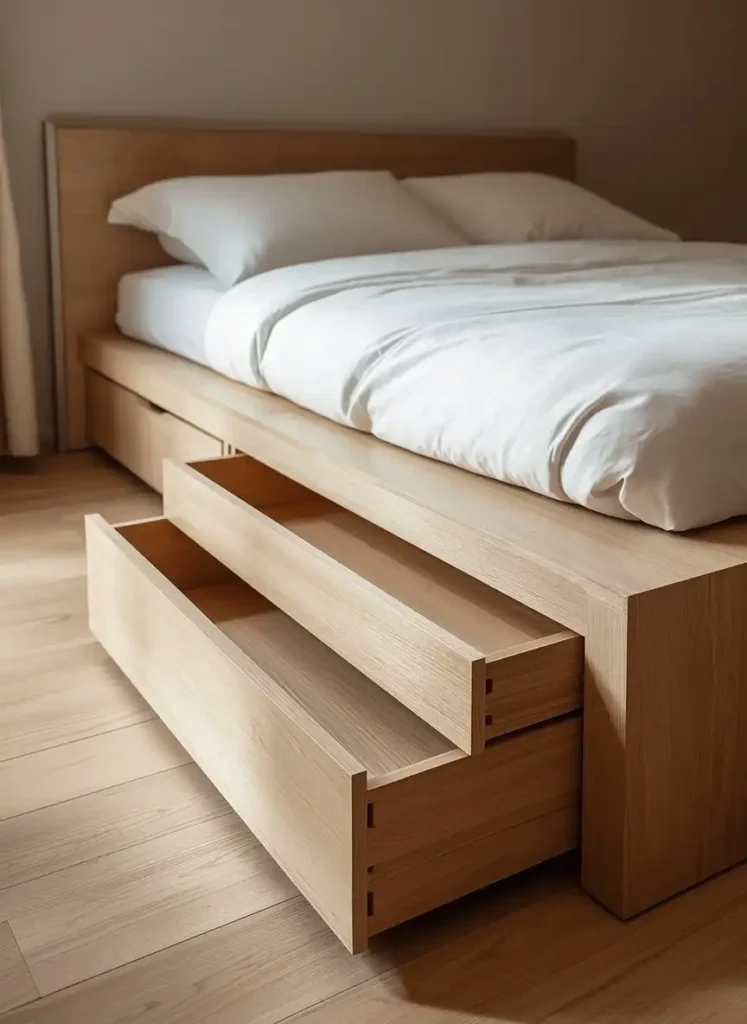
22. Hidden Storage Solutions
- Under-bed drawer storage keeps the floor clear while solving the most common bedroom clutter problem
- Seamless drawer fronts in matching wood tone make storage completely invisible within the bed frame
- Push-to-open mechanisms eliminate hardware and maintain the clean uninterrupted aesthetic
- Hidden storage reduces the need for additional furniture keeping the room feeling open and breathable
- This solution proves that minimalist design can be deeply practical without sacrificing any beauty
The biggest challenge in a minimalist bedroom is not decoration. It is storage. Clutter destroys calm faster than any design mistake and hidden storage solves this at the source. A bed frame with built-in drawers is the single most functional upgrade a minimalist bedroom can have.
I’ve noticed that once under-bed storage is in place the entire room immediately feels more controlled and intentional. Everything has a home that nobody can see. That invisible organization is what allows the visible surfaces to stay completely clear and calm.
That’s why many designers recommend prioritizing hidden storage before investing in any decorative elements. When clutter has nowhere to hide visually the room maintains its peaceful feeling effortlessly every single day. Function and beauty working together is the heart of this entire design philosophy.
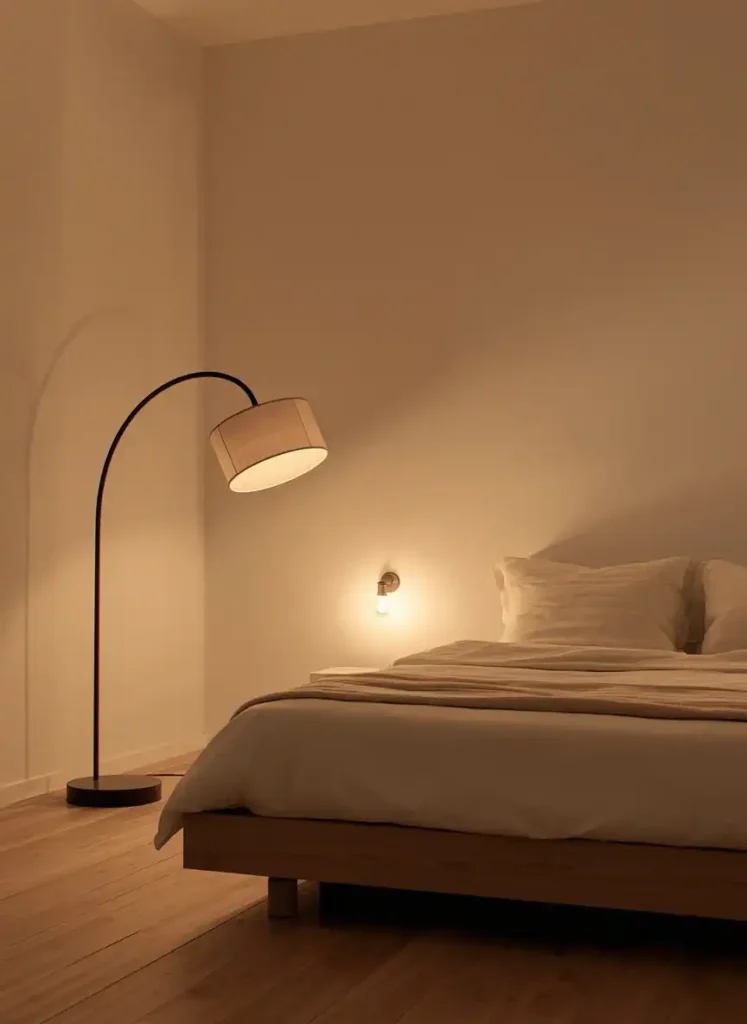
23. Warm Ambient Lighting
- Layered ambient lighting creates depth and warmth that a single overhead light source never achieves
- Wall sconces beside the bed free up surface space while providing perfectly positioned reading light
- A floor lamp in the corner adds a warm pool of light that makes the room feel larger after dark
- Warm bulb temperatures between 2700K and 3000K are essential for creating a genuinely restful atmosphere
- Eliminating harsh overhead lighting entirely transforms a bedroom from functional to truly sanctuary-like
Lighting design in a bedroom is not about brightness. It is about warmth, placement, and layering. The difference between a room that feels like a hotel corridor and one that feels like a personal sanctuary is almost always the lighting setup.
In my experience, removing the central overhead light from the evening routine makes the single biggest difference to bedroom atmosphere. Switching to layered sources at lower heights immediately makes the room feel softer and more intimate. The ceiling disappears and the room wraps around you warmly.
I’ve tried many combinations of bedroom lighting over the years and the pairing of bedside sconces with a single corner floor lamp consistently produces the most beautiful result. It covers every functional need while creating an atmosphere that genuinely encourages rest. Good lighting is not an optional finishing touch. It is the foundation of the entire evening experience.
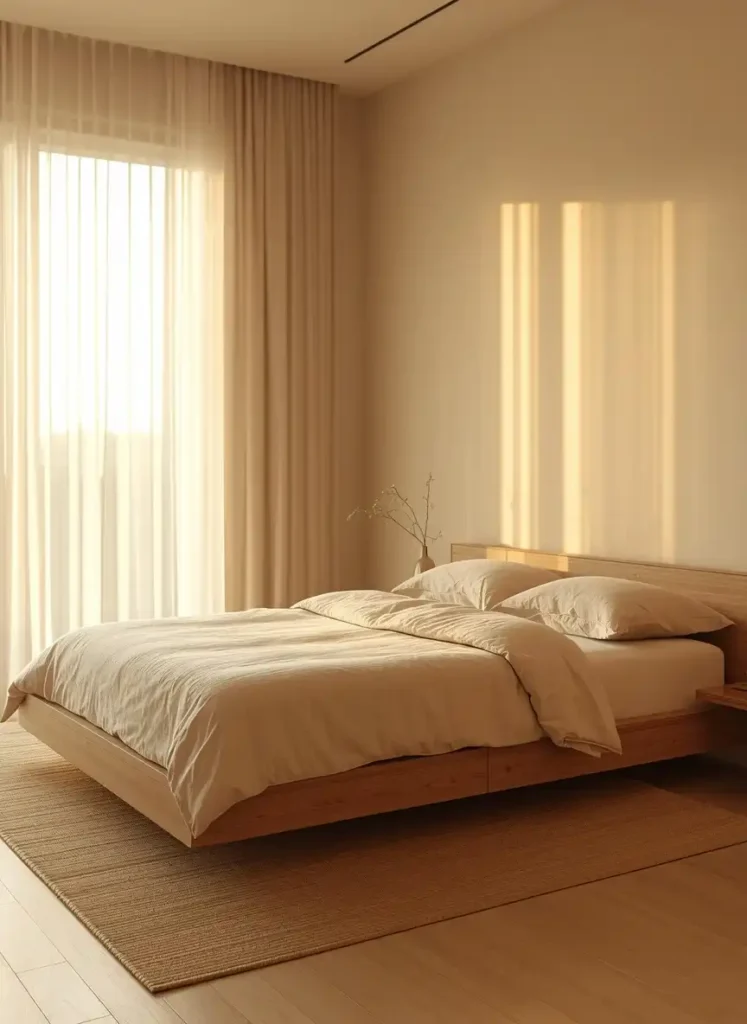
24. Japandi Morning Light Setup
- Positioning the bed to face or receive morning light creates a natural and gentle daily waking experience
- Sheer curtains allow soft golden light to fill the room gradually rather than flooding it all at once
- A simply made bed in crisp neutral linen looks its most beautiful in early morning natural light
- One fresh stem in a small vase catches morning light in a way that feels quietly magical every day
- This setup requires no special decor because the light itself becomes the most beautiful element in the room
The most beautiful moment in a well-designed japandi bedroom is not a styled photo shoot. It is an ordinary Tuesday morning when light comes through the curtains and lands on clean linen. That daily moment is what the entire design is actually built for.
I’ve noticed that people who design their bedroom around morning light report feeling genuinely better about waking up each day. The room welcomes you into the day rather than demanding immediate action. That gentle beginning sets the tone for everything that follows.
From my perspective, this final idea is the most important one in the entire article. Every other element, the low bed, the neutral palette, the natural textures, the soft lighting, all of them exist to serve this single daily moment. A japandi bedroom is not just a beautiful space. It is a daily practice of calm, simplicity, and intentional living. And morning light is where that practice begins.
Conclusion
Your dream bedroom is closer than you think. These 24 japandi bedroom ideas prove that calm, beauty, and simplicity can coexist in any space regardless of size or budget. You do not need to change everything at once. Start with one idea, one texture, one quiet corner, and let the transformation unfold naturally from there.
I’ve seen how small intentional changes like these completely shift the energy of a room and the way it feels to live in every day. If these ideas inspired you, save this post on Pinterest, share it with someone who needs a bedroom refresh, and start creating your own peaceful sanctuary today.