
26 genius playroom ideas that turn any space into a magical kids’ hideaway
Introduction
Picture a room your kids never want to leave. That’s exactly what these genius playroom ideas deliver. Whether you’re working with a tiny corner or an entire spare room, there’s a design here that fits.
I’ve noticed most parents overthink playroom planning, assuming it needs a big budget or a full renovation. It rarely does. Small changes, like a pegboard wall or a cozy reading nook, often make the biggest difference in how kids actually use a space.
This list covers everything from active climbing walls to quiet under-stairs corners, giving you real options for real homes. Each idea focuses on function first, style second, so the room stays as practical as it is beautiful. By the end, you’ll have plenty of inspiration ready to save and try.

Cozy Kids Craft Corner
- Turns an empty corner into a functional creative zone kids actually use
- Open cubbies keep art supplies visible and easy to grab
- Soft color palette keeps the space calm instead of chaotic
- Window seat adds a quiet spot to pause between activities
- Small upgrade, but it changes how often kids choose to create
A cozy craft corner gives kids a reason to sit down and create. It doesn’t need to be big. Just organized, warm, and inviting.
In my experience, kids gravitate toward spaces that feel theirs. A low table at their height makes all the difference here. It signals this spot is built for them, not borrowed from elsewhere.
Open storage baskets do more work than closed cabinets ever could. Kids can see their supplies and reach them alone. That small independence keeps creative sessions longer and less stressful for parents.
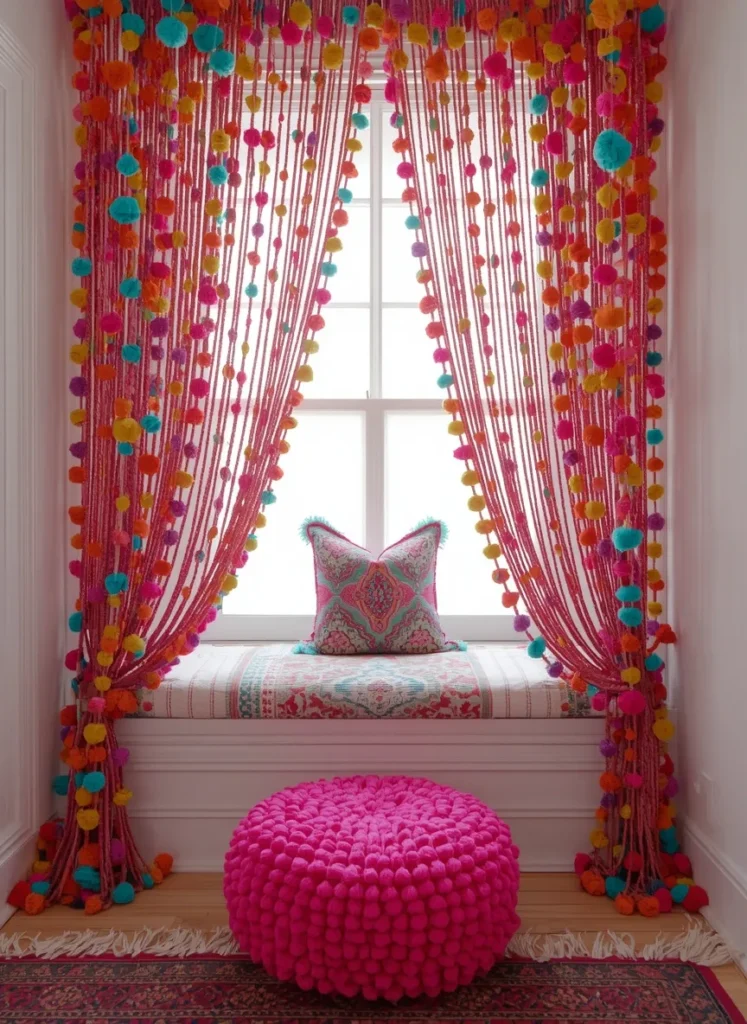
Boho Pom Pom Reading Nook
- Pom pom curtains add texture without needing a full room makeover
- Window seat becomes a natural quiet corner for books or daydreaming
- Bright colors keep the mood playful instead of overwhelming
- Easy DIY element that works in rented spaces too
- Low cost way to make a plain window feel like a feature
This nook proves color doesn’t need a big budget to make an impact. A few yarn strands change the entire feel of a window.
I’ve noticed families often overlook window seats completely. They sit unused, collecting clutter instead of quiet moments. Adding texture here invites kids to actually sit and stay a while.
Handmade elements like this also carry warmth machine-made decor rarely matches. The pom poms feel personal, playful, and clearly made with intention. That authenticity is part of why this idea keeps getting saved.
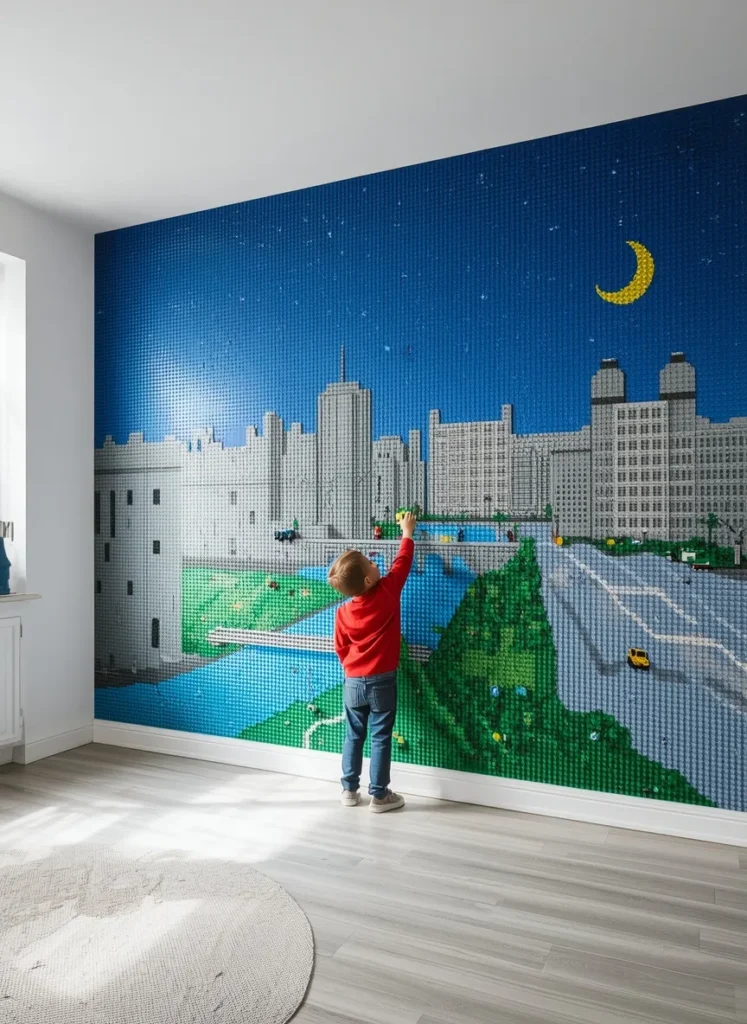
DIY Giant Lego Wall
- Turns wasted wall space into an interactive play feature
- Builds fine motor skills without feeling like structured learning
- Wall stays flexible since kids can rebuild the scene anytime
- Works well in smaller playrooms with limited floor space
- Encourages longer, more focused solo or sibling play sessions
This is one of the more genius playroom ideas for families tight on floor space. It shifts the play zone vertically instead of horizontally.
I’ve seen this work especially well with kids who lose interest fast. The wall changes daily, so boredom rarely sets in here. That constant novelty keeps them coming back on their own.
It also doubles as functional art once it’s built out fully. Guests notice it immediately, and kids feel proud showing it off. Few playroom upgrades offer this much value for the wall space used.

Dreamy Pastel Fantasy Bedroom
- Loft layout doubles the usable space without expanding the room
- Soft glowing lights create a calming bedtime atmosphere
- Spiral staircase adds a playful architectural moment kids love
- Pastel palette keeps the fantasy theme soft, not overstimulating
- Upper play level gives kids a separate zone from the sleeping area
A layered bedroom like this makes a small footprint feel endless. The vertical design gives kids two distinct worlds in one room.
Based on what I’ve seen, loft setups work best when lighting stays soft and warm. Harsh overhead lights ruin the magical effect instantly. Star lights and gentle glow keep the fantasy feeling believable at night.
Separating sleep and play areas also helps with bedtime routines. Kids associate the loft with rest, not stimulation. That physical separation quietly supports better sleep habits over time.

Indoor Playhouse With Slide
- Slide adds active play without needing extra outdoor space
- Built-in stairs double as storage, saving valuable floor room
- Foam mat flooring keeps active play safer for younger kids
- Elevated playhouse gives kids a sense of their own hideaway
- Works well for year-round indoor energy release
This idea solves a real problem many parents face indoors. Kids need to move, and this setup gives them room to.
That’s why many designers recommend combining storage with structure like this. Every staircase step becomes function instead of wasted space. Nothing here exists just for looks, and that’s what makes it last.
The slide alone changes how kids use the room daily. It turns a simple loft into an actual destination. Parents often notice kids choosing this space over screens entirely.

Pink Floral Dollhouse Corner
- Floral wallpaper adds drama without needing a full room redo
- Matching dollhouse and vanity create a cohesive, styled corner
- Soft rug and ottoman keep the space comfortable for floor play
- Warm interior lighting in the dollhouse adds a magical detail
- Coordinated pink tones make the corner feel intentional, not cluttered
A themed corner like this proves consistency matters more than size. Every piece here supports one clear, romantic aesthetic.
I’ve tried mixing bold wallpaper with simple furniture in similar spaces before. It almost always outperforms rooms packed with too many patterns. One statement wall carries more visual weight than five smaller ones.
The vanity addition also adds function beyond pure decoration. Kids get a real spot for imaginative play and grooming routines. That mix of beauty and use is what makes corners like this age well.

Giant Chalkboard Play Corner
- Chalkboard wall gives kids unlimited space to draw and erase
- Bold pendant lights add energy without needing colorful walls
- Round table keeps traffic flow open in smaller playrooms
- Erasable surface means zero mess compared to paper and crayons
- Encourages daily creativity since the canvas never runs out
A chalkboard wall solves the endless paper problem most parents deal with. Kids draw, erase, and start fresh without any waste.
I’ve noticed this idea works especially well for kids who create constantly. They no longer need permission to grab more paper. The wall becomes an outlet that’s always ready and always free.
Pairing it with bold lighting keeps the room from feeling flat or plain. Color comes from the fixtures instead of busy wallpaper. That balance keeps the space bright but still easy on the eyes.
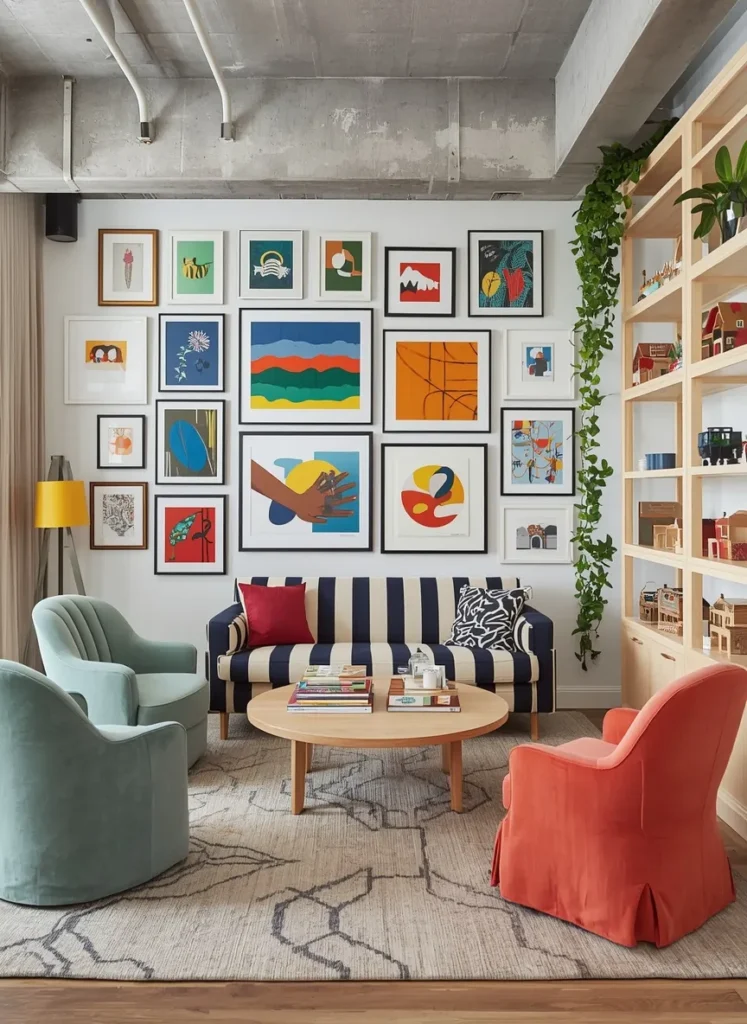
Modern Kids Gallery Lounge
- Gallery wall adds personality without needing themed decor
- Mixed seating styles make the room feel curated, not childish
- Layout works for both solo play and family time together
- Design ages well as kids grow into teenagers
- Open shelving keeps toys nearby without cluttering the lounge feel
This layout works because it doesn’t scream “kids room” at first glance. It feels intentional, stylish, and genuinely enjoyable for adults too.
From my perspective, rooms designed like this get used longer term. Parents don’t feel the urge to redo it every few years. That longevity alone makes the upfront design effort worth it.
The gallery wall also gives the space a rotating, evolving quality. New prints or kids’ own art can join anytime. It keeps the room feeling current without any major renovation required.

Indoor Nature Sensory Room
- Turf flooring brings an outdoor feel into any indoor room
- Sensory sandbox adds tactile play without the mess of a real yard
- Artificial tree creates a natural focal point kids love climbing near
- Great option for homes without easy access to outdoor space
- Encourages calmer, nature-based play instead of screen time
This idea brings the outdoors in, which matters more than people expect. Many kids simply don’t get enough daily outdoor time.
I’ve seen this work well in homes with small or shared yards. The turf and sandbox recreate that grounded, natural play feeling. Kids respond to texture and greenery even when it’s fully indoors.
It also tends to lower noise and energy compared to typical playrooms. Something about the greenery slows kids down naturally. That calming effect is often the biggest surprise for parents trying this setup.

Fairy Light Teepee Tent
- Teepee adds a private hideaway without needing a full room
- Fairy lights create a calming glow perfect for quiet time
- Faux-fur cushions make the tent comfortable for reading or naps
- Portable setup works in bedrooms, playrooms, or shared spaces
- Gives kids a sense of ownership over their own small space
A teepee like this gives kids something rare, a space fully their own. It’s small, but the emotional impact is bigger than the footprint.
In my experience, kids use these corners more for calming down than active play. The soft lighting and cushions naturally slow things down. It becomes the go-to spot after a long or overwhelming day.
Setup also stays simple compared to bigger playroom projects. No construction, no permanent changes, just fabric and lights. That makes it one of the easiest genius playroom ideas to try first.

Pirate Adventure Playroom Ideas
- Costume-ready setup encourages imaginative role-play daily
- Rich wall colors set the mood without needing full theme decor
- Vintage props like the ship figurehead add authentic storytelling detail
- Bunting and chandelier bring warmth to an otherwise bold theme
- Works well for group play with siblings or friends
Themed rooms like this succeed when the details feel real, not plastic. A few authentic props go further than a room full of cheap decor.
I’ve noticed kids stay engaged longer in spaces built around a story. The pirate theme gives every object a purpose in their imagination. That narrative pull keeps play sessions longer and more collaborative.
Bold wall color also does most of the heavy lifting here. It sets the mood before a single prop gets added. That’s a useful shortcut for parents who don’t want a fully themed room.

Doll Display Craft Nook
- Floating shelves turn a toy collection into intentional wall decor
- Doll display keeps favorite toys visible instead of buried in bins
- Small craft table makes the corner functional, not just decorative
- Bunting garland adds color without overwhelming the neutral wall
- Great solution for small rooms needing a dual-purpose corner
This nook shows how display and storage can work together well. Toys become decor instead of clutter that needs hiding.
That’s why many designers recommend open shelving for collections kids are proud of. It teaches care and ownership over hidden storage boxes. Kids tend to treat visible toys with more respect over time.
The added craft table keeps this corner from becoming purely decorative. It stays a real, usable space for daily play. That balance between display and function is what makes it worth recreating.
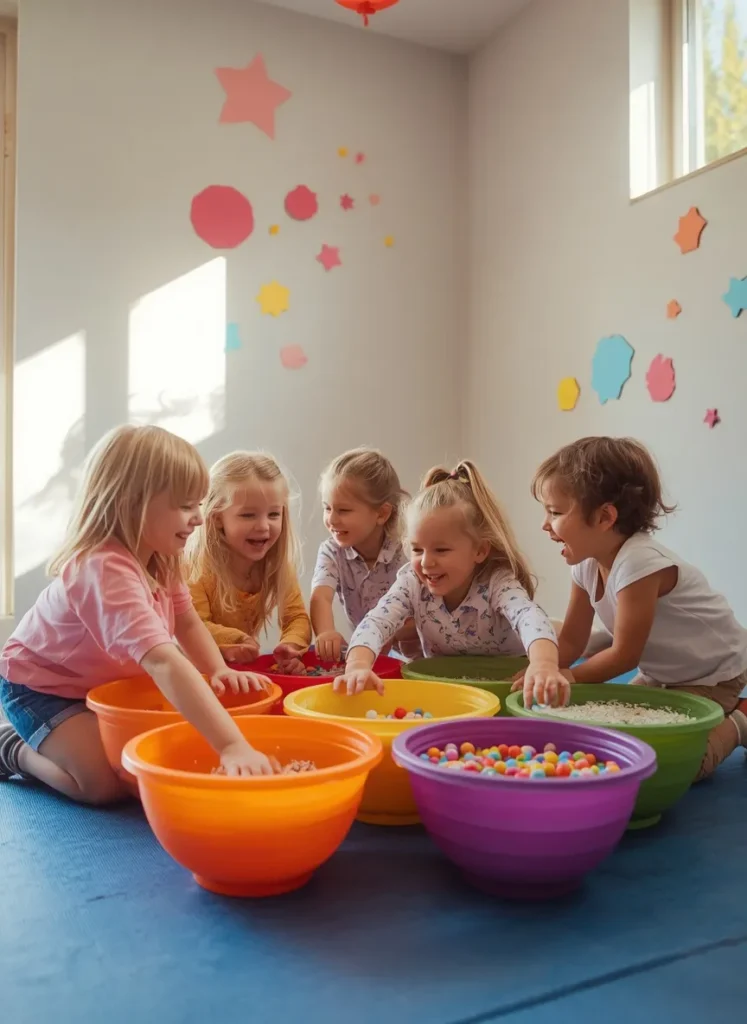
Colorful Sensory Bin Play
- Sensory bins keep multiple kids engaged in one shared activity
- Bright plastic bowls make cleanup fast and simple
- Materials like rice and beads build tactile skills through play
- Setup costs very little compared to most playroom upgrades
- Works well for playdates, siblings, or classroom-style group play
Sensory bins prove some of the best genius playroom ideas cost almost nothing. A few bowls and household fillers create real engagement.
I’ve seen this work well even with toddlers who usually lose focus fast. The mix of textures keeps their hands and attention busy longer. Group setups like this also naturally encourage sharing and turn-taking.
Cleanup stays manageable since everything sits in separate, contained bowls. Nothing spreads across the whole floor during play. That simplicity is exactly why parents keep coming back to this idea.
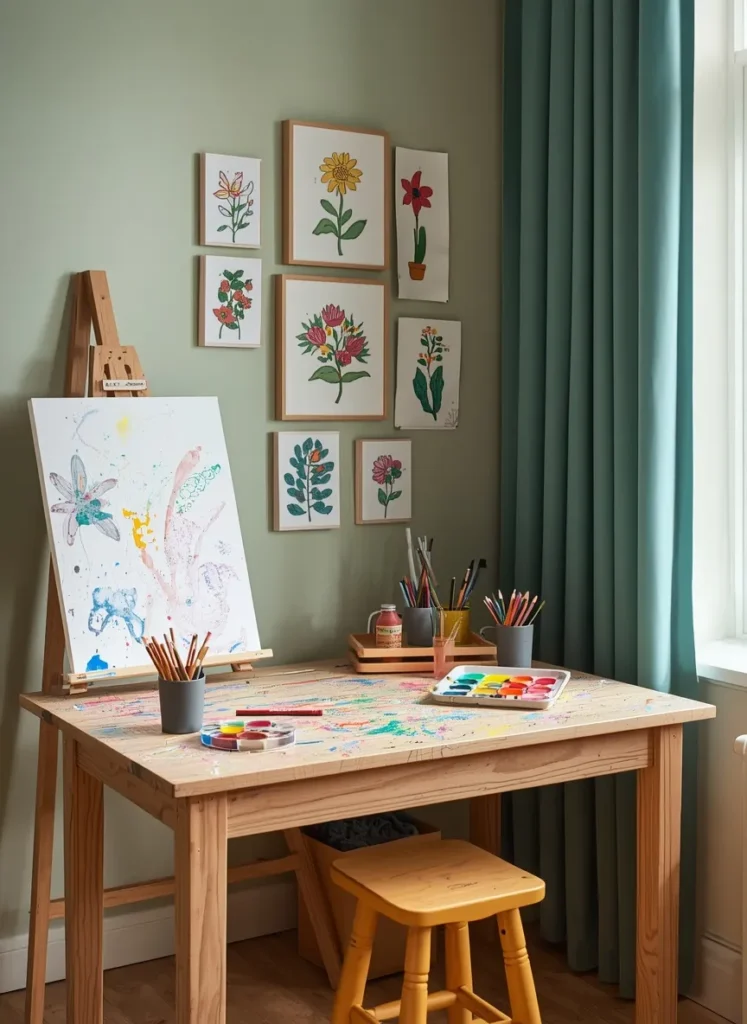
Little Artist Studio Corner
- Easel setup encourages standing, full-arm painting movement
- Displaying kids’ own art builds confidence and pride quickly
- Paint-stained table signals the space is meant to get messy
- Simple wood frames make any child’s artwork look intentional
- Corner works even in small rooms with limited square footage
This corner works because it removes the fear of making a mess. Everything here is designed to be used, not protected.
Based on what I’ve seen, kids create more freely when a space already looks lived-in. A pristine craft table often makes children hesitant to start. This one invites them in immediately, stains and all.
Framing their finished work also changes how kids view their own effort. It turns a quick painting into something worth noticing. That small shift adds real value beyond just the physical setup.
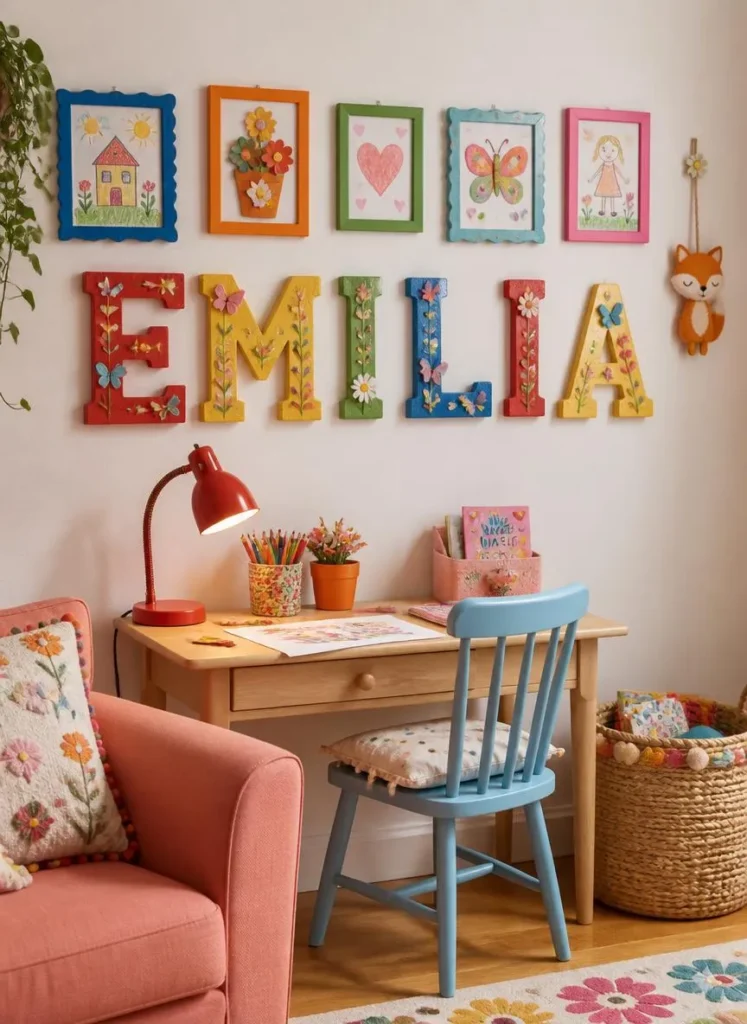
Personalized Name Wall Decor
- Name wall makes the space feel personal from the very first glance
- Mismatched frames give kids’ artwork a rotating, gallery-style spot
- Bright letter colors add personality without full wall repainting
- Small desk setup keeps the corner functional, not just decorative
- Easy to recreate using paint, wood letters, and basic frames
A personalized wall like this instantly makes a shared space feel individual. It’s often the first thing kids point out to guests.
I’ve tried similar setups in shared sibling rooms with great results. Giving each child their own named corner reduces territory disputes. It’s a small design choice that solves a very real, common problem.
Rotating frames also keep the wall relevant as kids’ art improves. Nothing here needs permanent commitment or major updates. That flexibility makes it one of the more practical ideas on this list.

Indoor Treehouse Adventure Room
- Faux tree trunk adds height and drama without real construction
- Elevated treehouse gives kids a private, elevated play zone
- Mural walls extend the outdoor theme beyond just the structure
- Ladder access adds a light physical challenge kids enjoy
- Great option for basements or windowless rooms needing atmosphere
A treehouse indoors solves a problem many families face directly. Not every home has a yard suited for real outdoor building.
I’ve noticed basement playrooms benefit the most from this kind of setup. The mural and structure trick the eye into feeling outdoors. That illusion matters more than people expect in windowless spaces.
The elevated design also gives kids a genuine sense of adventure. Climbing up feels like an event, not just a walk. That small thrill is often what makes this space their favorite in the house.

Enchanted Forest Mural Playroom
- Full mural transforms plain walls into an immersive storybook setting
- Paper lantern moon adds a soft focal point without harsh lighting
- Mismatched chairs keep the room playful instead of overly matched
- Storage units in warm tones tie the whole color scheme together
- Best suited for larger playrooms with open wall space
This idea works best when the room has space to breathe. A full mural needs open walls to really land visually.
That’s why many designers recommend saving large-scale murals for bigger rooms. Crowded furniture competes with the artwork instead of complementing it. Giving the mural room to shine makes the whole space feel intentional.
The soft pastel palette also keeps a busy scene from feeling chaotic. Nothing here uses harsh or clashing colors. That restraint is what keeps an elaborate design still feeling calm and livable.
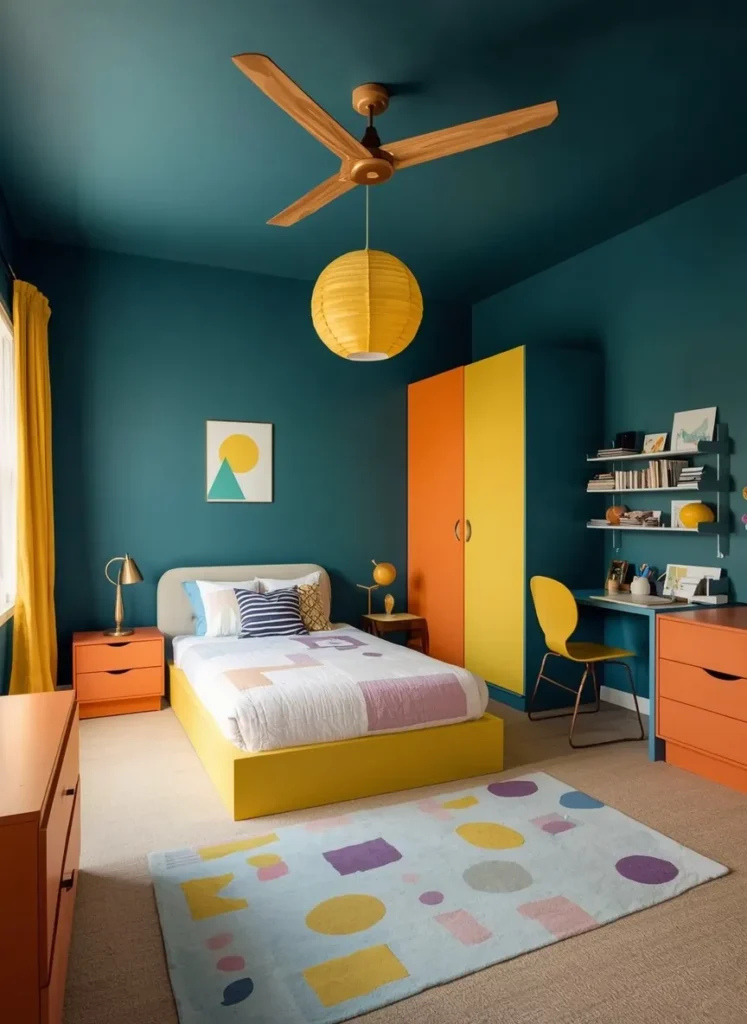
Bold Colorful Teal Bedroom
- Bold wall color creates instant visual impact without extra decor
- Two-tone furniture keeps a saturated room feeling coordinated, not chaotic
- Teal ceiling adds drama most bedrooms skip entirely
- Built-in wardrobe keeps storage streamlined despite the bold palette
- Works well for kids who want a room that feels distinctly theirs
Painting the ceiling is the detail most people forget to try. It’s also what makes this room feel finished, not half done.
I’ve seen this work particularly well with kids past the pastel-nursery stage. Bold color signals a room that’s grown up with them. It gives older kids ownership over a space that finally feels personal.
Matching the furniture tones to the wall also prevents visual overload. Every piece feels chosen, not randomly added over time. That coordination is what separates a bold room from a cluttered one.

Pegboard Craft Wall Organizer
- Pegboard keeps every supply visible and easy to reach
- Customizable layout grows with kids as their hobbies change
- Clear jars make it simple to spot what’s running low
- Wall-mounted storage frees up valuable floor and table space
- Great option for shared craft areas used by multiple kids
A pegboard system solves the constant clutter problem craft corners tend to create. Everything gets a fixed, visible spot on the wall.
I’ve noticed families with multiple kids benefit most from this setup. Shared supplies stay organized instead of mixed into random bins. Each hook and jar keeps the whole station easy to maintain daily.
The flexibility here is what makes it last long term. Hooks and shelves move as needs change over time. That adaptability is rare in most fixed storage furniture options.

Minimalist Cozy Reading Corner
- Neutral palette keeps the corner calm despite colorful book spines
- Oversized armchair invites longer, more relaxed reading sessions
- Open shelving makes choosing a book simple for younger kids
- Bunting adds a playful touch without breaking the minimalist feel
- Works well as a quiet retreat inside a busier playroom
A minimalist reading corner gives kids a break from visual overstimulation. Not every part of a playroom needs bold color or theme.
In my own experience, quieter corners like this get used more than expected. Kids naturally seek out calm spaces after active play. Having one ready-made spot makes that transition smooth and simple.
The oversized chair also plays a bigger role than it seems. Comfort alone can turn reading into a preferred activity. That’s often the difference between books being ignored or genuinely enjoyed.
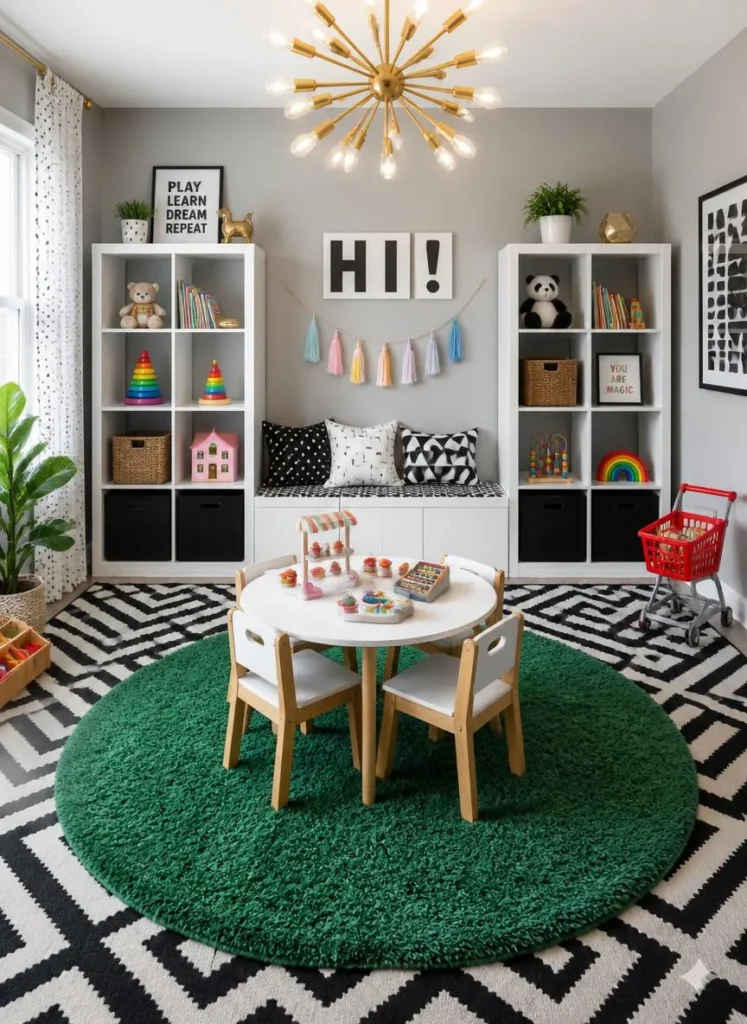
Black White Rug Playroom
- Layered rugs add texture and definition without extra furniture
- High-contrast pattern makes the room feel styled, not childish
- Matching storage units keep toy clutter visually contained
- Statement lighting elevates the space beyond typical playroom decor
- Works well in open-plan homes where the playroom stays visible
Layering two rugs is a simple trick that instantly upgrades a room. It adds depth without needing any structural changes at all.
I’ve tried this layout in open-concept homes with strong results. Bold pattern keeps the playroom looking intentional next to living areas. It stops the space from feeling separate or out of place nearby.
The chandelier detail also signals this room matters just as much as any other. Lighting like this rarely goes into a kids’ space. That extra care is exactly what makes the room feel elevated.
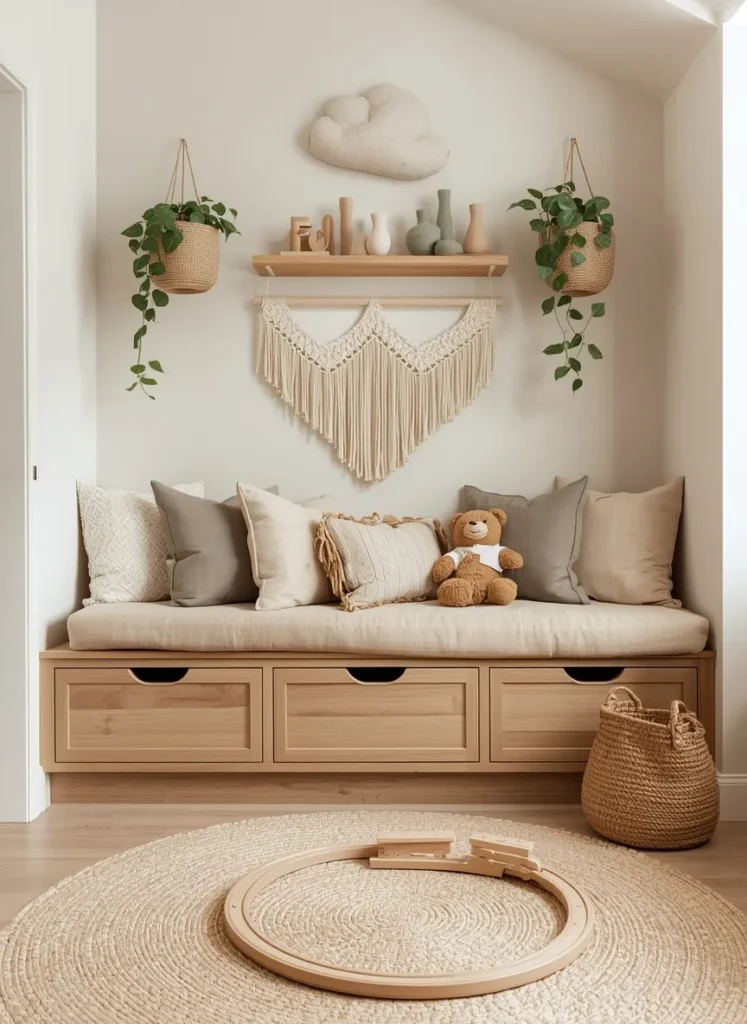
Boho Neutral Play Nook
- Built-in bench maximizes seating without taking up floor space
- Neutral tones make the nook easy to style around any decor
- Hanging plants add life without needing floor-level pots
- Wooden toys keep the palette cohesive instead of plastic and bright
- Great option for parents wanting a calmer, less cluttered look
This nook shows that playrooms don’t have to be loud to work well. Soft neutral tones can feel just as inviting as bold color.
Based on what I’ve seen, boho-neutral spaces tend to age better over time. They don’t feel dated as fast as trend-heavy color schemes. That longevity makes the slightly higher styling effort worth it upfront.
The built-in bench also adds real function beyond just good looks. Storage drawers underneath keep toys hidden but accessible. That combination of calm style and practicality is hard to beat.

Indoor Climbing Wall Playhouse
- Climbing wall adds physical challenge inside a compact footprint
- Two-story structure separates active play from quieter zones below
- Foam floor tiles protect against falls during energetic play
- Small triangle ramp gives younger kids a gentler starting point
- Great option for burning off energy during bad weather days
A climbing structure like this keeps active kids engaged for hours indoors. It gives them a real physical outlet, not just visual stimulation.
I’ve noticed rainy or winter days become far less stressful with a setup like this. Kids get their movement in without needing to go outside. That alone makes the investment worthwhile for many families.
Having both a ramp and full wall also covers a wider age range. Younger siblings can join in at their own pace. That flexibility keeps the whole family using the space together.

Colorful Rock Climbing Room
- Rope swing adds movement variety beyond just climbing
- Bold color blocking makes the room feel like a real activity zone
- Recessed lighting keeps the space bright during active play
- Checkerboard foam flooring adds visual energy while staying safe
- Best suited for a dedicated room rather than a shared space
This setup goes further than most home playrooms typically attempt. It functions closer to a mini indoor gym than a play corner.
I’ve seen this work best in homes with a spare room to dedicate fully. The bold colors and equipment need space to feel purposeful. Cramming this into a small corner loses most of its impact.
The combination of swing and climbing wall also keeps play varied daily. Kids don’t burn out on one single activity option. That variety is often what keeps a room like this in constant use.

Elegant Duck Egg Playroom
- Crown molding adds a formal touch rarely seen in playrooms
- Soft blue palette keeps the space calm and gender-neutral
- Herringbone flooring elevates the room beyond typical kids’ decor
- Built-in desk supports both play and future homework use
- Works well in traditional or period-style homes
This idea proves a playroom can feel elegant without losing its playful purpose. Refined details and toys can genuinely coexist in one space.
From my perspective, rooms like this work well because they don’t feel temporary. The desk and molding suit the space for years, not just toddler stage. That long-term thinking saves families from repeated redesigns later on.
The soft color palette also keeps the room adaptable as kids grow. Nothing here feels locked into one specific age or theme. That flexibility is exactly why elegant, neutral design choices tend to last.

Cozy Under-Stairs Reading Nook
- Under-stairs space turns unused square footage into real function
- Built-in storage keeps books tucked away without extra furniture
- String lights add warmth to a naturally shadowed corner
- Bold cushion color makes the tight space feel intentional
- Great solution for homes without room for a full playroom
Dead space under a staircase is one of the most overlooked areas in any home. This idea turns it into one of the coziest spots in the house.
I’ve noticed families often forget this space exists until it’s pointed out. Once styled, it becomes a favorite corner almost immediately. Kids seem drawn to small, tucked-away spaces more than open ones.
The lighting detail matters more here than in most other ideas. Stairwells rarely get natural light on their own. String lights solve that instantly, turning a dim spot into something genuinely inviting.
Conclusion
A great playroom doesn’t happen by accident. It comes from small, intentional choices that fit how your kids actually play. These genius playroom ideas prove that creativity, comfort, and function can exist in the same space, no matter its size.
I’ve seen how small changes like these can completely transform a room’s energy and how often kids choose to use it. Pick one idea that speaks to you and try it this weekend. Save this post to Pinterest so you can revisit the rest later, and share it with a friend who’s planning their own playroom refresh. Your kids’ new favorite room might be closer than you think.