25 Cozy Kitchen Ideas With Simple Changes That Make a Big Difference
Introduction
Your kitchen deserves to feel like the warmest room in the entire home. It should be the place where morning coffee tastes better, where cooking feels slower and more intentional, and where every corner tells a story worth noticing. If your kitchen currently feels cold, plain, or uninspiring, these ideas were made specifically for you.
This article walks you through 25 genuinely beautiful ways to create a cozy kitchen with real cottage charm, natural warmth, and effortless everyday style. Every idea here is practical, achievable, and deeply rooted in the kind of design that makes a space feel lived-in and loved rather than simply decorated.
I’ve noticed that the kitchens people feel most drawn to are never the most expensive or perfectly renovated ones. They are the ones filled with natural textures, warm lighting, personal touches, and small details chosen with genuine care and intention. Whether you are starting from scratch or refreshing what you already have, even one idea from this list has the power to completely change how your kitchen feels every single day.
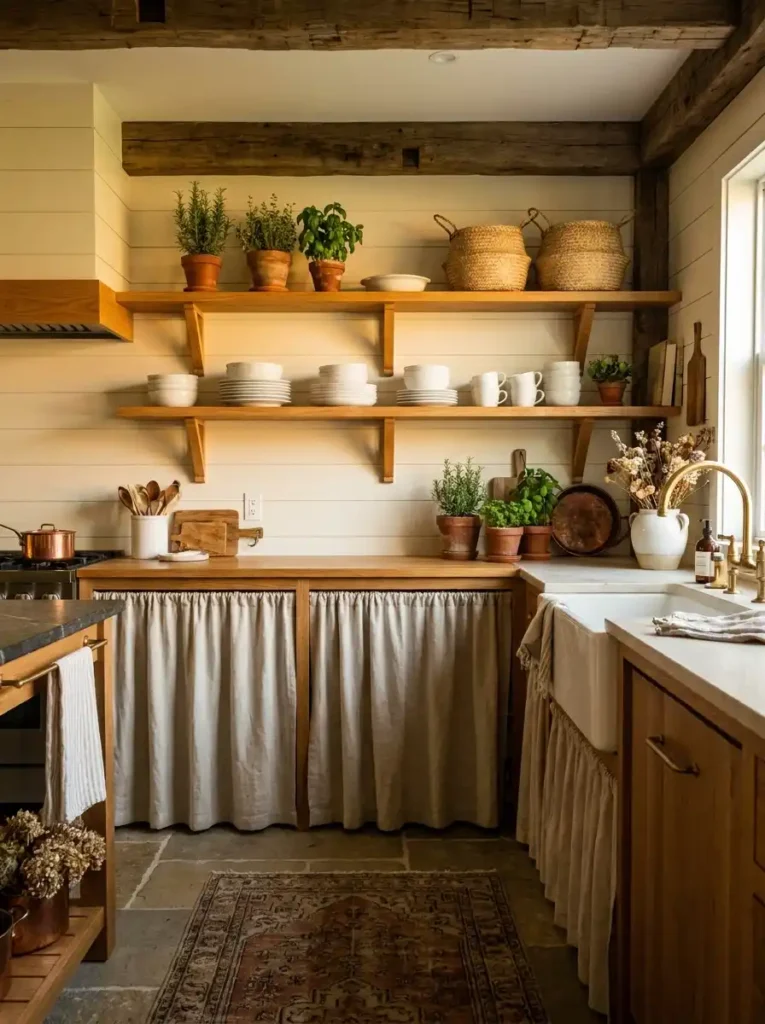
Warm Wood Open Shelving
- Open shelves make a small kitchen feel airy, open, and much larger
- Wood tones instantly add warmth that painted cabinets simply cannot match
- Displaying everyday dishes turns functional storage into beautiful kitchen décor
- Woven baskets tucked on lower shelves keep clutter hidden but still accessible
- This setup works especially well in kitchens with limited natural light
Small kitchens often feel boxed in and heavy. Replacing upper cabinets with open wooden shelves completely changes that feeling. The eye travels freely across the wall and the space suddenly breathes.
Warm toned wood like oak or walnut adds a natural richness that feels inviting rather than designed. In my experience, even one shelf swap can make a kitchen feel like an entirely different room. Layering dishes, herbs, and small baskets creates a lived-in, curated look that Pinterest users genuinely love to save.
The secret to making open shelving work is keeping it intentional. Every item placed on the shelf should be useful, beautiful, or both. That means rotating seasonal décor, keeping colors cohesive, and avoiding overcrowding.
I’ve noticed that homes using two to three neutral tones across their shelf displays always look more pulled together. This idea works in modern farmhouse kitchens as well as older cottage-style homes. It is one of those upgrades that photographs beautifully and feels even better in real life every single morning.
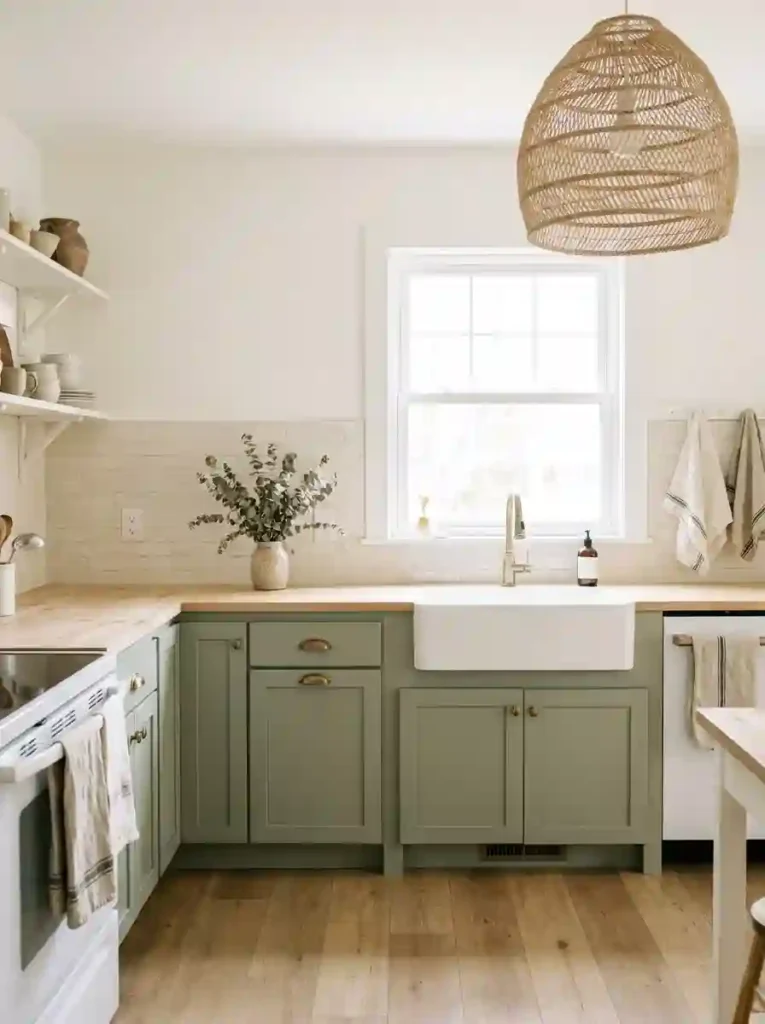
Sage Green Cabinet Refresh
- Sage green is one of the most calming and universally flattering kitchen colors available
- Painting only lower cabinets keeps the refresh budget-friendly and visually balanced
- Brass or matte black hardware adds contrast and personality against green tones
- This color pairs beautifully with white countertops, wood accents, and warm lighting
- It works in both small and large kitchens without feeling overwhelming or overdone
Cabinet color is one of the fastest ways to completely transform a kitchen’s personality. Sage green in particular carries a quiet warmth that feels both fresh and timeless. That’s why many designers recommend it for cottage-style spaces where nature-inspired palettes feel right at home.
The green reads differently throughout the day, cooler in morning light and richer by evening lamp glow. It never feels trendy in a temporary way. Instead it settles into a kitchen and makes the whole room feel considered, calm, and quietly beautiful without demanding too much attention.
Choosing the right shade of sage matters more than most people expect. Some lean gray, others lean olive, and a few tip toward mint. For a cozy kitchen feel, choose a sage with warm undertones rather than cool ones.
Pair it with unlacquered brass handles for an aged, collected aesthetic. I’ve seen this work beautifully even in tiny apartments where the green bounces off white walls and makes the whole space feel like a countryside escape. Adding a small plant or dried herb bundle nearby ties the nature-inspired color story together in the most effortless and satisfying way.
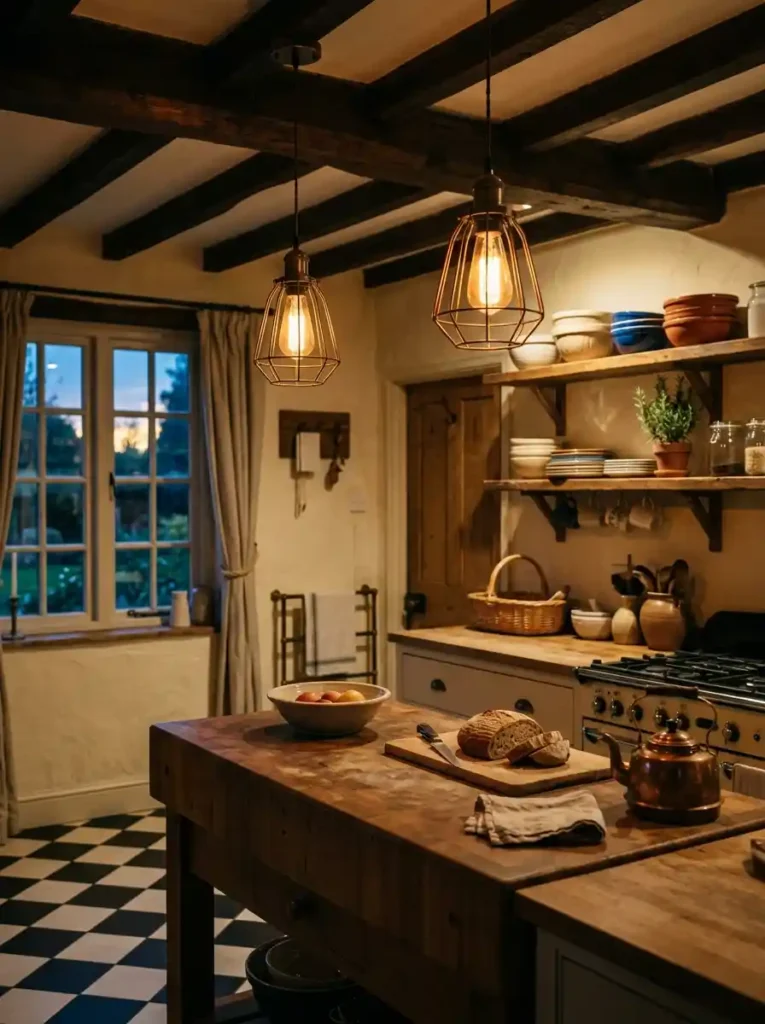
Vintage-Style Pendant Lighting
- Pendant lights above an island or sink instantly define and anchor that area visually
- Edison-style bulbs emit warm amber light that feels soft, relaxed, and welcoming
- The right pendant becomes a focal point that ties the whole kitchen design together
- Aged bronze, matte black, or antique brass finishes all complement cottage-style kitchens
- Lighting height matters because hanging too high loses the warmth and visual impact
Lighting is the single most underestimated design element in any kitchen. Most people upgrade cabinets and countertops but leave the original builder lighting untouched. Swapping one overhead fixture for a pair of vintage-style pendants changes the entire mood of the room.
The warm glow they cast is completely different from harsh overhead lighting. From my perspective, good kitchen lighting should feel like candlelight that also happens to be practical. It should make the food look beautiful, the space feel intimate, and the people in it feel completely at ease.
Vintage pendant lights work because they bring character into a space that often feels purely functional. A kitchen with warm, intentional lighting invites people to linger, cook slowly, and actually enjoy the process.
I’ve tried different bulb temperatures and always return to soft white or warm white for kitchen spaces and never cool or daylight bulbs. The difference is immediately visible and emotionally noticeable.
For a cottage aesthetic specifically, look for pendants with seeded glass, exposed filament bulbs, or hand-blown glass shades. These small details elevate even a builder-grade kitchen into something that feels genuinely special and carefully curated.
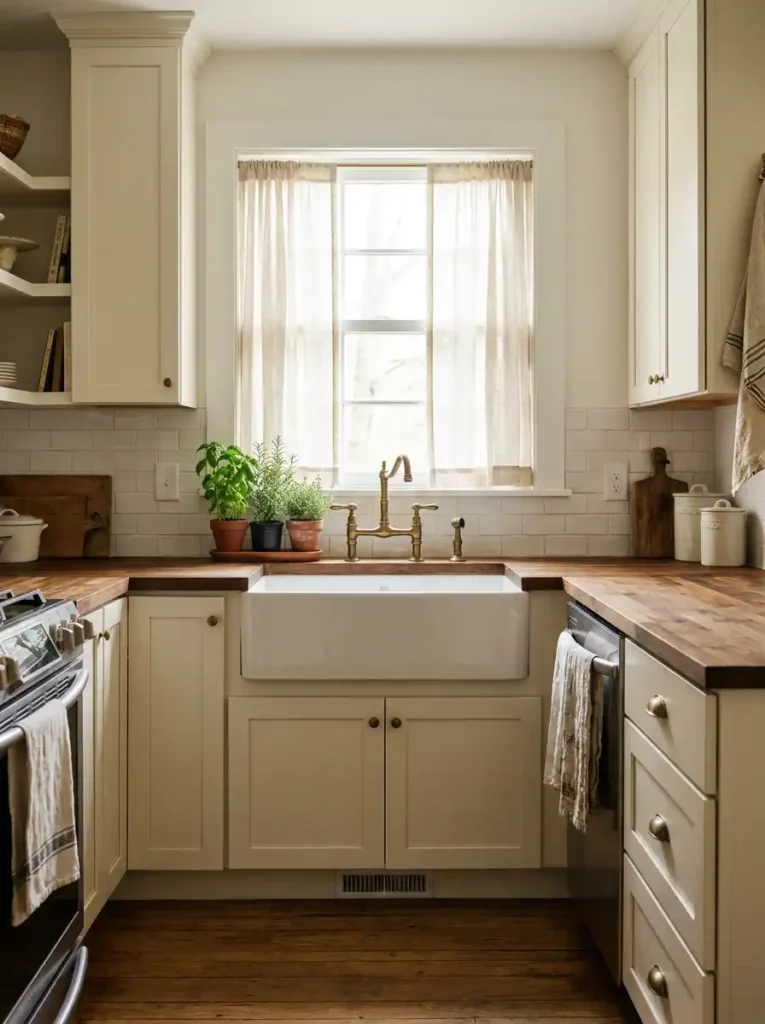
Farmhouse Apron Sink
- An apron sink instantly becomes the visual centerpiece of any cottage-style kitchen
- The deep basin makes washing large pots, pans, and baking trays genuinely easier
- White fireclay or porcelain finishes stay bright and add a clean, classic look
- Pairing it with a bridge faucet in brass or chrome completes the vintage aesthetic perfectly
- A window positioned above the sink makes this spot the most beautiful in the kitchen
Some kitchen upgrades are purely cosmetic. An apron-front sink is both beautiful and deeply functional at the same time. The exposed front panel gives the kitchen an immediate cottage personality that no standard undermount sink can replicate.
I’ve noticed that once homeowners install an apron sink, it becomes the feature they mention first when describing their kitchen to anyone. It anchors the whole room. Combined with natural light from a nearby window, a small herb pot on the sill, and warm cabinet tones on either side, this sink turns an ordinary kitchen wall into something genuinely worth photographing and saving.
The practical benefits match the visual appeal in every way. A deeper basin means fewer splashes on the counter during dishwashing. The wide opening accommodates large sheet pans and stockpots with zero struggle.
That’s why many designers recommend this sink style not just for its looks but for how it improves daily kitchen routines. In a cozy kitchen, every element should earn its place by being both useful and beautiful.
The apron sink does exactly that. It rewards you visually every morning and practically every evening, making it one of the most satisfying investments a kitchen renovation can include.
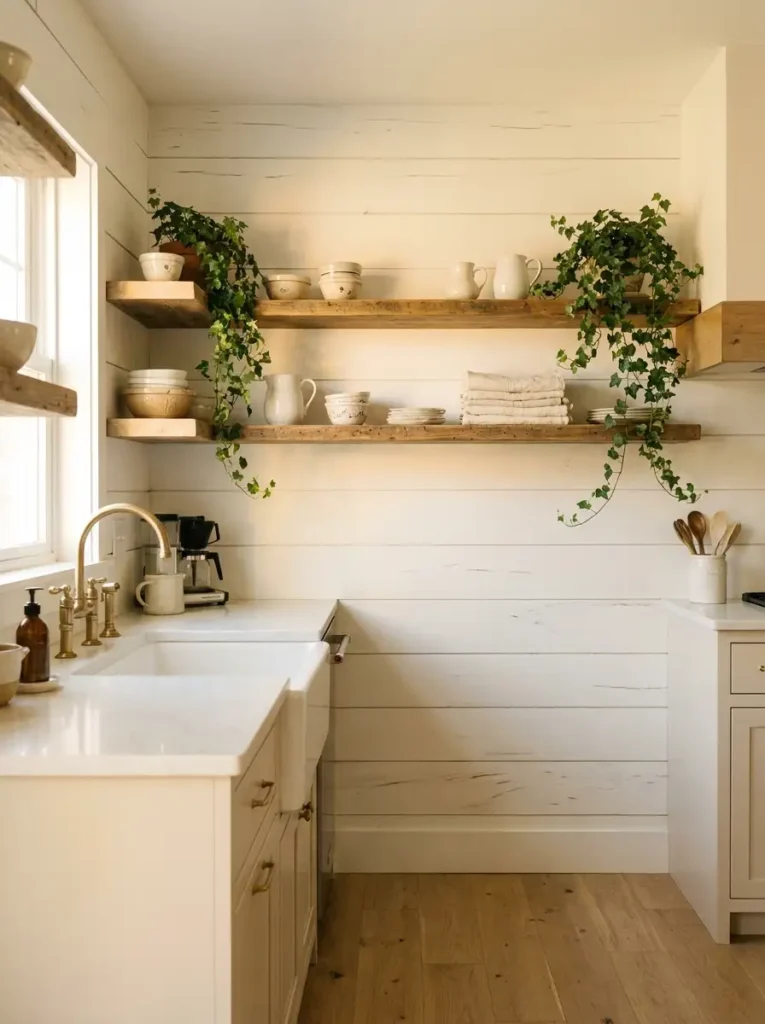
Shiplap Accent Wall
- Shiplap adds texture and architectural character that plain painted walls simply cannot offer
- White or cream shiplap brightens a kitchen while keeping the mood warm and relaxed
- It works beautifully as a full wall or as a partial backsplash behind open shelving
- The horizontal lines visually widen a narrow kitchen and make ceilings feel taller
- Even budget-friendly shiplap boards installed DIY-style create a high-end cottage look
Texture is what separates a designed kitchen from a decorated one. Paint adds color but shiplap adds dimension, depth, and a quiet storytelling quality that makes a wall feel intentional.
In cottage-style and farmhouse kitchens especially, shiplap carries a sense of history and handcraft that modern smooth walls simply lack. Based on what I’ve seen, even a single shiplap accent wall behind a coffee station or open shelving unit completely reframes how the entire kitchen feels.
It gives the eye something interesting to rest on and makes the whole room feel warmer without adding a single piece of furniture.
Installation is more approachable than most homeowners expect. Tongue-and-groove shiplap boards are available at most home improvement stores and can be installed directly over drywall with adhesive and finishing nails.
Painting them in a warm white or soft cream keeps things bright while honoring the cottage aesthetic. I’ve seen this work beautifully in both large open kitchens and compact galley-style spaces.
The key is consistency, keeping the wall color within the same warm tonal family as the cabinetry and countertops. When everything speaks the same visual language, the result feels effortlessly cohesive and genuinely inviting every single day.
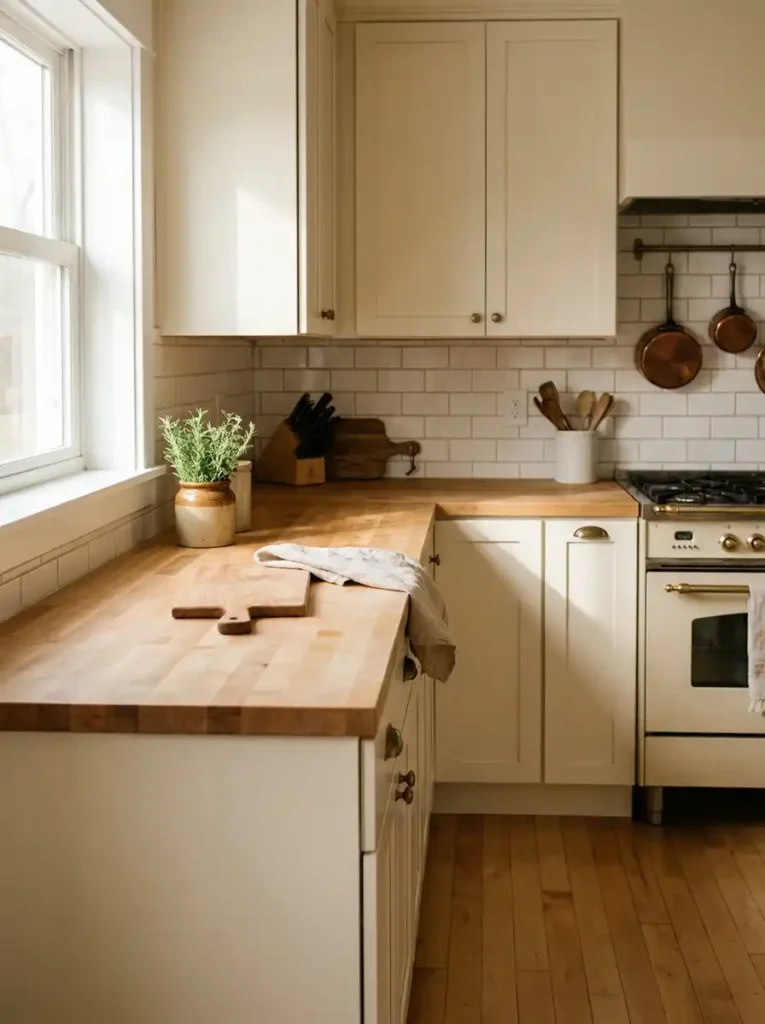
Butcher Block Countertop
- Butcher block instantly adds warmth and natural texture that stone countertops cannot replicate
- It is one of the most budget-friendly countertop upgrades available for a full kitchen refresh
- The surface improves with age, developing a beautiful patina that adds to its charm
- Oiling it regularly takes only minutes and keeps the wood nourished, protected, and rich-looking
- It pairs naturally with nearly every cabinet color from white and sage to navy and charcoal
Few surfaces transform a kitchen as warmly and affordably as a butcher block. Unlike cold stone or manufactured materials, wood feels alive. It carries grain, warmth, and a natural variation that makes every countertop completely unique.
In my experience, kitchens with butcher block countertops consistently feel more inviting than those with polished stone alone. There is something about the organic texture beneath your hands while cooking that makes the entire process feel more connected and enjoyable. For a warm cottage-inspired kitchen, this surface is not just a design choice. It is a mood-setting decision that shapes how the space feels daily.
Maintenance concerns often make people hesitate before choosing wood countertops. The reality is far simpler than most expect. Food-grade mineral oil applied once a month keeps the surface protected and beautiful.
Cutting directly on it is perfectly fine and actually part of its appeal. That’s why many designers and home cooks choose a butcher block specifically for the section near the stove or prep area.
Water damage is the only real risk, so keeping the sink area sealed or using a different material there is a smart approach. Combine butcher block with painted cabinets and open shelving and the result is a kitchen that feels warm, practical, and completely at home with itself.
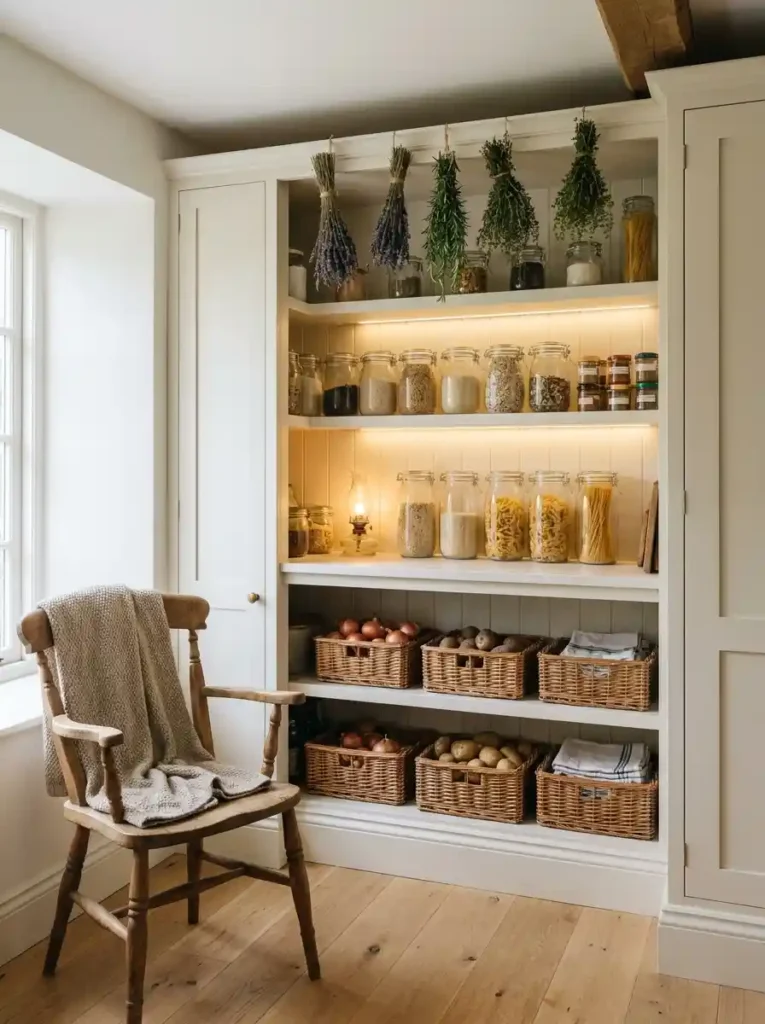
Cottage-Style Open Pantry
- Glass jars for dry goods turn everyday pantry storage into a genuinely beautiful display
- Labeling jars with simple tags adds a personal, handcrafted touch that feels intentional
- Wicker or rattan baskets on lower shelves keep bulkier items hidden but still accessible
- Dried herb bundles or small botanical prints add natural charm to the pantry styling
- An open pantry works in any kitchen size when shelves are kept organized and cohesive
A well-styled open pantry does two things at once. It solves a storage problem and creates a beautiful moment in the kitchen. When everything is visible, organization becomes a daily habit rather than an occasional project.
Glass jars lined up in rows, baskets tucked neatly below, and a bundle of dried lavender hanging from the top shelf feel quietly satisfying every single time you walk past. I’ve noticed that kitchens with open pantry styling consistently feel more lived-in and personal than those with everything hidden behind closed cabinet doors. It reflects a lifestyle, not just a storage solution.
The key to making an open pantry work long-term is choosing a consistent container style and sticking to it. Mixing too many jar shapes, basket textures, or label fonts creates visual noise instead of calm.
Choose one jar style, whether that’s wide-mouth mason jars, swing-top glass containers, or simple square canisters, and use it throughout. That’s why many designers recommend establishing a pantry system before purchasing containers.
Once the system is in place, restocking and tidying takes almost no effort. In a cozy kitchen setting, an organized open pantry becomes one of the most photographed and admired corners of the entire home.
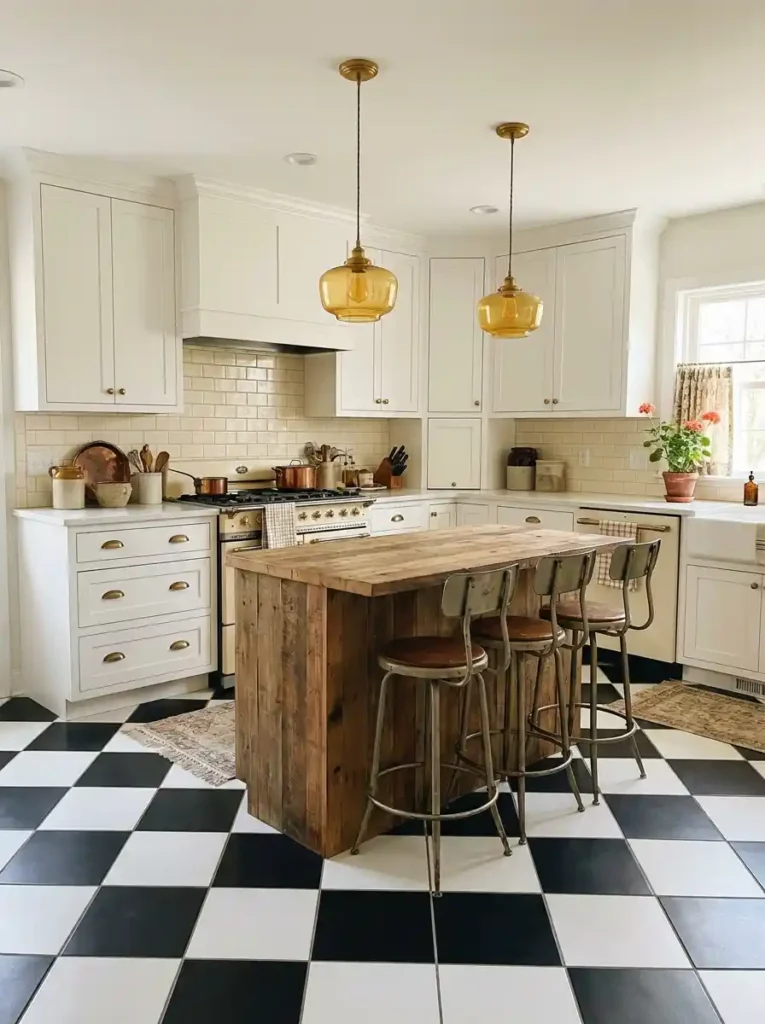
Checkered Floor Tile
- Black and white checkered tile is one of the most timeless and recognizable kitchen floor patterns
- It adds visual energy and personality to kitchens that feel plain or lacking in character
- The pattern works equally well in small kitchens and large open-plan cooking spaces
- Pairing it with white or cream cabinetry keeps the overall look balanced and bright
- Porcelain versions are highly durable, easy to clean, and resistant to heavy kitchen traffic
Few design choices carry the same instant personality as a checkered kitchen floor. The moment it is installed, the entire kitchen gains a nostalgic, cheerful energy that feels both retro and completely current at the same time.
I’ve seen this pattern work beautifully in everything from tiny apartment kitchens to large farmhouse-style cooking spaces. The scale of the tile matters. Smaller squares feel more traditional and intricate while larger ones read as more modern and bold.
Either way the pattern creates a strong visual foundation that makes every other design element in the kitchen feel more intentional and carefully chosen.
Choosing the right finish is just as important as choosing the pattern. Matte tiles reduce glare and hide everyday smudges far better than glossy versions, making them more practical for a busy kitchen floor. Grout color also plays a significant role.
White grout keeps things bright and airy while dark grout adds contrast and hides staining over time. From my perspective, checkered floors are one of those design decisions that feels slightly bold in the planning stage but immediately right the moment it is complete.
Combined with warm wood accents and cottage-style cabinetry, this floor transforms an ordinary kitchen into a space with genuine charm and lasting visual appeal.
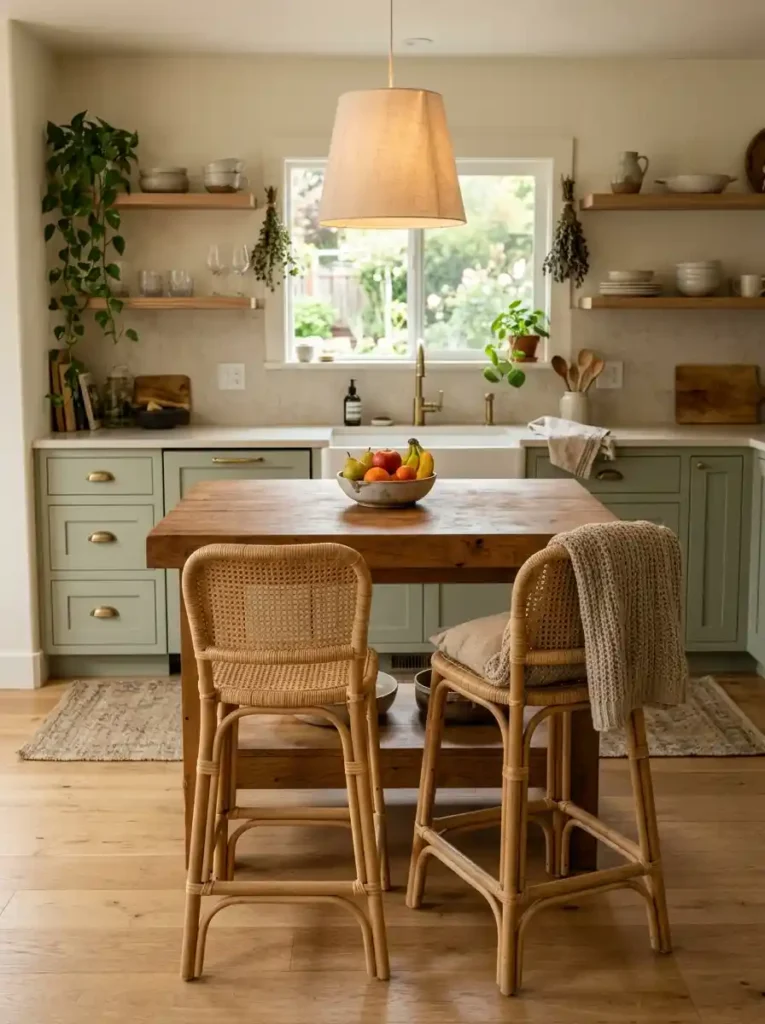
Woven Rattan Barstools
- Rattan barstools add natural texture and warmth that metal or plastic seating simply cannot match
- They are lightweight, easy to move, and work beautifully around both wood and stone island surfaces
- Woven cane seating adds a handcrafted quality that immediately elevates a kitchen’s visual character
- They pair effortlessly with sage green, cream, white, and warm wood kitchen color palettes
- Cushion covers in linen or cotton can be added for extra comfort during longer mealtimes
Seating is often the last thing people think about when designing a kitchen but it is one of the first things visitors notice. The right barstool can tie an entire design together while also making the island feel like a place people genuinely want to gather.
Woven rattan barstools do exactly that. They bring softness into a space filled with hard surfaces like tile, stone, and wood. In my own experience, swapping out basic metal stools for rattan ones is one of those small changes that makes a disproportionately large visual difference. The kitchen immediately feels warmer, more layered, and more intentionally designed.
Natural materials like rattan and cane also photograph beautifully, which makes them especially popular in Pinterest-worthy kitchen designs. The woven texture catches light in a way that solid materials simply cannot, adding depth and visual interest to any corner they occupy. Rattan holds up well in kitchen environments when kept away from prolonged moisture exposure.
Wiping them down with a lightly damp cloth is all the maintenance they typically need. That’s why many interior designers consistently recommend rattan seating as a high-impact, low-effort upgrade for anyone wanting to add cottage warmth and natural character to their kitchen island area without a major renovation or large budget commitment.
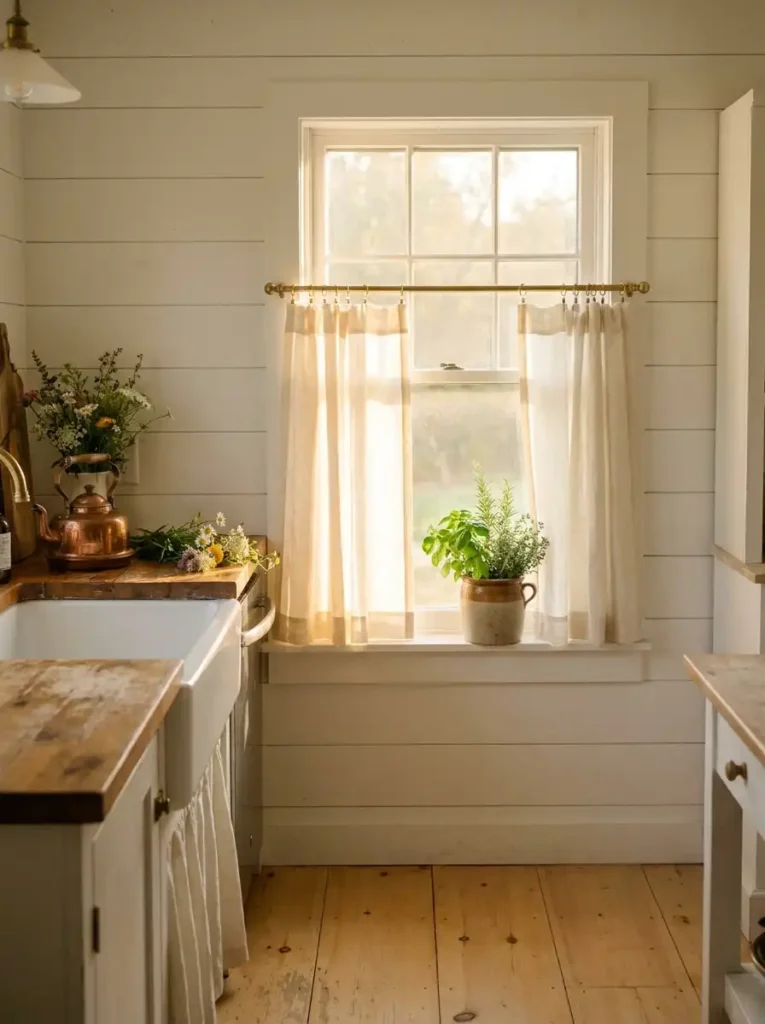
Linen Cafe Curtains
- Cafe curtains cover only the lower half of the window, keeping privacy while letting light in freely
- Natural linen fabric softens the hard lines of a kitchen window without blocking the view
- Ivory, cream, or soft white tones keep the look bright, airy, and seasonally appropriate
- A simple brass or iron rod adds a finishing detail that elevates the entire window treatment
- This window style works especially well above a farmhouse sink or breakfast nook area
Window treatments are one of the most overlooked opportunities in kitchen design. Most kitchens leave windows completely bare or cover them entirely with heavy blinds that block natural light. Cafe curtains solve both problems at once.
They bring softness and personality to the window while keeping the upper glass fully open to natural light. I’ve noticed that kitchens with linen cafe curtains instantly feel more romantic and cottage-like than those without any window dressing at all.
The fabric moves gently with air from an open window, adding a living quality to the space that no other kitchen element can replicate quite as simply.
Choosing the right fabric weight matters more than most people anticipate. Lightweight linen or cotton voile allows light to pass through beautifully while still providing a soft visual layer at the window. Heavier linen works better for privacy but can make smaller kitchens feel slightly darker during overcast days.
For a cozy kitchen aesthetic, always lean toward lighter, more breathable fabrics in neutral or warm tones. Washing them regularly keeps them looking fresh and prevents kitchen grease from dulling the fabric over time.
Hung simply on a slim rod with clip rings, cafe curtains require almost no effort to install and deliver an immediate, noticeable transformation to any kitchen window.
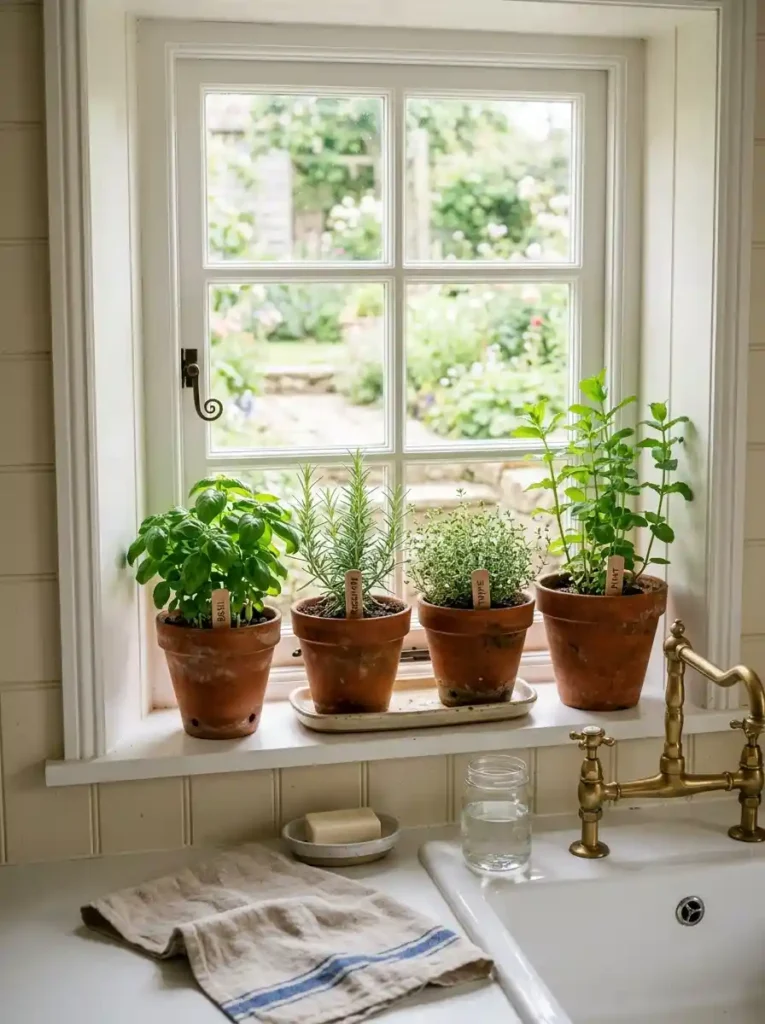
Herb Garden Windowsill
- A windowsill herb garden brings living greenery into the kitchen without taking up counter space
- Terracotta pots in varying sizes create a naturally charming and visually layered display
- Fresh herbs used daily in cooking make this one of the most functional kitchen décor ideas
- The green of living plants against white walls adds color and life to any neutral kitchen palette
- Even one or two small herb pots are enough to completely change the feel of a kitchen window
Nothing makes a kitchen feel more alive than actual living plants. A small herb garden on the windowsill is the simplest, most affordable way to bring nature directly into the cooking space. It also happens to be genuinely useful.
Reaching for fresh basil while cooking pasta or snipping rosemary for roasted potatoes creates a sensory experience that dried herbs from a jar simply cannot match. In my experience, even people who claim they cannot keep plants alive tend to succeed with kitchen herbs because they water them naturally as part of their daily cooking routine.
The regular attention keeps the plants thriving without requiring any dedicated gardening effort or special knowledge.
Placement is everything with a kitchen herb garden. South or east-facing windows provide the strongest light for most common cooking herbs. Basil loves full sun while mint and parsley tolerate slightly lower light conditions.
Grouping pots together on a small tray protects the windowsill from water damage and creates a tidier, more intentional display. I’ve tried both wall-mounted herb planters and simple windowsill arrangements and consistently prefer the windowsill version for its warmth and accessibility.
The terracotta pot color against white walls and natural light is one of those combinations that photographs beautifully every single time and never loses its charm regardless of the season or kitchen style surrounding it.
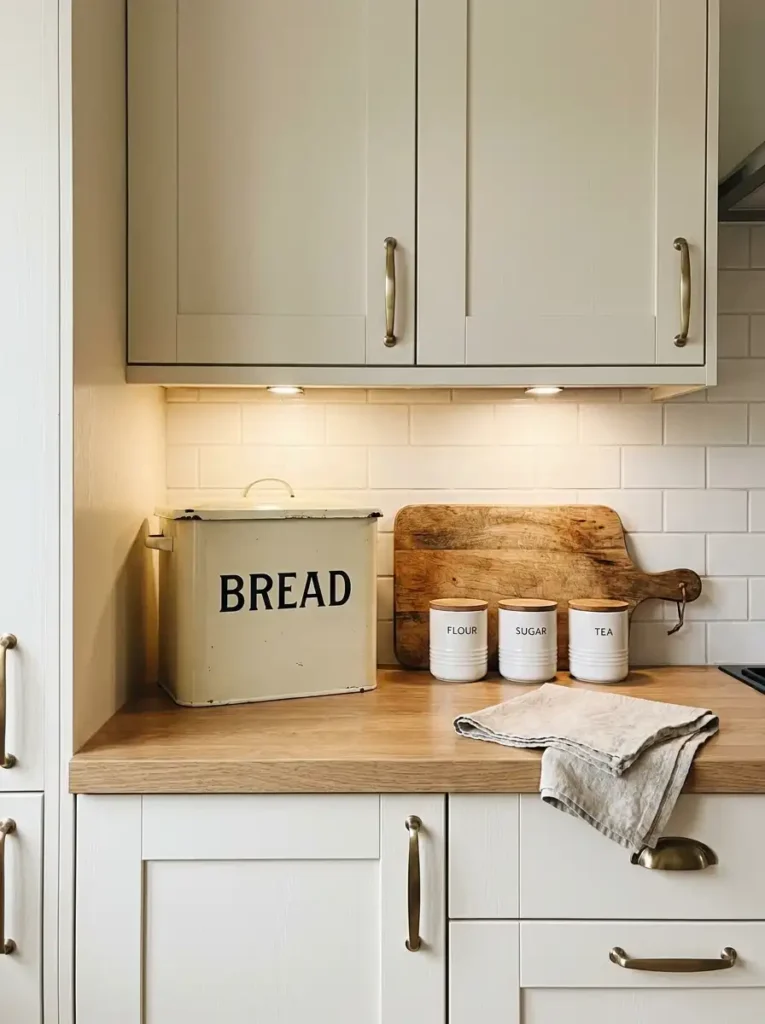
Vintage Bread Box Display
- A vintage bread box keeps bread fresh longer while adding classic cottage charm to the counter
- Cream, white, or sage painted finishes complement nearly every cottage kitchen color palette
- Styling items beside the bread box like a cutting board or small canister creates a curated vignette
- Enamel, wood, or painted metal versions each carry a different but equally charming vintage personality
- This is one of the easiest countertop additions that instantly improves both function and visual appeal
Countertop styling is a skill that takes time to develop but a vintage bread box gives you an immediate head start. It is one of those objects that is inherently charming simply by existing on the counter. Unlike most kitchen appliances that feel cold and utilitarian, a well-chosen bread box carries personality and warmth.
I’ve noticed that kitchens with thoughtfully styled countertops always photograph better and feel more welcoming to guests. The bread box acts as an anchor for a small countertop vignette. Group a wooden cutting board, a small plant, and a folded linen towel beside it and the result feels curated without looking overdone or overly staged.
Beyond its visual appeal, a bread box genuinely improves daily kitchen life. Bread stored inside stays fresh two to three days longer than bread left in open air or sealed plastic bags. The controlled airflow inside prevents both the sogginess of plastic and the rapid drying of open-air storage.
That’s why many home bakers and cottage kitchen enthusiasts consider it a non-negotiable countertop item rather than just a decorative one. Choosing a size that fits your counter without overwhelming it is important, so measure the space before purchasing. A well-proportioned bread box in the right finish becomes one of those quiet kitchen details that people always notice and always admire.
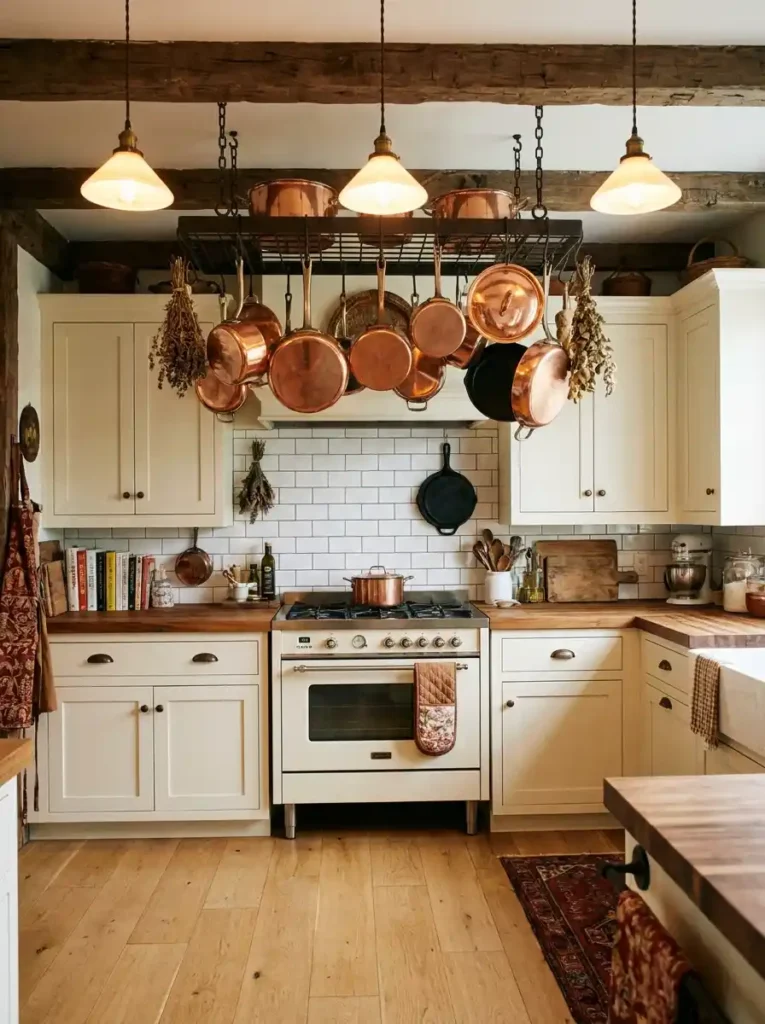
Copper Pot Display
- Hanging copper pots frees up valuable cabinet space while turning cookware into stunning wall décor
- The warm reddish-gold tone of copper adds richness and depth that no paint color can replicate
- A ceiling-mounted rack works beautifully in kitchens with higher ceilings and central islands below
- Copper develops a natural patina over time that adds character and an authentically aged appearance
- Mixing copper with cast iron and wooden utensils creates a layered, collected, and deeply personal display
There is something undeniably romantic about a kitchen with copper pots hanging overhead. It speaks to a love of cooking, a respect for quality tools, and an appreciation for objects that age beautifully over time. Unlike kitchen décor that is purely ornamental, a copper pot display is fully functional.
Every piece hanging there is used, washed, and rehung as part of a real cooking routine. In my experience, this is one of those design decisions that transforms a kitchen from a room where meals are prepared into a space that genuinely reflects the personality and passions of the person who cooks there every day.
Copper cookware requires slightly more care than stainless steel but rewards that effort generously. Hand washing and occasional polishing keep the surface bright and gleaming. Leaving them unpolished allows a darker, richer patina to develop naturally, which many cottage kitchen lovers actually prefer.
That’s why many professional cooks and home chefs alike consider copper an investment rather than an expense. The weight of real copper cookware feels satisfying and serious in the hand. Displayed overhead in a warm kitchen, it catches light in a way that makes the entire space glow with a golden warmth that feels both professional and deeply, comfortably homey at the same time.
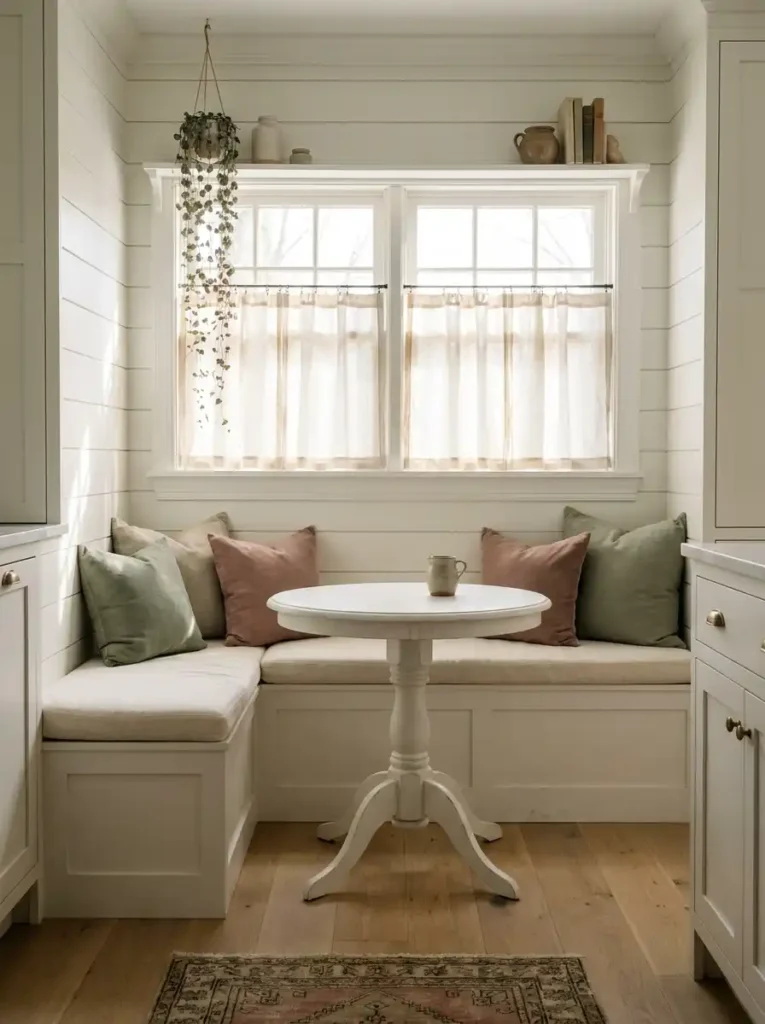
Cozy Breakfast Nook Corner
- A built-in corner bench maximizes seating in a small kitchen without requiring extra floor space
- Cushioned bench seating with scatter cushions makes the nook feel soft, personal, and genuinely cozy
- A round pedestal table fits more people comfortably than a square table in a corner space
- Adding a trailing plant or small shelf above the window gives the nook a layered, intimate character
- This spot naturally becomes the most loved and used corner of the entire home over time
A breakfast nook does something that no kitchen island or dining table can fully replicate. It creates a sense of belonging. Tucked into a corner with soft cushions, warm morning light, and a small table just the right size for two, it becomes the place where coffee is sipped slowly, where children do homework, and where the best conversations happen.
I’ve seen this work beautifully in kitchens of all sizes, from compact apartments where the nook replaces a separate dining room entirely to larger homes where it becomes a cherished secondary gathering spot separate from the main dining table.
The design details inside a breakfast nook matter enormously because the space is intimate and every element is noticed up close. Cushion fabric should be durable and washable. Linen blends or indoor-outdoor fabrics in soft neutrals work best for long-term use.
The table height should allow comfortable seating without feeling cramped beneath. Adding a small wall-mounted shelf or hook above the bench for mugs, a book, or a small plant personalizes the nook beautifully.
From my perspective, a well-designed breakfast nook is one of those kitchen additions that immediately becomes irreplaceable. Once you have one, it is genuinely difficult to imagine the kitchen feeling complete without it.
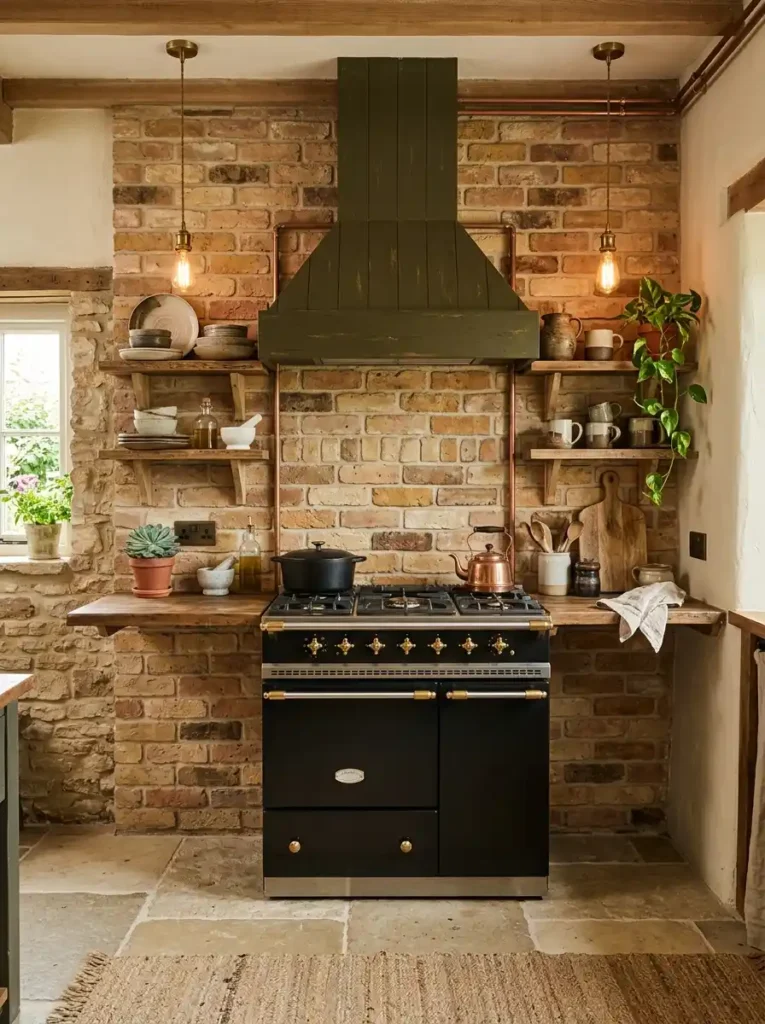
Stone or Brick Backsplash
- A brick or stone backsplash adds raw, natural texture that makes a kitchen feel genuinely historic and warm
- Terracotta, cream, and sandy tones in the brick complement nearly every cottage cabinet color beautifully
- The irregular surface of real or faux brick catches light differently throughout the day, adding visual depth
- This backsplash style pairs especially well with dark range hoods, wooden shelves, and matte black fixtures
- Even thin brick veneer panels applied over existing tile create a fully convincing and cost-effective result
Most kitchen backsplashes lie flat against the wall and blend quietly into the background. A brick or stone backsplash refuses to do that. It demands gentle attention in the best possible way, drawing the eye toward the stove area and giving the kitchen an anchor point that feels ancient, solid, and deeply characterful.
Based on what I’ve seen, this backsplash choice works particularly well in kitchens that are trying to move away from a generic or builder-grade appearance. The texture alone communicates that the kitchen was designed with genuine intention rather than simply assembled from a standard showroom selection of matching finishes.
Installing real brick in a kitchen requires professional help and proper waterproofing behind the stove area. However, thin brick veneer panels are a highly convincing and far more accessible alternative that even confident DIY homeowners can install successfully over a weekend.
Sealing the surface properly afterward protects against cooking grease and moisture while preserving the natural texture and color variation that makes brick so appealing. That’s why many kitchen renovation experts recommend the veneer option for renters and budget-conscious homeowners alike.
Paired with a wooden range hood, open shelving, and warm pendant lighting, a brick backsplash completes a cozy kitchen aesthetic in the most dramatic and satisfying way imaginable.
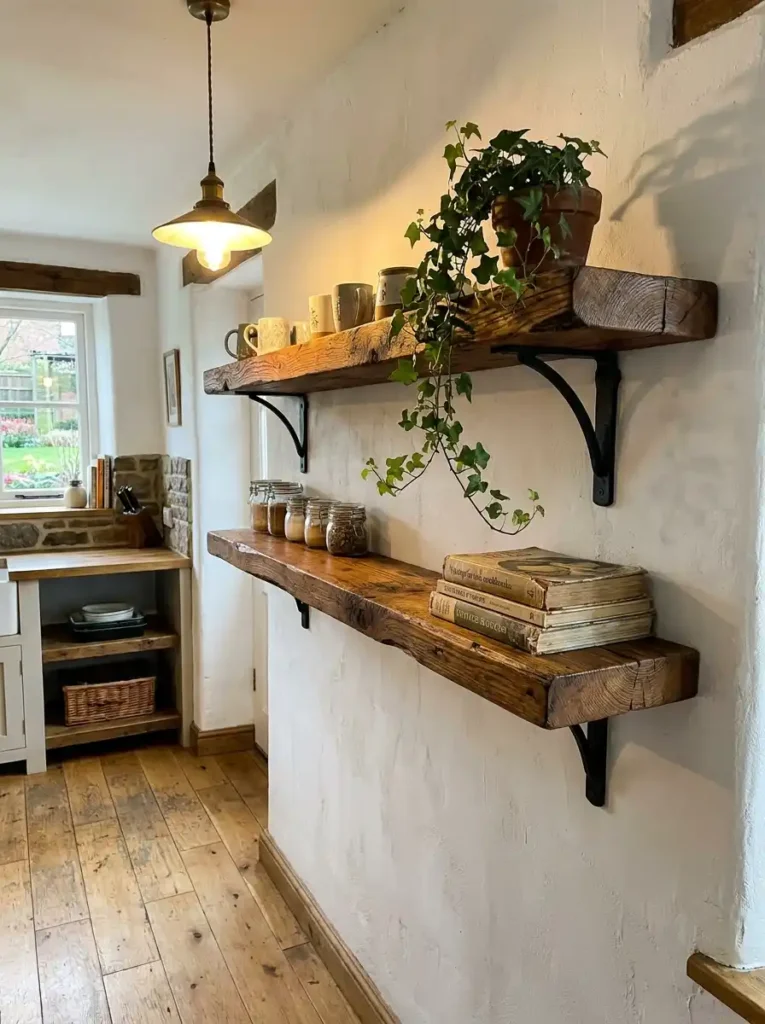
Reclaimed Wood Floating Shelves
- Reclaimed wood carries natural imperfections like knots and grain variations that make each shelf completely unique
- The aged texture adds instant history and depth to walls that would otherwise feel flat and plain
- Black iron brackets create a strong visual contrast against pale walls and warm wood tones beautifully
- These shelves work perfectly for displaying a curated mix of functional and decorative kitchen items
- The weathered character of reclaimed wood only deepens and improves with age over time
Reclaimed wood shelves bring something into a kitchen that brand new materials simply cannot manufacture. A genuine sense of history. Every grain line, knot, and weathered mark tells a quiet story that makes the shelf feel like it belongs in space rather than having just arrived from a store.
I’ve noticed that kitchens featuring reclaimed wood elements consistently photograph with a warmth and depth that polished, uniform materials rarely achieve. The imperfection is precisely the point. It signals that the kitchen was built thoughtfully over time rather than assembled quickly from a single matching collection of brand new finishes and fixtures.
Sourcing reclaimed wood has become easier than ever through salvage yards, online marketplaces, and specialty lumber suppliers. Pieces from old barns, factories, and demolished buildings carry the richest character and the most interesting grain patterns.
Sealing reclaimed wood properly before installing it in a kitchen is essential. Food-safe sealant protects against moisture and grease while preserving the natural texture and color. That’s why many renovation experts recommend at least two coats of clear matte sealant for kitchen shelf applications specifically.
Mounted with sturdy iron brackets and styled with a thoughtful mix of ceramics, plants, and everyday items, reclaimed wood shelves become the most admired feature in the entire kitchen.
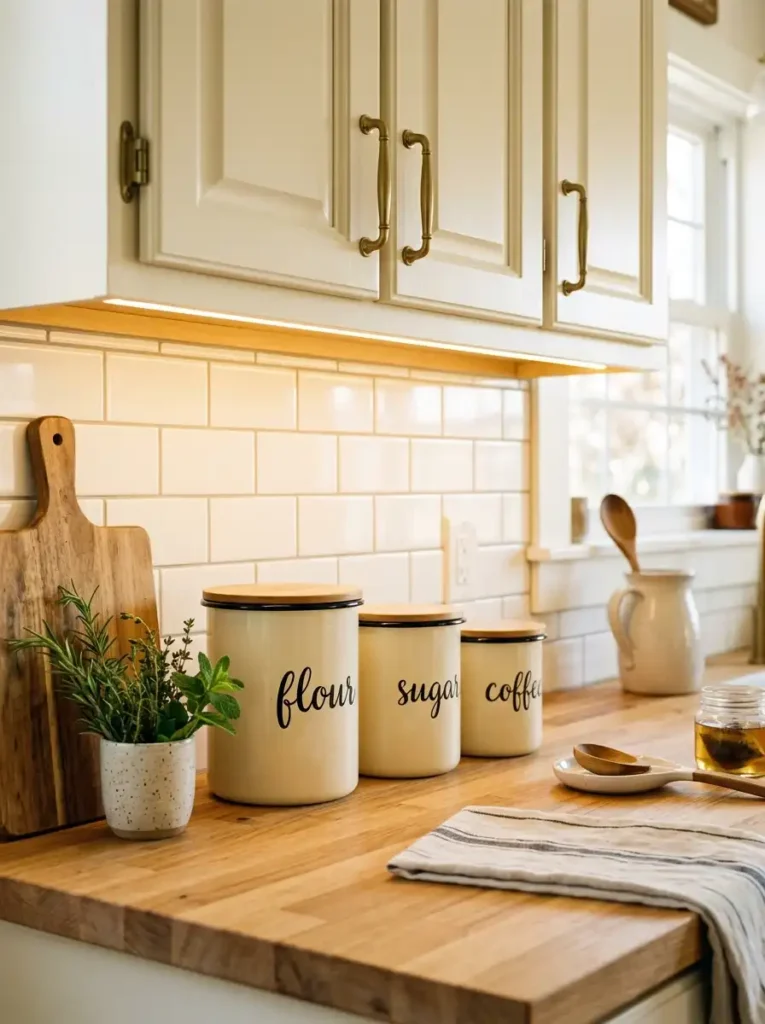
Enamel Canister Set Display
- A matching enamel canister set instantly creates a cohesive and charming countertop display
- Hand-lettered or stamped labels add a handcrafted, personal quality that printed labels cannot replicate
- Enamel finishes are durable, easy to clean, and resistant to everyday kitchen humidity and heat
- Cream, sage green, or soft white canisters complement virtually every cottage kitchen color scheme
- Grouping three canisters together in graduating sizes creates natural visual balance on the counter
Countertop organisation rarely looks this beautiful in most kitchens. A well-chosen enamel canister set changes that entirely by turning everyday storage into a styled display that feels both intentional and nostalgic.
The weight and solidity of enamel communicates quality in a way that plastic containers simply never will. I’ve tried various countertop storage solutions over time and always return to enamel canisters for their combination of durability, charm, and visual warmth.
They sit on the counter looking like they have always belonged there, like inherited pieces passed down through generations rather than recently purchased kitchen accessories from a home goods store.
The beauty of an enamel canister set lies in its quiet consistency. When three matching pieces sit together in a row, they create instant order on a countertop that might otherwise feel cluttered and random.
Choosing a finish that coordinates with existing hardware or cabinet colors pulls the whole kitchen palette together without requiring any additional investment. Sage green canisters beside sage green cabinets, cream canisters beside white shaker doors. The repetition of color creates visual harmony that feels professionally designed.
That’s why many interior stylists use canister sets as a quick styling tool when photographing kitchens. They are small, affordable, and deliver a disproportionately large impact on how organized and considered the entire space appears.
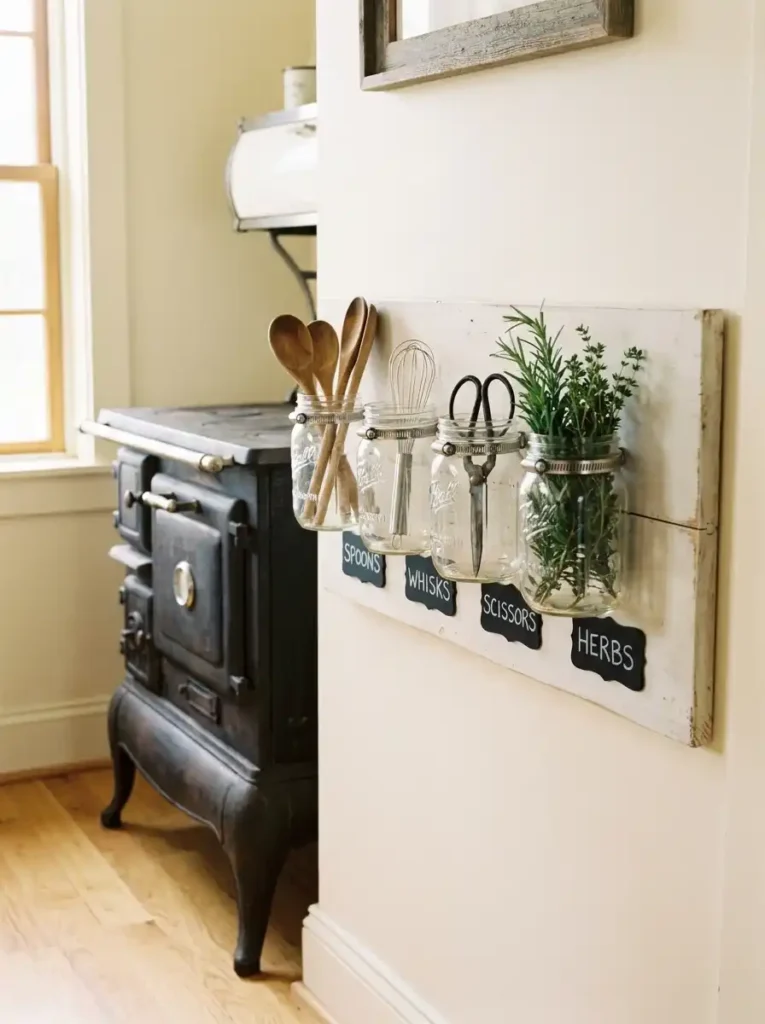
Gathered Mason Jar Storage
- Wall-mounted mason jars free up valuable drawer and counter space in a practical and beautiful way
- Glass jars keep kitchen tools visible and instantly accessible during active cooking sessions
- A rustic wooden mounting board adds texture and warmth that makes the display feel intentional
- Chalkboard labels beneath each jar add a handcrafted, personalised touch to the functional display
- This idea works especially well beside the stove where frequently used tools need to be within easy reach
Mason jars have earned their place as one of the most beloved and versatile objects in cottage kitchen design. Their simple glass form works with almost every aesthetic, from rustic farmhouse to modern cottage, and their transparency makes finding what you need completely effortless.
Mounting them on a wall beside the stove turns a purely functional storage need into a genuinely attractive kitchen feature. In my own experience, wall-mounted jar storage is one of those ideas that sounds almost too simple to make a real difference but consistently delivers a surprisingly strong visual and practical impact the moment it is installed and styled.
The mounting process is straightforward and highly DIY-friendly. A wooden board cut to the desired length, painted or stained to match existing kitchen tones, and fitted with metal hose clamps provides a secure and attractive base for each jar.
The clamps grip the jar necks firmly without cracking the glass. Spacing the jars evenly creates a clean, organized appearance while leaving room to remove and replace each one during use.
Based on what I’ve seen, this works best when the jars are grouped by category, cooking tools in one cluster, herb sprigs in another, and small utensils in a third. The result is a kitchen wall feature that is functional every single day and visually charming every time someone walks into the room.
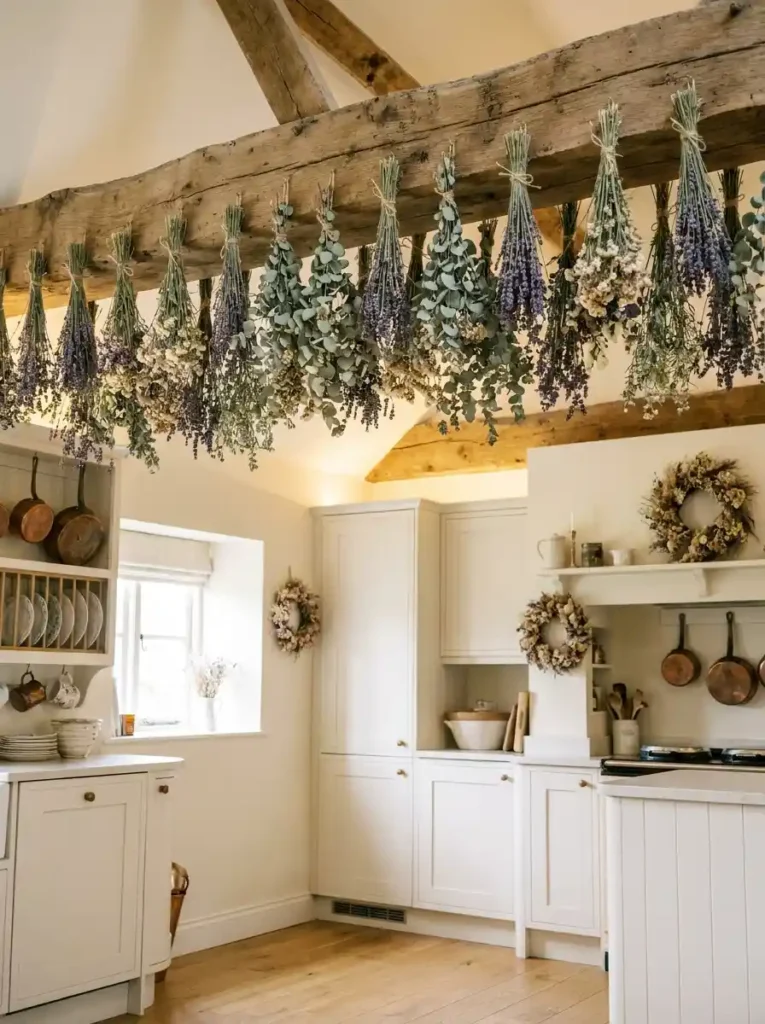
Dried Flower Ceiling Bundles
- Dried flower bundles add natural fragrance, color, and texture to an often-overlooked ceiling space
- Lavender, eucalyptus, and chamomile are especially popular choices for kitchen ceiling displays
- Tying bundles with simple natural twine keeps the look handcrafted, rustic, and authentically cottage-like
- The soft muted tones of dried botanicals complement cream, sage, and white kitchen color palettes beautifully
- This idea works particularly well in kitchens with exposed wooden beams or higher ceilings overhead
Looking up in most kitchens reveals nothing interesting, a plain white ceiling and a standard light fixture. Dried flower bundles change that completely. Hung from a beam or a simple hook, they bring the ceiling into the design conversation for the first time.
The soft muted tones of dried lavender and eucalyptus add color without competing with anything below. I’ve noticed that kitchens featuring ceiling botanicals always generate the most comments and the most saved pins when photographed.
There is something deeply romantic and intentional about a kitchen where even the ceiling has been considered and styled with the same care as every other surface in the room.
Drying your own flowers makes this idea even more personal and satisfying. Harvest lavender or wildflowers at peak bloom, tie them loosely with twine, and hang them upside down in a dry, airy spot for two to three weeks before moving them to the kitchen.
Purchased dried bundles from florists or farmers markets work equally well and are available year-round. That’s why many cottage kitchen enthusiasts keep a rotating selection of seasonal botanicals, lavender in summer, dried orange slices and cinnamon bundles in autumn, and eucalyptus throughout winter.
Each seasonal swap costs very little but refreshes the entire kitchen atmosphere in a way that feels genuinely new and carefully considered every single time.
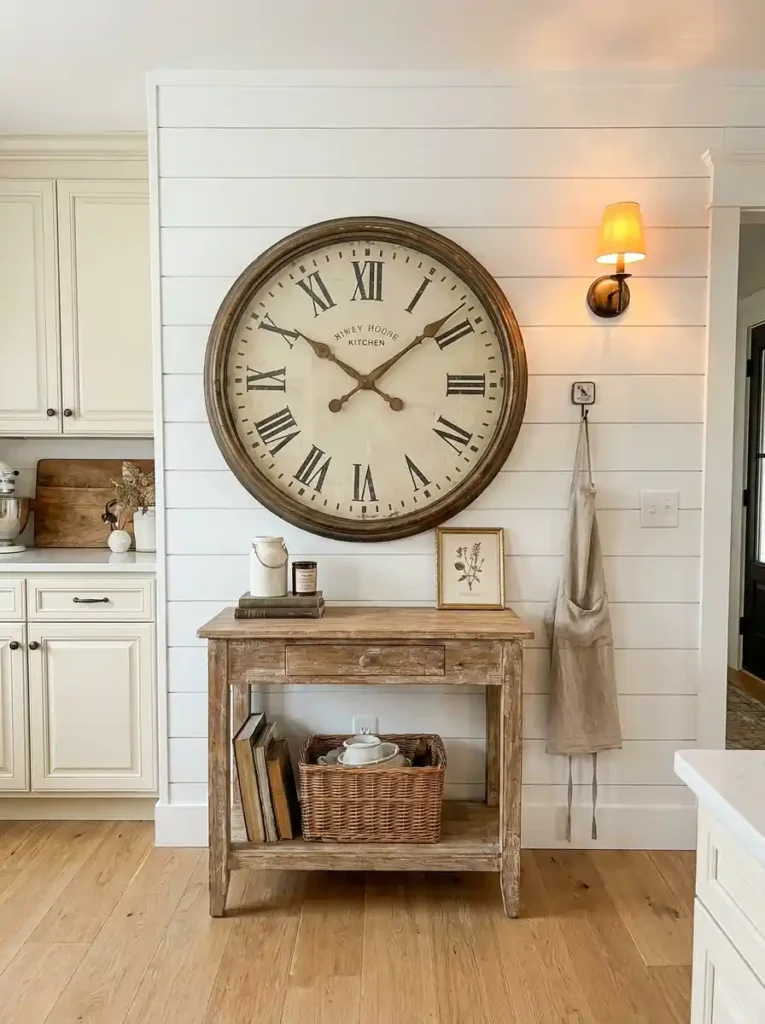
Antique Clock Wall Feature
- A large antique-style clock becomes an instant focal point on any plain kitchen wall
- Cream or white clock faces with Roman numerals carry a timeless, classical cottage personality
- Positioning the clock above a console table or beside open shelving creates a natural wall vignette
- Pairing the clock with a small botanical print and a linen apron hook adds layered, personal character
- Aged bronze, matte black, or antique gold clock frames all complement cottage kitchen aesthetics beautifully
Wall décor in kitchens is often limited to a single framed print or left entirely bare. A large antique clock solves both the decorative and functional needs of a kitchen wall simultaneously.
It tells the time while also anchoring the wall with a strong, characterful focal point that smaller décor pieces simply cannot achieve. From my perspective, a clock is one of the most underused decorating tools in kitchen design.
When chosen thoughtfully with the right size, finish, and face style, it elevates the entire wall and gives the kitchen a sense of warmth, history, and gentle personality that feels completely natural in a cottage-inspired space.
Scale matters enormously when selecting a kitchen wall clock. A clock that is too small disappears against a wall and fails to make any meaningful visual impact. For most kitchen walls, a diameter of at least 40 to 50 centimeters reads clearly and commands the attention the space deserves.
Antique and vintage-style clocks are widely available at flea markets, antique shops, and online retailers at very accessible price points. I’ve seen beautifully characterful pieces found for very little cost that look extraordinary once hung in the right space. The key is choosing a face color and frame finish that harmonizes with existing kitchen tones rather than competing against them in any way.
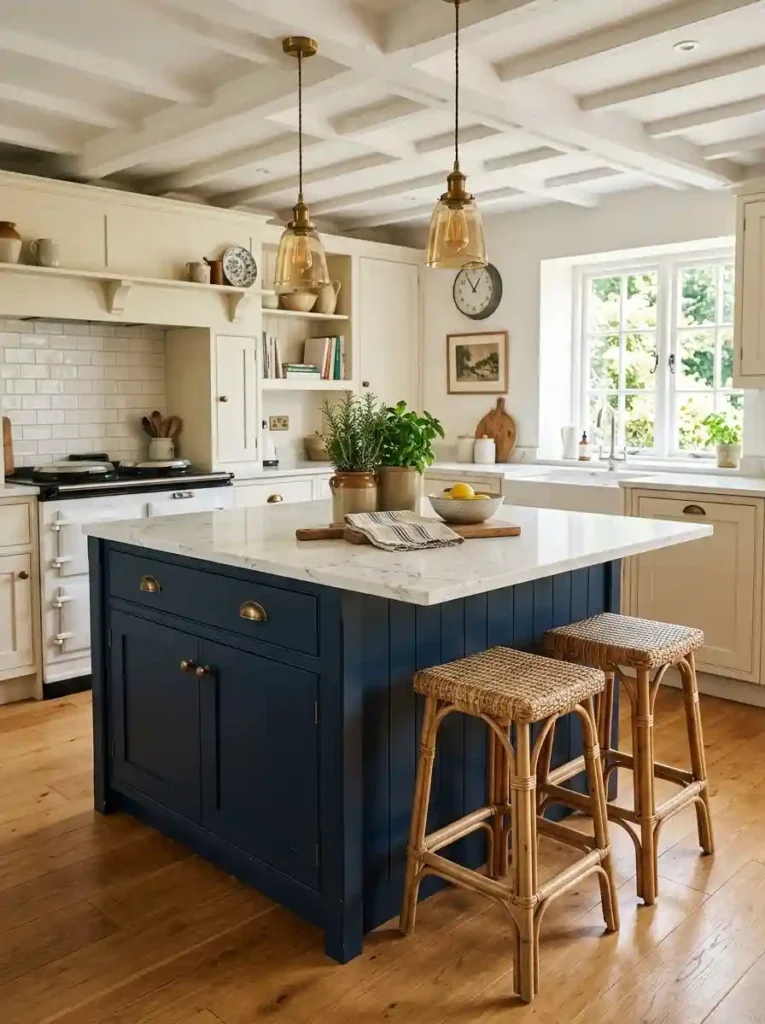
Painted Kitchen Island Accent
- Painting the island a contrasting color creates an immediate focal point in an otherwise neutral kitchen
- Deep navy, forest green, charcoal, and dusty rose are all excellent cottage-friendly island accent colors
- Swapping existing hardware for aged brass or matte black cup handles transforms the island dramatically
- A lighter countertop on a dark island creates strong visual contrast that feels deliberate and designed
- This approach allows a bold color commitment without painting the entire kitchen a darker shade
A painted kitchen island is one of the smartest design moves available to anyone wanting to add personality without committing to a full kitchen renovation.
The island becomes a color statement while the surrounding cabinetry stays neutral, creating a balanced contrast that feels intentional and sophisticated. I’ve seen this approach work beautifully in rental kitchens where only the freestanding island can be painted, as well as in fully owned homes where the island becomes the deliberate design centerpiece.
The result in both cases is a kitchen that immediately feels more layered, considered, and visually exciting than a single-color scheme ever could.
Choosing the right accent color for an island requires looking carefully at the existing kitchen palette. Navy works beautifully against cream and white. Forest green complements warm wood tones and brass hardware. Dusty rose adds unexpected softness in a kitchen dominated by neutral grays and whites.
That’s why many designers recommend painting a large sample card and living with it for several days before committing. The color reads differently in morning light, afternoon sun, and evening lamp glow.
Once the color is confirmed and applied with a durable furniture-grade paint, the transformation is genuinely remarkable. A well-painted island elevates the entire kitchen in a way that feels both bold and completely at home within the cottage aesthetic.
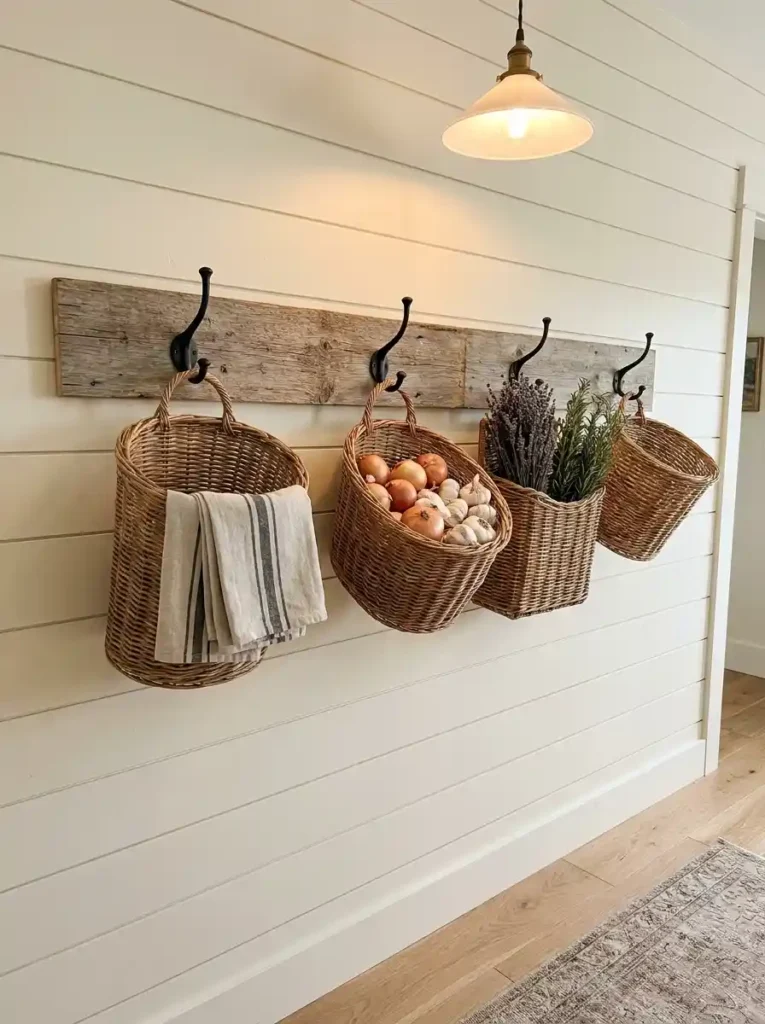
Wicker Basket Wall Hooks
- Wall-mounted hooks with hanging baskets solve storage problems while creating beautiful kitchen wall décor
- Wicker and rattan baskets in varying sizes add natural texture and a handcrafted cottage quality
- Storing garlic, onions, or potatoes in hanging baskets keeps produce fresh with proper natural airflow
- A slim reclaimed wood mounting board ties multiple hooks together into one cohesive wall feature
- This idea transforms a plain kitchen wall into a functional display that works harder than any cabinet
Storage and style rarely come together as effortlessly as they do with wicker basket wall hooks. Most kitchens struggle with finding homes for everyday items like dish towels, produce, and small tools without creating counter clutter. Mounting a row of hooks along a blank kitchen wall and hanging baskets of different sizes solves multiple storage problems simultaneously while adding genuine cottage warmth to the space.
I’ve noticed that this particular idea works especially well in smaller kitchens where cabinet space is limited and every available wall surface needs to contribute meaningfully to the overall organization of the room.
The visual impact of a well-arranged basket wall comes from thoughtful variation. Mixing basket sizes, shapes, and weave textures creates a collected, organic look rather than a uniform retail display. Some baskets work best open at the top for produce or towels while others with handles suit hanging tools or herb bundles.
Natural twine, leather straps, or simple wire handles all add to the overall handcrafted character. Based on what I’ve seen, keeping the basket tones within a consistent warm natural range, honey, tan, and wheat, creates the most cohesive and visually pleasing wall arrangement.
Combined with black iron hooks and a rustic wooden mounting board, this becomes one of the most admired and most copied kitchen wall features in cottage-style home design.
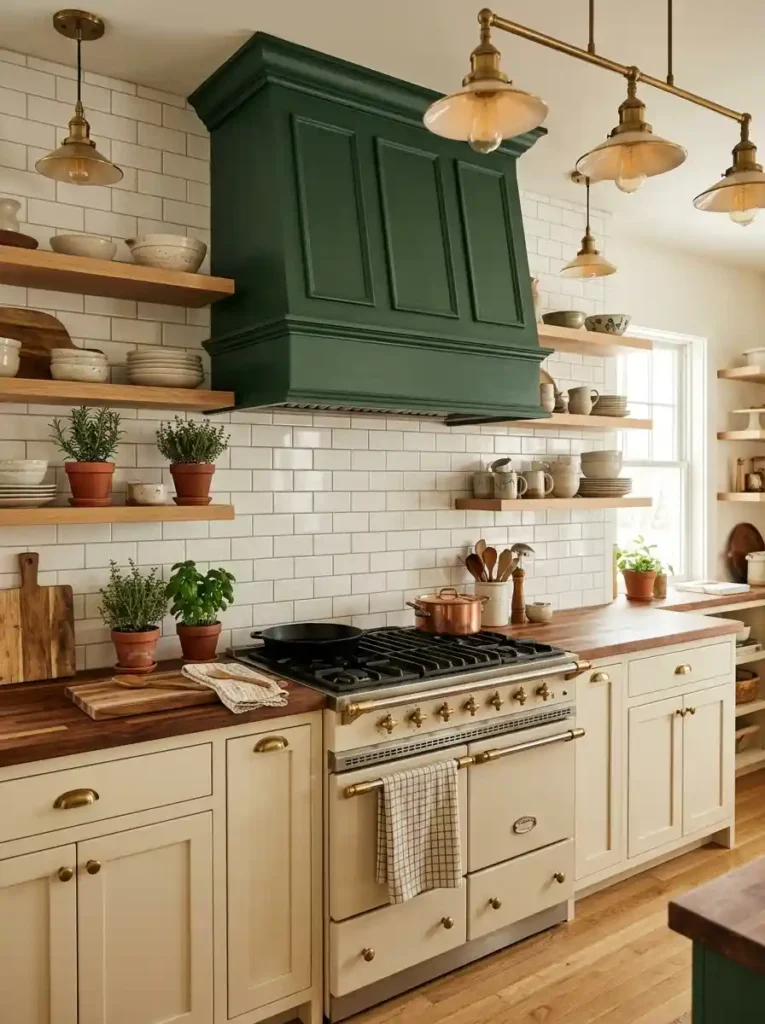
Farmhouse-Style Range Hood
- A custom wooden range hood instantly becomes the most dramatic focal point in the entire kitchen
- Painting the hood in a contrasting color like forest green or navy makes it a true design statement
- Simple raised panel or shiplap detailing on the hood surface adds architectural character and depth
- This feature draws the eye upward and makes kitchen ceilings feel taller and more intentional
- A well-designed range hood ties together cabinetry, backsplash, and shelving into one cohesive design story
The range hood is one of the most powerful design opportunities in any kitchen yet it is consistently underutilized in standard home builds. Most builder-grade hoods are purely functional stainless steel boxes that draw the eye for all the wrong reasons.
A custom wooden range hood changes everything about how the stove area reads within the wider kitchen. It adds height, drama, and a sense of architectural permanence that makes the entire cooking zone feel like the heart of a thoughtfully designed home rather than just a functional appliance corner.
In my experience, a statement range hood is consistently the feature that generates the most admiration from visitors seeing the kitchen for the first time.
Building a custom range hood is more accessible than most homeowners expect. The wooden shell is constructed around an existing functional insert and can be built by a confident DIYer or a local carpenter at a reasonable cost. Shiplap panels, raised frame detailing, or simple flat panels painted in a bold color all create beautiful results depending on the surrounding kitchen aesthetic.
That’s why many kitchen renovation experts recommend allocating a meaningful portion of the renovation budget specifically toward the range hood. Its visual return on investment is among the highest of any single kitchen upgrade available. Styled with open shelves on either side and warm pendant lighting above, a farmhouse range hood anchors the kitchen with a confidence and beauty that photographs magnificently every single time.
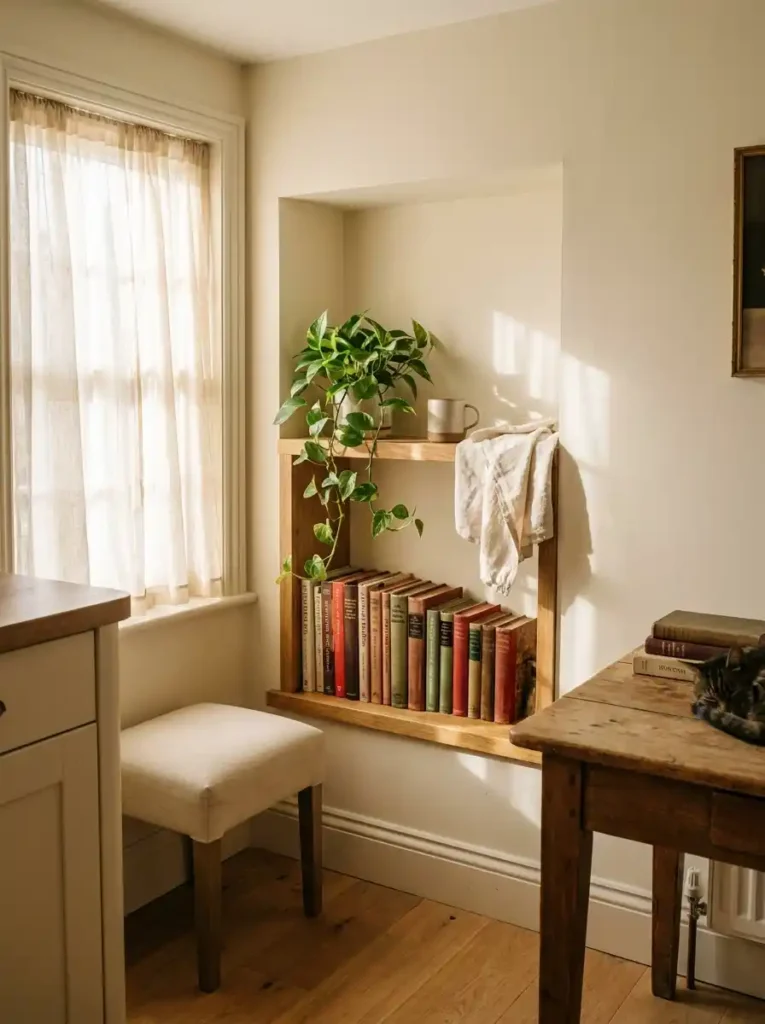
Cozy Reading Nook Shelf Corner
- A small cookbook shelf beside a kitchen window creates a personal and functional reading corner
- Vintage cookbooks with worn spines add color, character, and a deeply personal touch to any shelf
- A small upholstered stool makes the corner genuinely usable as a quiet spot for recipe browsing
- A trailing plant and a ceramic mug on the shelf add life and warmth to the styled corner display
- This idea works beautifully in any unused kitchen corner that currently serves no design purpose
Every kitchen deserves at least one corner that exists purely for pleasure. A small reading nook shelf beside a window, just wide enough for a row of cookbooks, a trailing plant, and a ceramic mug, transforms an unused corner into the most personal spot in the entire home.
It signals that the kitchen is not just a place for cooking but a space for slowing down, browsing recipes with a warm drink in hand, and genuinely enjoying the room. I’ve seen this idea work beautifully in kitchens of every size, from compact galley layouts where a single slim shelf beside the window is enough to larger spaces with room for a proper built-in nook with seating.
Cookbook styling is its own small art form worth approaching thoughtfully. Arranging books by spine color creates a visually pleasing gradient effect. Mixing upright books with a few laid horizontally adds variation and creates natural display surfaces for small objects like a ceramic bird, a folded recipe card, or a tiny succulent.
I’ve tried both highly organized and more relaxed arrangements and find that a loosely curated approach, mostly organized but slightly imperfect, always feels the most authentic and inviting. That’s why many home stylists recommend treating cookbook shelves like a personal gallery rather than a library.
Each book chosen for display should be one genuinely loved and regularly used, making the shelf a true reflection of the cook who calls that kitchen home.
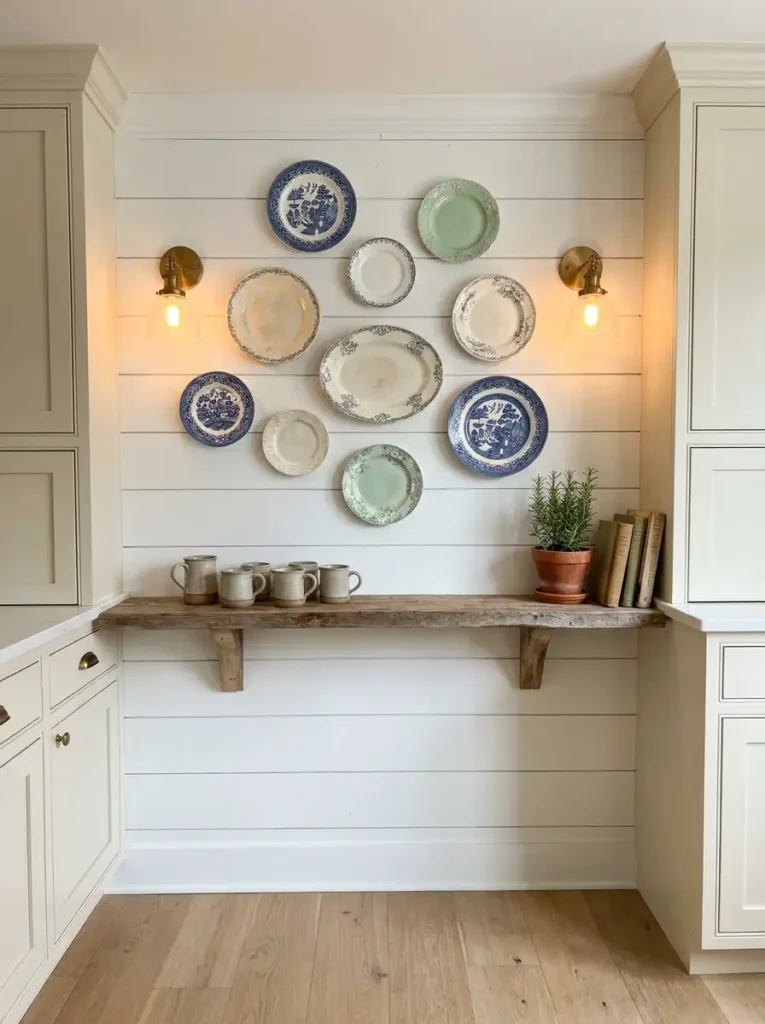
Vintage Ceramic Dish Display
- Vintage ceramic plates mounted on a wall create a curated gallery that feels collected over time
- Mixing plate sizes and complementary patterns adds visual interest without creating a chaotic display
- Blue and white, cream and botanical, and sage green palettes all work beautifully in cottage kitchens
- Plate hanging hardware is inexpensive, easy to install, and completely invisible from the front
- This display idea works on any blank kitchen wall and requires no renovation or permanent changes
A wall of carefully chosen vintage ceramic plates tells a story that no framed print ever quite manages. Each plate carries its own history, found at a flea market, inherited from a grandmother, or discovered at a countryside antique shop during a weekend away.
Together they create a display that feels genuinely personal rather than purchased and installed as a single matching set. I’ve noticed that ceramic plate walls consistently generate the warmest responses from visitors because they invite curiosity.
People move closer to examine individual pieces, ask where they came from, and immediately begin imagining a similar collection of their own forming slowly and intentionally over time.
Arranging a plate wall successfully requires planning the layout before committing any hardware to the wall. Trace each plate onto paper, cut out the shapes, and arrange them on the wall using painter’s tape until the composition feels balanced and natural.
Start with the largest plate at the center and work outward with progressively smaller pieces. That’s why many interior stylists recommend photographing the paper arrangement from a distance before drilling a single hole. What looks right up close sometimes reads differently from across the room. Mixing round plates with the occasional oval platter adds variety without disrupting the overall harmony.
Once hung, a vintage ceramic plate wall becomes a permanent conversation piece that makes the kitchen feel genuinely loved and deeply personal every single day.
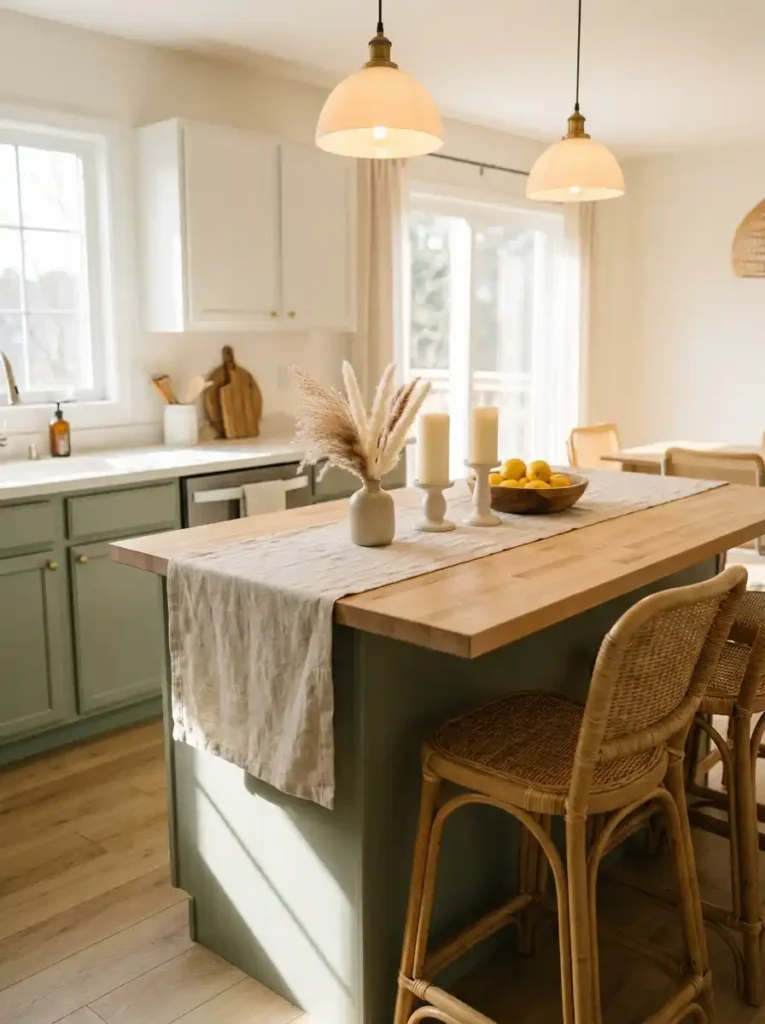
Soft Linen Table Runner Styling
- A linen table runner instantly transforms a plain kitchen island into a beautifully styled surface
- Natural oatmeal, cream, and soft white linen tones complement virtually every cottage kitchen palette
- Styling the runner with candles, dried botanicals, and a wooden bowl creates an effortless centerpiece
- Linen fabric adds soft texture that contrasts beautifully against hard wood or stone island surfaces
- Washing and rotating runners seasonally keeps the island display feeling fresh and thoughtfully updated
Kitchen islands serve as workspaces for most of the day but they deserve to be beautiful during the quieter hours when cooking is finished and the kitchen becomes a gathering space.
A simple linen table runner costs very little and requires no installation yet it completely changes how the island reads within the wider room. The fabric softens the hard edges of the counter surface and creates a natural runway for simple styling.
In my own experience, a well-styled island runner is one of the fastest and most affordable ways to make a kitchen feel immediately more intentional, welcoming, and Pinterest-worthy without changing a single permanent feature of the space.
Seasonal rotation is what keeps a linen runner display feeling alive and current throughout the year. In spring, pair a natural linen runner with a small ceramic vase of fresh tulips and a bowl of green apples.
Summer calls for dried pampas grass and fresh lemons in a wooden bowl. Autumn invites small pumpkins, cinnamon-scented candles, and warm amber tones. Winter styling with pine sprigs, cream candles, and a woven bowl of pinecones creates a deeply cozy seasonal moment. That’s why many home stylists consider the kitchen island runner a year-round styling foundation rather than a single fixed display.
It is the easiest and most rewarding small investment available for anyone wanting their kitchen to feel genuinely beautiful in every season.
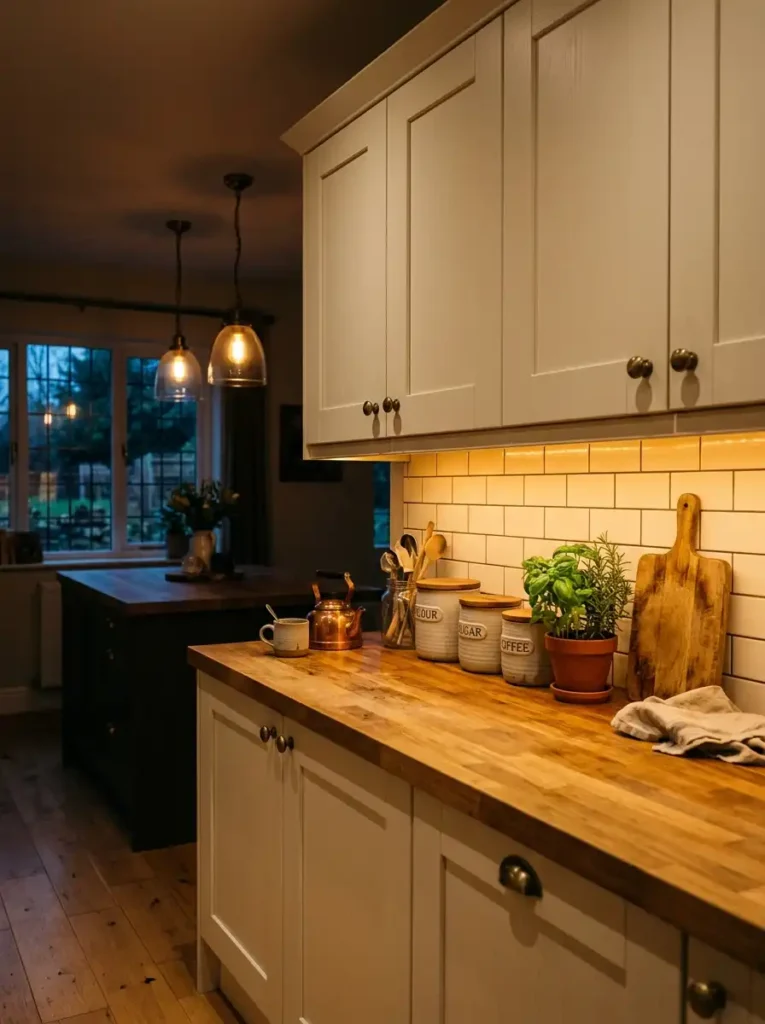
Warm Ambient Under-Cabinet Lighting
- Under-cabinet lighting makes countertop tasks like chopping and reading recipes significantly easier
- Warm amber LED strips create an intimate evening atmosphere that overhead lighting simply cannot replicate
- The soft glow highlights backsplash tile texture and countertop materials in a beautifully dramatic way
- Plug-in LED strip options require no electrician and can be installed independently in under an hour
- Dimmer-compatible strips allow brightness adjustment from full task lighting to soft ambient evening glow
Lighting transforms a kitchen more dramatically than almost any other single change and under-cabinet lighting is the most underestimated version of that truth. During daylight hours it functions as practical task lighting, making food preparation safer and more comfortable. But in the evening, when overhead lights are dimmed and only the warm amber glow beneath the cabinets remains, the kitchen becomes something else entirely, intimate, golden, and deeply atmospheric.
I’ve tried various lighting temperatures beneath cabinets and consistently find that warm white at 2700 Kelvin creates the most flattering and genuinely cozy result for a cottage-style kitchen at any time of day.
Installation has become remarkably straightforward with modern LED strip technology. Peel-and-stick adhesive backing holds strips firmly to the underside of cabinets without drilling or professional wiring. Plug-in versions connect directly to existing outlets inside cabinet interiors, keeping cords completely hidden from view.
Hardwired options offer a cleaner permanent result for those undertaking a larger renovation. That’s why many kitchen designers now consider under-cabinet lighting a standard recommendation rather than an optional upgrade for any kitchen refresh.
The cost is genuinely modest, the installation is accessible to almost anyone, and the transformation in how the kitchen looks and feels, particularly during evening hours, is immediate, dramatic, and consistently surprising even to people who were already expecting a noticeable improvement.
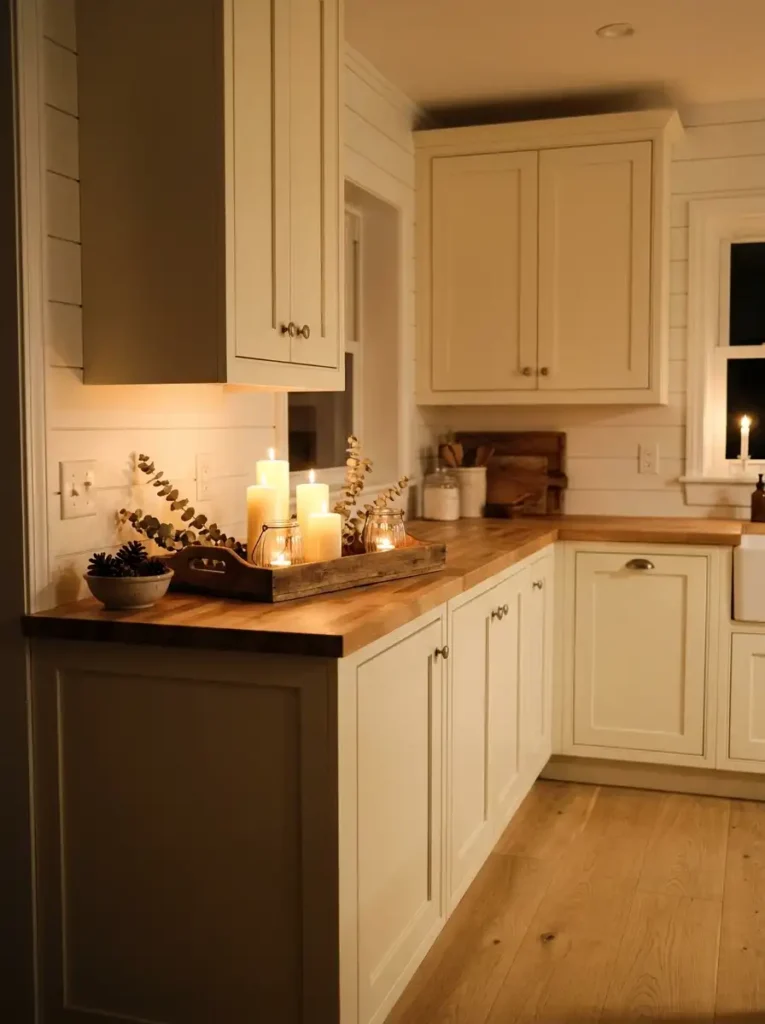
Cozy Candle and Lantern Styling
- A styled candle tray on the counter creates an instant mood-setting focal point during evening hours
- Mixing pillar candles in varying heights adds visual rhythm and dimension to the overall arrangement
- Glass lanterns protect open flames while adding a beautiful warm glow that feels romantic and safe
- Dried eucalyptus or lavender sprigs woven between candles bring natural fragrance into the display
- A wooden or marble tray underneath unifies all elements into one cohesive and easily moveable vignette
Candles do something in a kitchen that no light fixture can fully replicate. They make the space feel alive in the most ancient and instinctive way, warm, flickering, and genuinely inviting.
A styled candle tray on a kitchen counter or island costs almost nothing to create yet delivers an atmosphere that feels intentional, romantic, and deeply personal. I’ve noticed that kitchens styled with candlelight photographs with a warmth and depth that even the best overhead lighting struggles to achieve.
The golden glow touches every surface differently, catching the grain of butcher block, softening the edges of ceramic canisters, and making the whole room feel like somewhere worth lingering long after the meal is finished.
Building a candle tray vignette is one of the simplest and most rewarding kitchen styling exercises available. Start with a tray in wood, marble, or woven rattan as the foundation. Place the tallest pillar candle slightly off-center rather than perfectly centered.
This immediately feels more natural and less staged. Add two smaller candles at varying heights beside it, then tuck a glass lantern with a tea light at one end for layered light sources. Fill any remaining space with dried botanicals, a small ceramic bowl, or a few pinecones depending on the season.
That’s why many home stylists consider candle tray styling the single most impactful five-minute kitchen refresh available. It costs very little, requires no tools, and transforms the entire atmosphere of the room the moment the first flame is lit.
Conclusion:
A truly beautiful kitchen is never built all at once. It grows slowly through small, intentional choices, a warm pendant light here, a linen curtain there, a bundle of dried herbs hung from a wooden beam overhead.
Every idea shared in this article is designed to help you create a cozy kitchen that feels personal, warm, and genuinely yours.
I’ve seen how small changes like these can completely transform a space from purely functional to deeply cherished. Save this article on Pinterest, share it with someone who loves their kitchen, and start with just one idea today. That single first step is always enough.