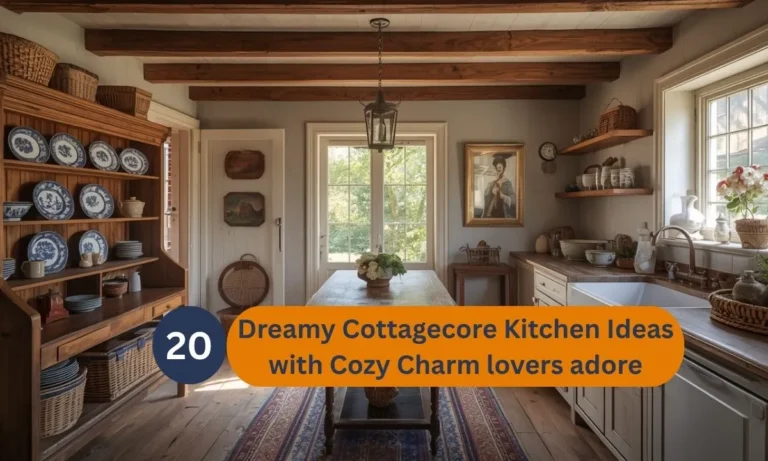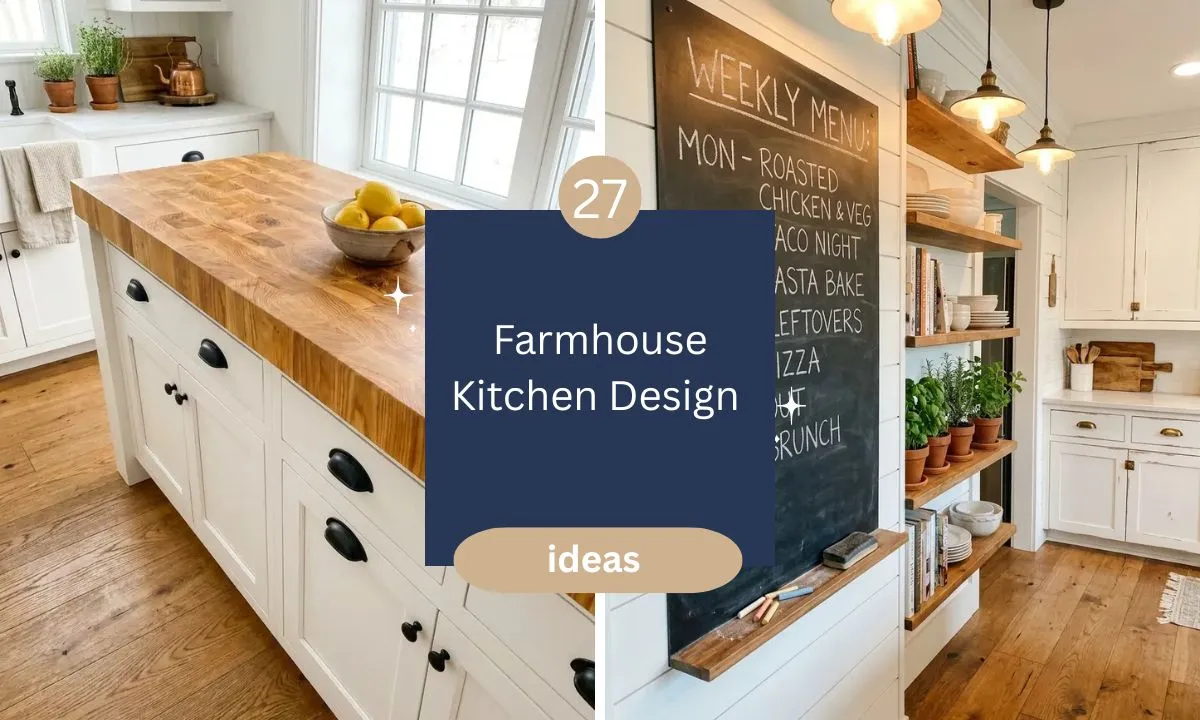
27 Inspiring Farmhouse Kitchen Design Ideas
Introduction
Your kitchen deserves to feel like the warmest room in the house. If you have ever scrolled through farmhouse kitchens and felt that immediate pull — that quiet longing for shiplap walls, apron sinks, and butcher block countertops — you are in exactly the right place. These inspiring farmhouse kitchen design ideas are here to turn that feeling into something real and achievable.
Farmhouse kitchens are beloved for a reason. They balance beauty with function, warmth with simplicity, and personality with practicality in a way that no other design style quite manages. In my experience, even small farmhouse-inspired changes — swapping hardware, adding open shelving, or introducing a vintage rug — can completely shift the energy of a kitchen from ordinary to genuinely inviting. You do not need a full renovation or an unlimited budget to create a space that feels thoughtfully designed and deeply warm.
Whether you are starting from scratch or refreshing what you already have, this article walks you through 27 carefully curated ideas to inspire every corner of your kitchen beautifully.
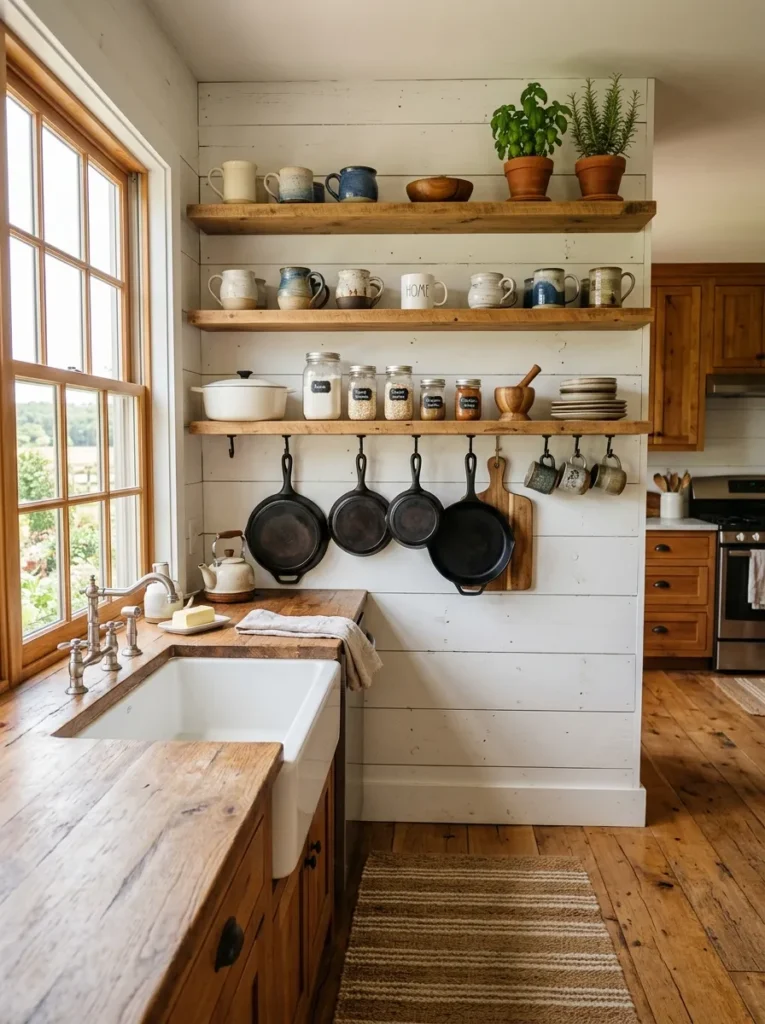
Shiplap Accent Wall
- Shiplap instantly adds texture and depth to a plain kitchen wall
- Works beautifully behind open shelving or a range hood
- White shiplap reflects light, making small kitchens feel larger and brighter
- The horizontal lines create a clean, structured visual rhythm across the room
- Easy to DIY on a budget with basic wood planks and white paint
There is something quietly powerful about a shiplap wall that transforms an ordinary kitchen into a space that feels genuinely lived-in and intentional. The horizontal lines draw the eye across the room, adding architectural detail without clutter or cost. In my experience, even a single shiplap accent wall behind a stove or open shelving makes the entire kitchen feel more designed and complete. It works equally well in modern farmhouse kitchens and classic rustic setups, making it one of the most versatile farmhouse upgrades you can make without a full renovation.
Shiplap is especially valuable in rental kitchens or builder-grade spaces that feel flat and forgettable. By adding this one textural element, you introduce warmth, character, and visual interest that paint alone simply cannot achieve. I’ve seen this work beautifully in kitchens where the rest of the design is minimal — the shiplap becomes the hero detail that ties everything together. Pair it with matte black hardware, warm wood accents, or vintage ceramic pieces for maximum farmhouse impact. The result feels curated, cozy, and completely Pinterest-worthy without requiring a significant investment.
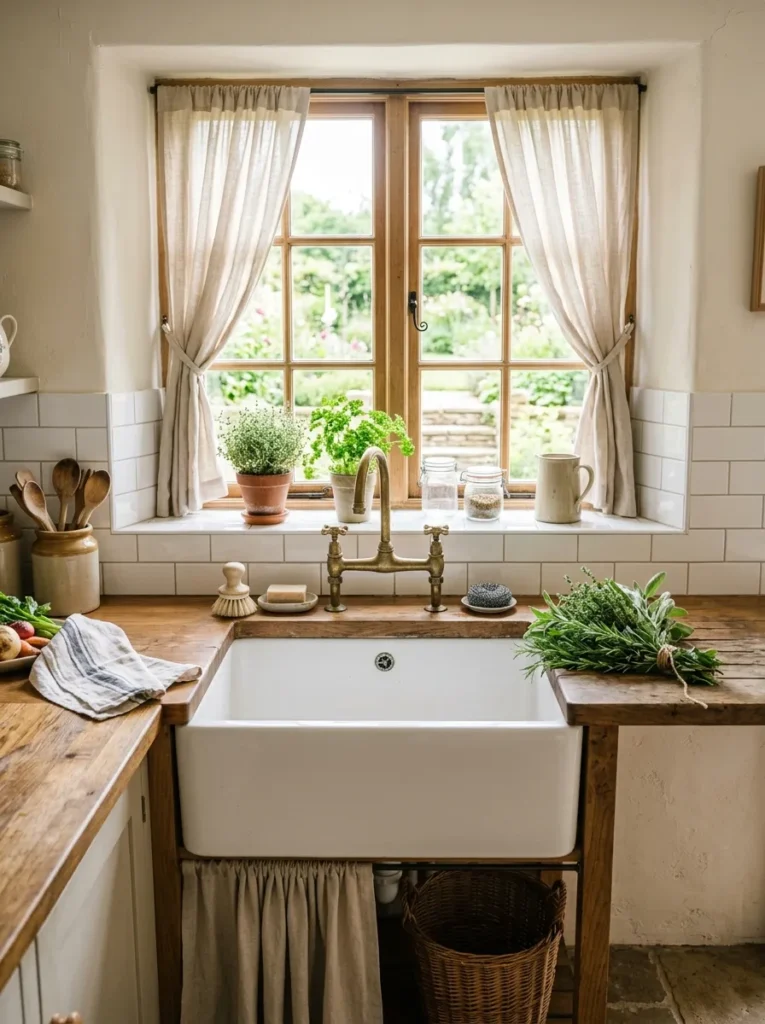
Apron Front Sink
- An apron sink is the single most recognizable element in farmhouse kitchen design
- Its deep basin makes washing large pots and baking trays significantly easier
- Available in fireclay, cast iron, and stainless steel to match any budget
- The exposed front panel becomes a beautiful visual focal point in the room
- Pairs naturally with brass, bronze, or matte black faucet finishes
Few single fixtures make as strong a statement in a kitchen as an apron front sink. Its bold, exposed front panel commands attention while adding unmistakable farmhouse character that no undermount sink can replicate. The deep basin is not just beautiful — it is genuinely functional, making it easier to handle large roasting pans, soaking pots, and bulky baking sheets without struggling. That’s why many designers recommend the apron sink as the first investment when planning a farmhouse kitchen refresh. It anchors the entire space visually and sets the tone for every other design decision that follows around it.
What makes the apron sink so enduringly popular is its ability to look both practical and elegant at the same time. Whether you choose a crisp white fireclay model or a warm concrete-style finish, the sink becomes the kitchen’s visual centerpiece without trying too hard. I’ve noticed that pairing an apron sink with a vintage-style faucet in aged brass or unlacquered brass creates an especially warm, authentic look that photographs beautifully and feels even better in person. Add a small potted herb or linen dish towel nearby and the entire corner of your kitchen instantly becomes the most inviting spot in the room.
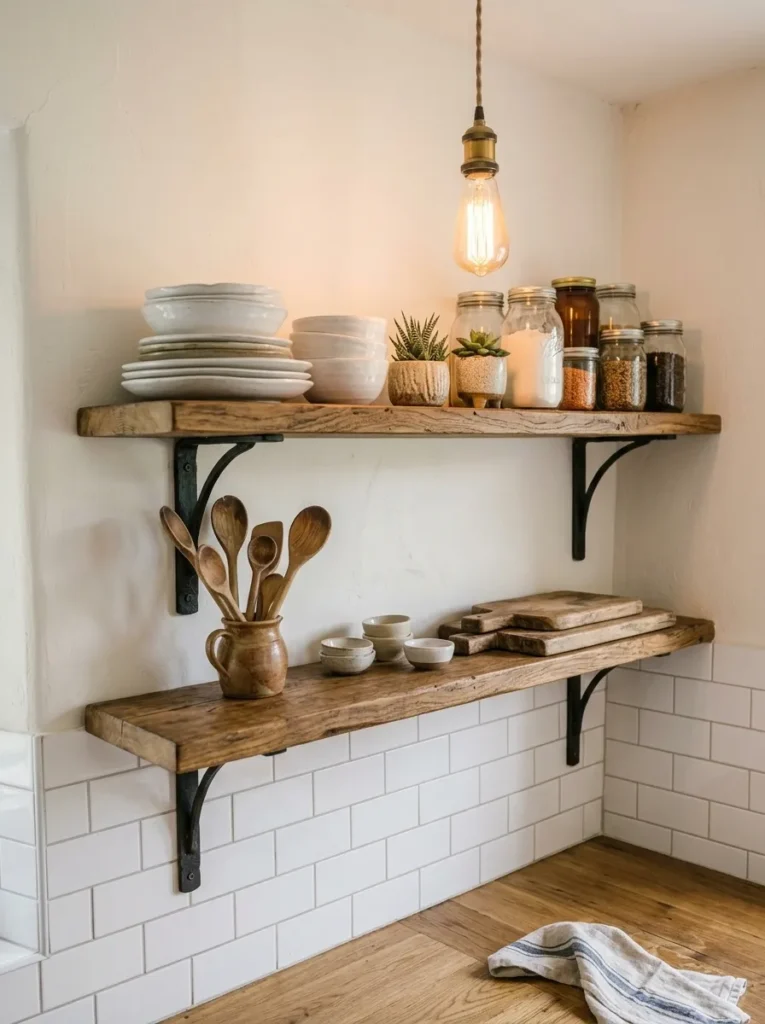
Open Wood Shelving
- Open shelving replaces heavy upper cabinets with an airy, spacious visual feel
- Reclaimed wood shelves add warmth, texture, and authentic farmhouse character
- Black iron brackets create strong contrast and reinforce the rustic aesthetic
- Displaying everyday items like dishes and jars makes the kitchen feel personal
- I’ve noticed that well-styled open shelves consistently become the most photographed corner in a kitchen
Open wood shelving is one of those farmhouse kitchen ideas that completely changes the energy of a space the moment it goes up. Replacing closed upper cabinets with thick, reclaimed wood shelves immediately makes a kitchen feel lighter, more open, and more personal. The shelves become a living display of the items you actually use and love — ceramic dishes, vintage jars, handmade pottery, and small plants. In my experience, the kitchens that feel most warm and inviting are the ones where open shelving is styled with a relaxed, casual hand rather than perfectly symmetrical arrangements that look staged and untouchable.
The practical beauty of open shelving is that it forces a kind of intentional editing. You keep only what you genuinely love and use, which naturally reduces clutter and keeps the kitchen feeling curated. Reclaimed wood adds grain, knots, and natural variation that no painted cabinet can replicate. Paired with black iron brackets, the contrast feels bold yet grounded — very much at home in both classic and modern farmhouse kitchens. Style your shelves in odd numbers, mix textures freely, and let a few imperfect details remain. That slight imperfection is exactly what makes a farmhouse kitchen feel real, lived-in, and deeply welcoming to anyone who walks in.
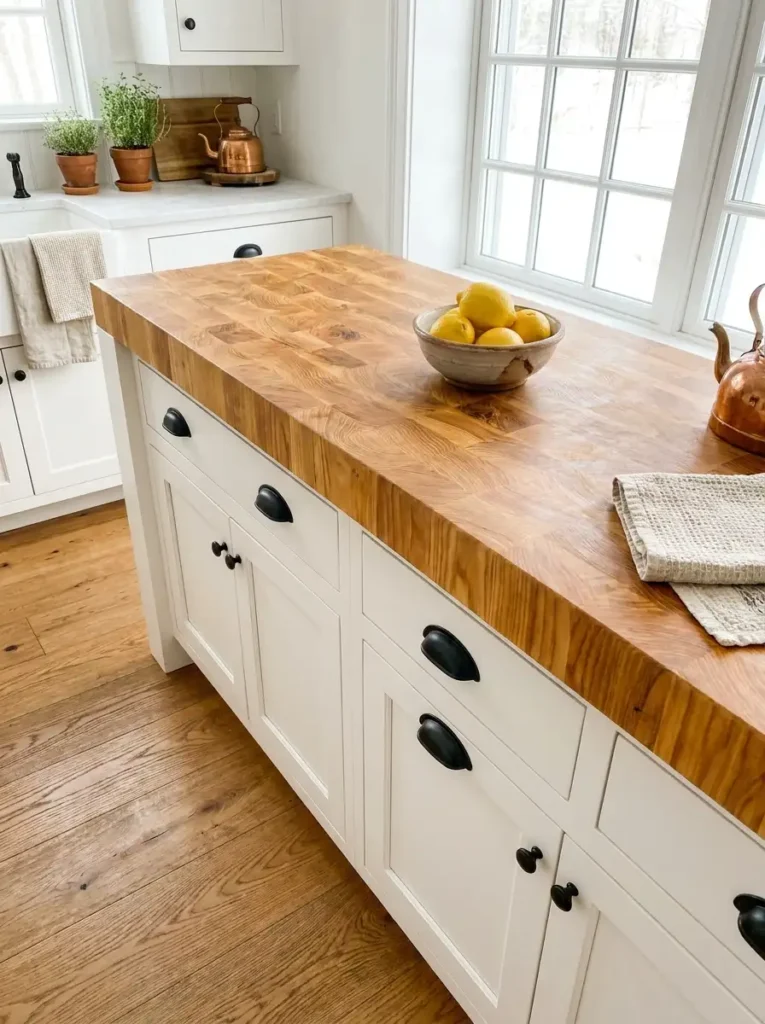
Butcher Block Countertops
- Butcher block adds instant warmth and natural texture that stone countertops cannot replicate
- End-grain versions are especially durable and develop a beautiful patina over time
- Works perfectly on kitchen islands as a contrasting surface alongside stone or quartz
- Light sanding and re-oiling can restore the surface to near-original condition
- The organic imperfections in the wood grain make every butcher block countertop uniquely beautiful
Butcher block countertops bring a warmth and organic richness to farmhouse kitchens that no engineered stone can truly replicate. The natural wood grain, the warm honey tones, and the slight texture underhand all create a sensory experience that makes a kitchen feel genuinely alive. I’ve noticed that even a single butcher block island surface in an otherwise all-white kitchen is enough to completely shift the room’s feeling from cold and minimal to warm and welcoming. It is one of the most impactful and cost-effective upgrades available, especially for homeowners who want that authentic farmhouse aesthetic without committing to a full kitchen renovation.
Beyond aesthetics, butcher block is a working surface with genuine functional character. It is forgiving under knives, warm to the touch, and improves visually with age and use. The minor scratches and worn patches that develop over years of cooking add personality rather than looking like damage. That’s why many designers recommend using butcher block specifically on islands or prep areas where it will be actively used rather than treated as a showpiece. Treat it seasonally with food-safe mineral oil to maintain its richness and prevent drying. With basic care, a quality butcher block countertop will last for decades and only grow more beautiful with time.
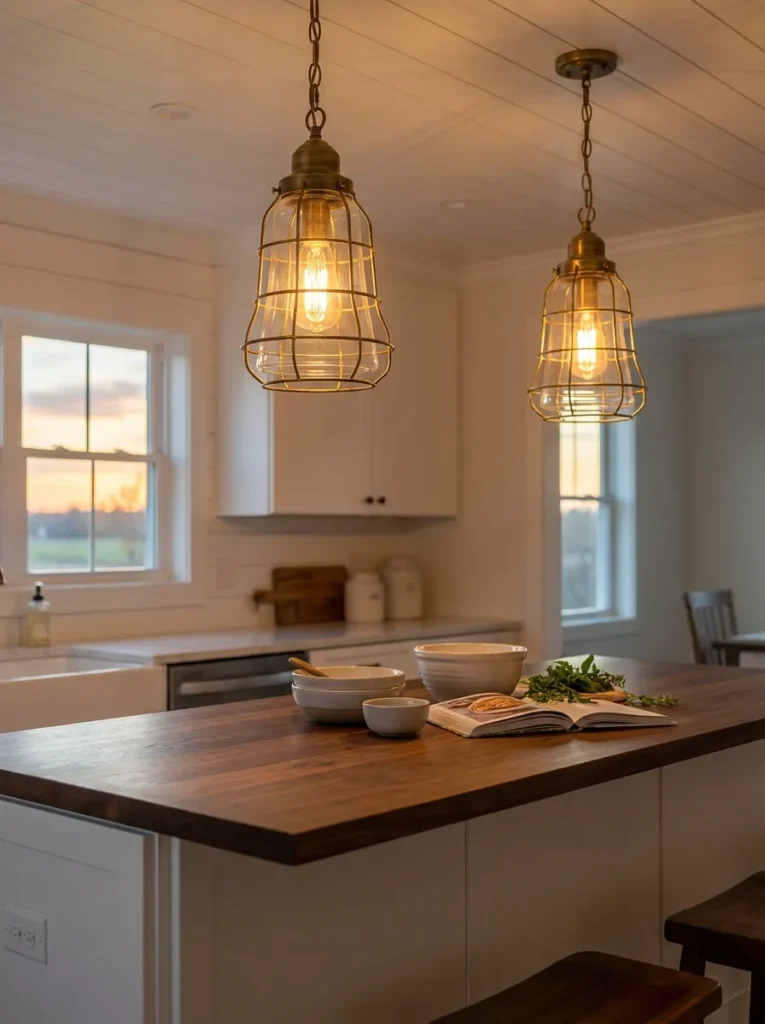
Vintage Pendant Lighting
- Vintage pendant lights instantly define the farmhouse character of a kitchen
- Cage-style or mason jar pendants are affordable and widely available
- Warm Edison bulbs create soft, golden light that flatters every kitchen surface
- Hanging two or three pendants in a row over an island creates strong visual rhythm
- The right pendant height — about 30 to 36 inches above the countertop — makes a significant difference in both function and appearance
Lighting is the single most underestimated design tool in any kitchen, and vintage-style pendant lights prove that point beautifully. A well-chosen pendant does not just illuminate a space — it defines its personality. Over a farmhouse kitchen island, a pair of aged brass cage pendants or hand-blown glass fixtures instantly communicates warmth, character, and intentional design. In my experience, swapping out builder-grade recessed lighting for even one pendant fixture above the island creates a transformation that feels far more dramatic than the effort or cost involved. It is one of the fastest ways to elevate an ordinary kitchen into something that feels curated and visually complete.
What makes vintage pendant lighting so effective in farmhouse kitchens is the quality of light it produces. Edison bulbs cast a warm amber glow that softens surfaces, flatters wood tones, and makes the entire kitchen feel more inviting during evening hours. Unlike harsh overhead fluorescents, pendant lighting creates pools of warm light that add depth and dimension to the room. That’s why many designers recommend layering pendant lights with under-cabinet lighting for a balanced, well-lit kitchen that works equally well for early morning coffee and late-night cooking. Choose finishes that complement your hardware — aged brass, matte black, or oil-rubbed bronze all work exceptionally well.
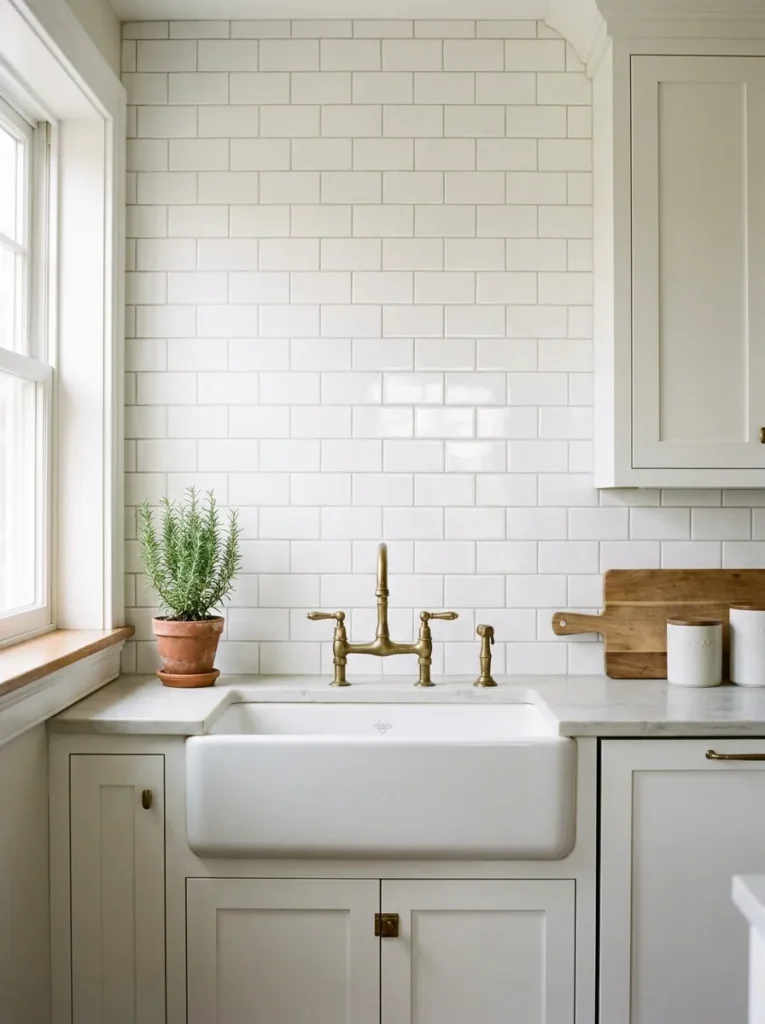
Subway Tile Backsplash
- White subway tile is one of the most timeless and versatile backsplash choices for farmhouse kitchens
- The classic brick-lay pattern adds subtle texture without overwhelming the space
- Glossy white tiles reflect light beautifully, keeping the kitchen feeling bright and open
- Darker grout like charcoal or warm grey adds contrast and hides everyday cooking residue
- Subway tile works with nearly every countertop material — wood, stone, concrete, or quartz
There is a reason white subway tile has remained a top farmhouse kitchen choice for well over a century — it simply works in almost every setting. Its clean lines, modest scale, and light-reflecting surface make it a reliable background that supports every other design element in the room without competing for attention. I’ve seen subway tile used in everything from ultra-modern farmhouse kitchens to deeply rustic cottage spaces, and it consistently delivers the same result — a kitchen that feels clean, bright, and effortlessly put together. It is the kind of design choice you make once and never regret, regardless of how your style evolves over time.
The real design power of subway tile lies in the details you choose around it. The same white tile can look dramatically different depending on grout color, laying pattern, and surrounding finishes. A herringbone layout feels more elevated and artisan. Charcoal grout adds edge and drama. Cream grout creates a softer, more vintage-inspired result. That’s why many designers recommend spending more time choosing the grout than the tile itself. Paired with farmhouse elements like open wooden shelving, an apron sink, or brass hardware, a well-installed subway tile backsplash becomes a quiet but essential part of what makes a farmhouse kitchen design feel complete, cohesive, and genuinely beautiful.
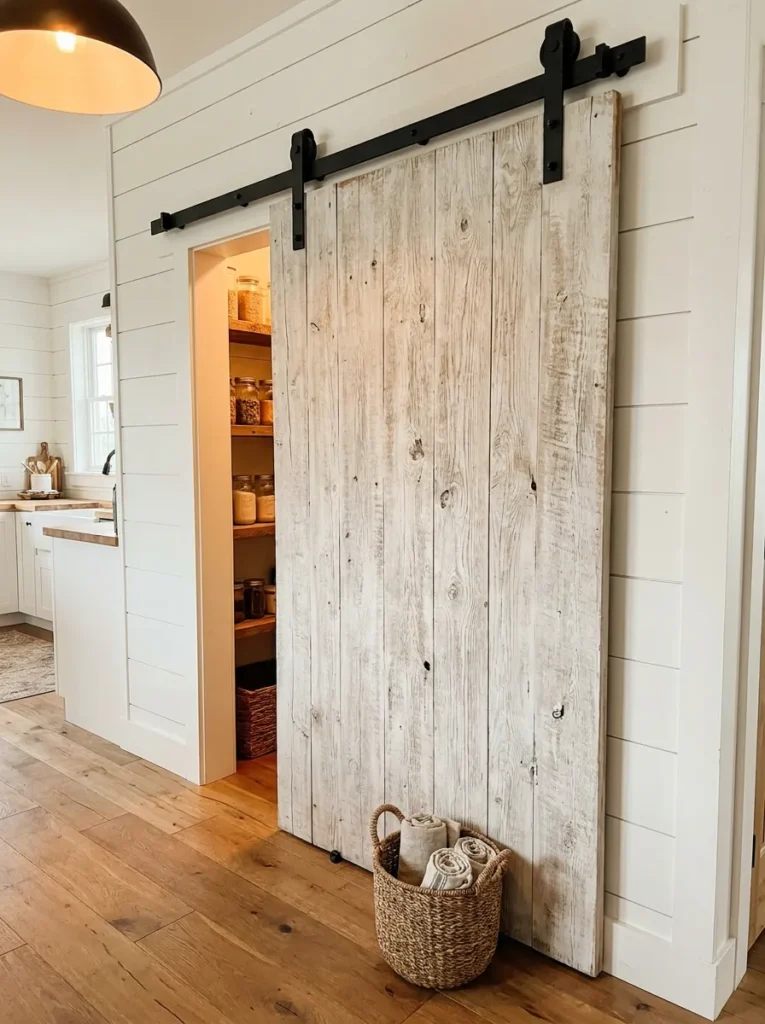
Barn Door Pantry
- A sliding barn door adds strong farmhouse character while saving valuable floor space
- Reclaimed or whitewashed wood panels bring authentic texture and visual warmth
- Black iron hardware and track create a bold contrast against light walls
- Works perfectly for pantry entrances, laundry room doors, or kitchen storage closets
- The sliding mechanism eliminates the awkward swing clearance of a traditional hinged door
A barn door pantry is one of those farmhouse kitchen ideas that delivers on both style and practicality in equal measure. The sliding door mechanism is a genuinely smart space-saving solution in kitchens where every square foot matters, and it replaces a standard hinged door with something far more visually interesting. I’ve noticed that barn doors have a particular effect on guests — they immediately draw attention, invite curiosity, and add a layer of rustic warmth that a plain painted door simply cannot replicate. Whether your kitchen is large or compact, a well-chosen barn door transforms what would otherwise be an overlooked transition into a genuine design feature worth noticing.
The materials and finish you choose for your barn door have a significant impact on the overall kitchen mood. A whitewashed reclaimed wood door feels light, airy, and relaxed. A darker stained panel reads as more dramatic and grounded. A distressed painted finish leans into vintage cottage territory beautifully. That’s why many designers recommend choosing a barn door finish that either contrasts sharply or coordinates closely with the surrounding cabinetry — a middle-ground choice can look unintentional. Pair the door with black iron hardware for crisp farmhouse edge, or opt for aged bronze for a softer, more antique-inspired result. Either way, the barn door pantry remains one of the most beloved and recognizable elements in farmhouse kitchen design today.
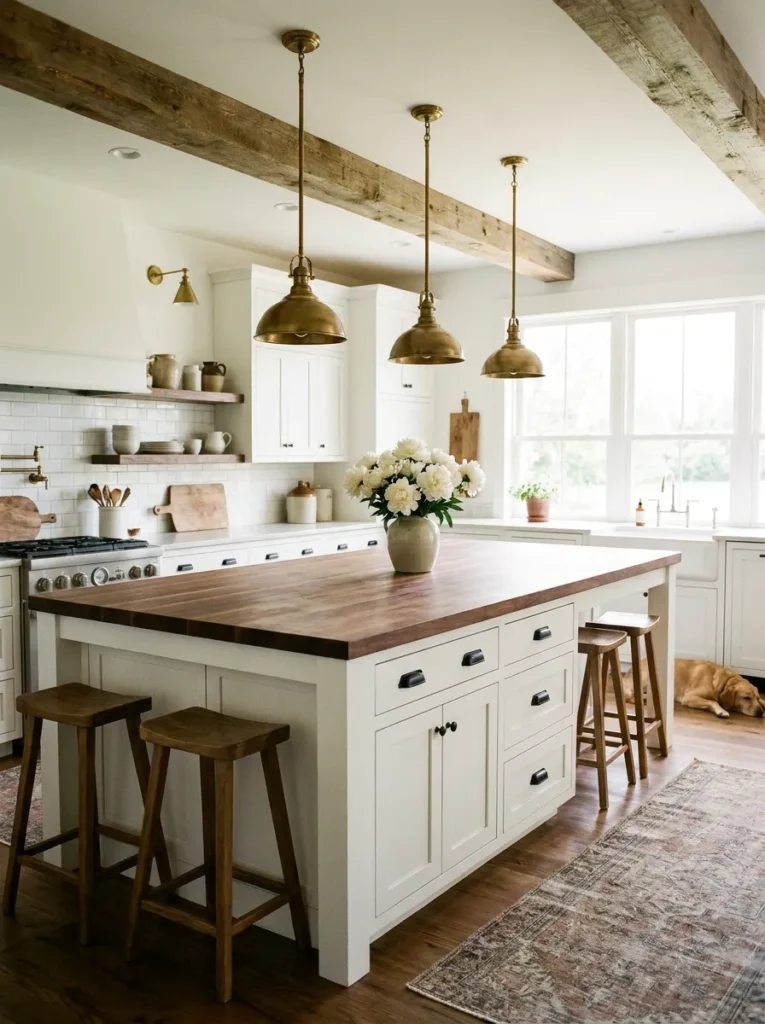
Farmhouse Kitchen Island
- A kitchen island instantly adds prep space, storage, and casual seating to a farmhouse kitchen
- Painting the island a contrasting color from surrounding cabinetry creates beautiful visual depth
- Butcher block or thick wood countertops on the island reinforce the farmhouse aesthetic naturally
- Built-in drawers and cabinets below maximize kitchen storage without sacrificing style
- Counter stools with natural wood or woven seats complement the farmhouse mood perfectly
A well-designed farmhouse kitchen island is far more than a prep surface — it becomes the true heart of the kitchen, the place where meals are prepared, coffee is shared, and conversations naturally gather. In my experience, the most successful farmhouse islands balance two things equally: strong visual character and genuine everyday function. A white painted base with a warm butcher block top is perhaps the most classic combination, offering the crisp contrast that farmhouse design depends on while introducing the organic warmth that makes a kitchen feel welcoming rather than sterile. Add vintage pendant lighting above and the island becomes a scene worth saving to every farmhouse inspiration board.
The details you choose for your island — hardware, stool style, countertop material, and even the items you keep on its surface — collectively tell the story of the kitchen’s personality. Matte black bin-pull hardware feels bold and modern-farmhouse. Worn brass knobs read as more vintage and relaxed. A small ceramic crock holding wooden spoons, a bowl of fresh lemons, or a single vase of seasonal flowers adds life to the surface without creating clutter. That’s why many designers recommend treating the island top as a curated display rather than a catch-all surface. When styled with intention, a farmhouse kitchen island becomes the most photographed and most loved corner of the entire home.
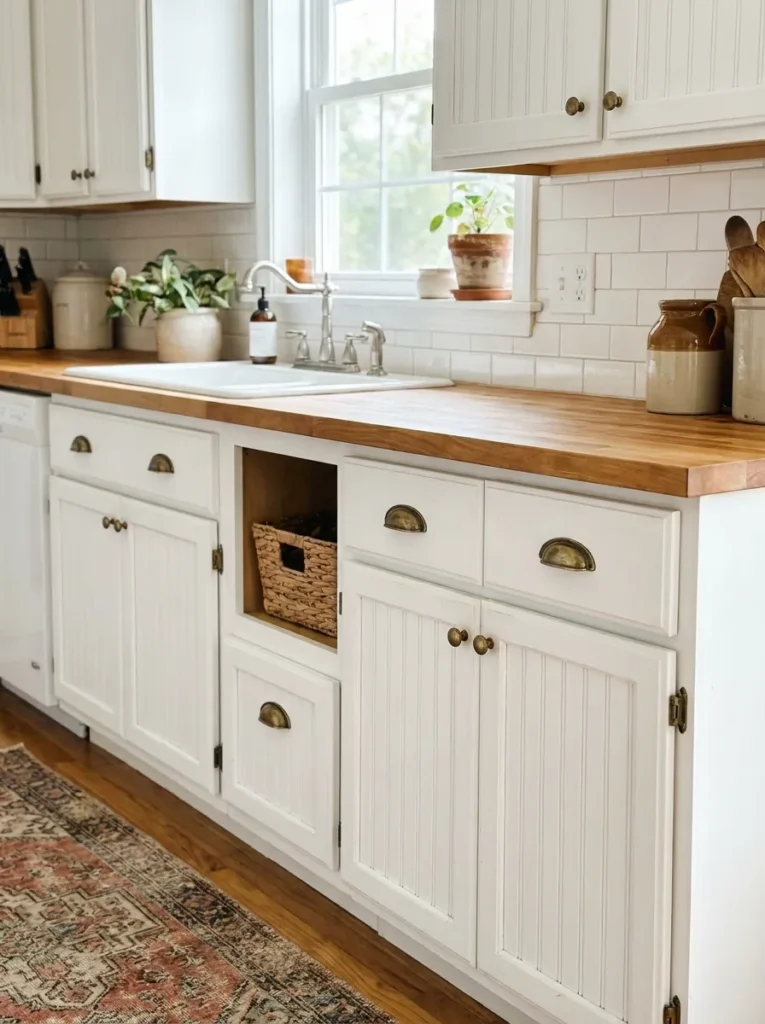
Beadboard Cabinet Fronts
- Beadboard cabinet fronts add vertical texture and vintage charm to plain flat-front cabinets
- A simple and affordable upgrade that dramatically changes the character of existing cabinetry
- Works beautifully on lower cabinets, kitchen islands, or a dedicated baking station
- White painted beadboard keeps the space bright while adding quiet visual interest
- Pairs naturally with cup-pull or bin-pull hardware for a complete cottage farmhouse look
Beadboard cabinet fronts are one of those quietly transformative upgrades that punch well above their price point in visual impact. The repetitive vertical groove pattern introduces texture and rhythm to a kitchen without adding visual noise or overwhelming the space. I’ve noticed that even in kitchens where the overall design is relatively simple, beadboard cabinet doors immediately communicate a sense of thoughtful, cottage-inspired character that flat-front cabinets simply cannot convey. It is a detail that reads beautifully in photographs and feels even more intentional in person, making it a particularly strong choice for kitchens designed with Pinterest visibility and everyday livability equally in mind.
What makes beadboard especially versatile is how well it adapts to different farmhouse styles. In a bright white cottage kitchen, painted beadboard disappears softly into the cabinetry while still adding tactile depth. In a more dramatic space with darker tones, white beadboard creates a fresh contrast that keeps the room from feeling heavy. That’s why many designers recommend beadboard as a reliable detail for kitchen refreshes where a full cabinet replacement is not practical or necessary. Applied as inserts to existing doors or used on a new island base, beadboard delivers genuine farmhouse character at a fraction of the cost of entirely new cabinetry, making it one of the most budget-friendly and visually rewarding upgrades available.
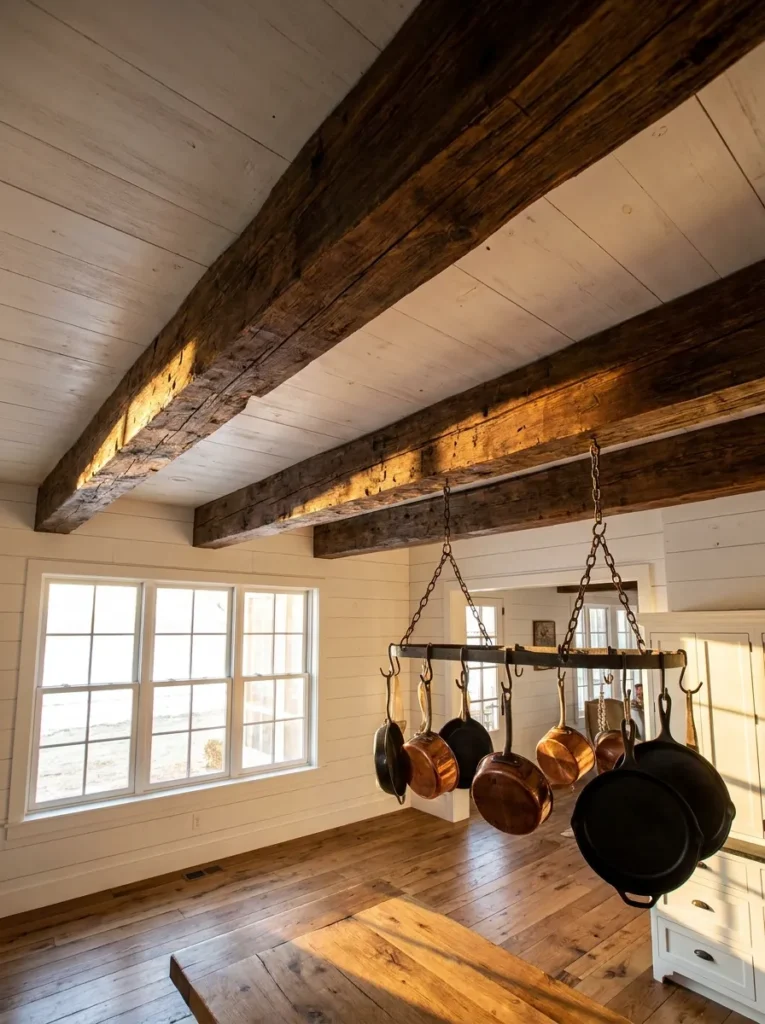
Exposed Wood Ceiling Beams
- Exposed ceiling beams instantly add architectural drama and rustic farmhouse character
- Dark-stained beams against a white ceiling create one of the strongest contrasts in farmhouse design
- Faux wood beams are a lightweight, affordable alternative that look remarkably authentic
- A pot rack hung from a center beam adds function and reinforces the farmhouse aesthetic beautifully
- The beams draw the eye upward, making ceilings feel taller and more expansive
Few architectural details command a room quite like exposed wood ceiling beams. The moment they appear overhead, the entire kitchen shifts in feeling — suddenly more substantial, more rooted, and more visually interesting in every direction. In my experience, homeowners who add ceiling beams consistently describe them as the single upgrade they wish they had made sooner. They work equally well in open-plan kitchens where the beams can span dramatically across a wide ceiling and in smaller, more intimate kitchen spaces where even one or two beams add enough warmth and character to completely redefine the room’s personality and visual presence.
One of the most practical developments in farmhouse kitchen design is the rise of high-quality faux wood beams. Made from lightweight polyurethane or hollow wood shells, these beams install without the structural requirements of solid timber and at a significantly lower cost. I’ve seen faux beams installed in a single weekend that are genuinely indistinguishable from real wood once stained and mounted. That’s why many designers recommend them enthusiastically for renovation projects where budget and structural limitations might otherwise rule out this feature entirely. Whether real or faux, dark-stained beams against a crisp white ceiling remain one of the most visually powerful and enduringly popular choices in inspiring farmhouse kitchen design.

Vintage Rug Under Island
- A vintage rug adds color, warmth, and softness to what is often the hardest surface in the kitchen
- Muted, faded tones in rust, cream, or blue complement farmhouse color palettes naturally
- Placing a rug under or beside the island defines the space and makes it feel more intentional
- Flat-weave or low-pile rugs are the most practical choice for high-traffic kitchen areas
- Even an inexpensive vintage-style rug dramatically changes the warmth and personality of the entire kitchen floor
A vintage rug is one of the most underused and most impactful accessories in farmhouse kitchen styling. In a room dominated by hard surfaces — tile, stone, wood, and metal — a soft, patterned rug introduces warmth, color, and a sense of layered personality that no other single accessory can replicate. I’ve noticed that kitchens styled without any textile on the floor often feel unfinished, regardless of how beautiful the cabinetry or countertops may be. A well-chosen vintage runner or area rug beneath the island grounds the entire space visually, creating a defined zone that feels deliberate and welcoming rather than purely functional and forgettable.
The color palette of your chosen rug matters enormously in a farmhouse kitchen setting. Muted, slightly faded tones — dusty rust, aged cream, faded indigo, soft terracotta — feel authentic and relaxed in a way that bright, saturated colors do not. A rug that looks gently worn communicates history, warmth, and lived-in comfort, which are exactly the qualities that define the farmhouse aesthetic at its best. That’s why many designers recommend seeking out vintage or vintage-style rugs with natural dye tones rather than crisp, brand-new patterns that can look too polished for this particular style. Pair your rug with natural wood stools and a ceramic or linen-dressed island surface for a farmhouse kitchen corner that feels genuinely beautiful and completely at home.
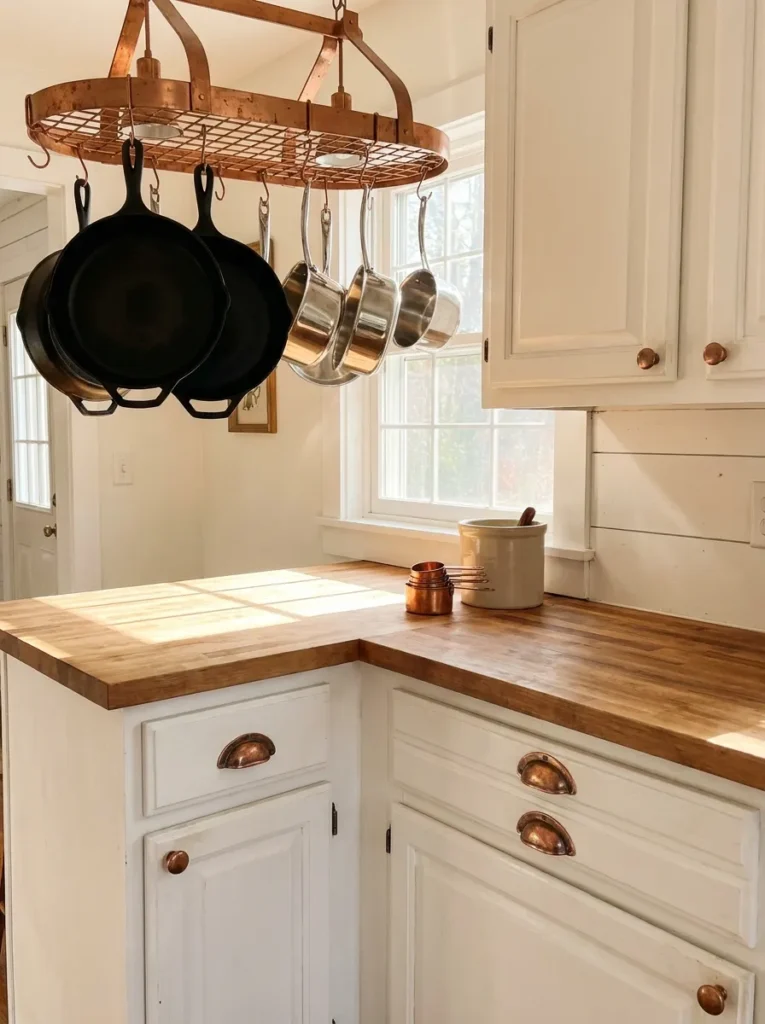
Copper Accents and Hardware
- Copper hardware introduces a warm, rich metallic tone that feels both rustic and refined
- Mixing copper with white cabinetry creates one of the most visually striking farmhouse combinations
- Copper develops a natural patina over time, adding character rather than looking worn
- A copper pot rack above the island adds function and becomes a beautiful focal point overhead
- Small copper accessories — measuring cups, funnels, canisters — add cohesion without large expense
Copper accents bring a level of warmth and richness to farmhouse kitchens that neither brass nor black hardware can fully replicate. The reddish-gold tone of copper catches light in a uniquely alive way, shifting subtly throughout the day as natural light moves across the room. In my experience, even small copper details — a set of cup pulls on lower cabinets, a copper faucet, or a simple row of copper canisters on open shelving — are enough to shift the entire kitchen’s feeling toward something warmer, more artisan, and more visually layered. Copper works especially well against white cabinetry, where its rich tone stands out clearly without feeling overdone or excessive.
What makes copper a particularly rewarding farmhouse kitchen choice is how beautifully it ages. Unlike polished chrome or brushed nickel, which simply show fingerprints and water spots over time, copper develops a living patina — a soft, darkened warmth that accumulates gradually with use and handling. This natural aging process makes copper hardware feel more authentic and personal with every passing year rather than tired or dated. That’s why many designers recommend embracing unlacquered copper specifically, allowing it to develop its natural character freely rather than maintaining an artificially uniform shine. Combined with warm wood tones, white walls, and vintage textiles, copper accents complete a farmhouse kitchen with a sense of genuine craft and timeless material beauty.
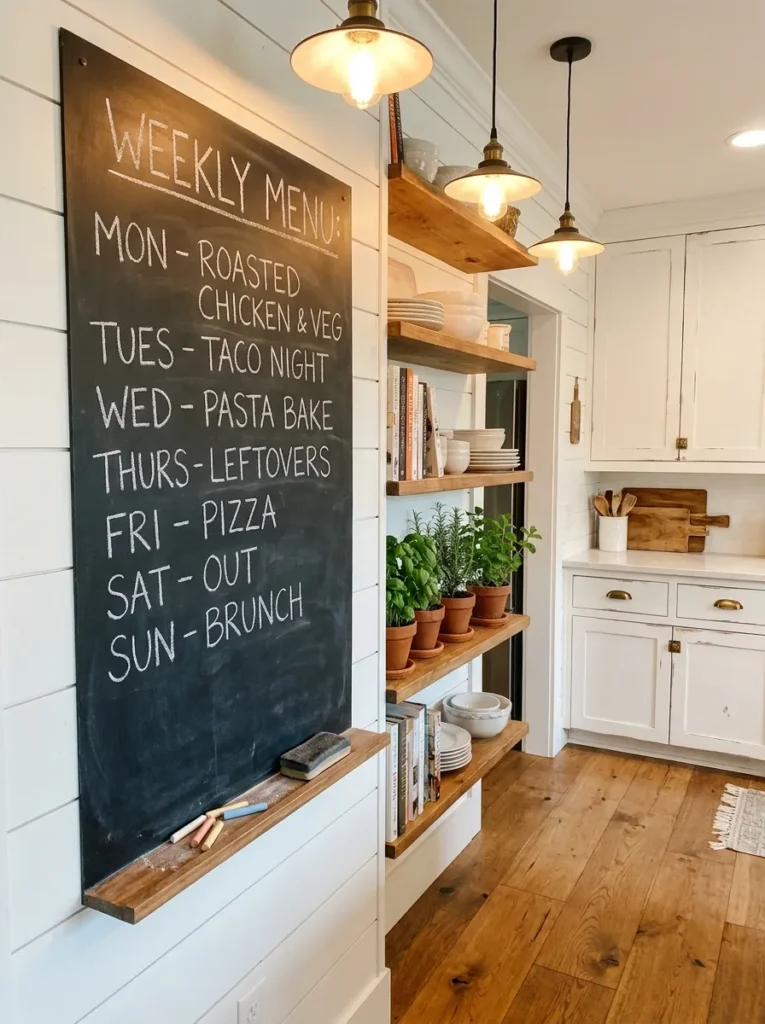
Chalkboard Wall or Panel
- A chalkboard wall adds personality, function, and a touch of handmade charm to any farmhouse kitchen
- Use it for weekly menus, grocery lists, family notes, or simple hand-lettered quotes
- Chalkboard paint can be applied directly to any smooth wall surface for an affordable custom look
- A framed chalkboard panel is a flexible option that can be moved or replaced without repainting
- The matte black surface creates strong visual contrast against white walls and light cabinetry
A chalkboard wall or panel brings something rare into a farmhouse kitchen — a surface that is both decorative and genuinely useful every single day. Unlike most design features that are fixed and static, a chalkboard changes with your family’s life, reflecting weekly menus, shopping reminders, seasonal quotes, or a child’s drawing on any given morning. I’ve noticed that kitchens with a chalkboard wall consistently feel more personal and more alive than those without one, because the surface invites participation rather than simply existing as background decoration. It communicates warmth, creativity, and a casual, welcoming spirit that fits the farmhouse aesthetic with complete naturalness and ease.
The design impact of a chalkboard goes well beyond its practical utility. Its deep matte black surface creates a bold visual anchor in rooms that are otherwise dominated by white, cream, and wood tones. That strong contrast gives the eye a resting point and adds a layer of graphic interest that photographs exceptionally well. That’s why many designers recommend positioning a chalkboard beside or behind open shelving, where the dark surface sets off displayed ceramics and greenery with particular clarity and depth. Whether you choose full chalkboard paint on an entire wall or a smaller framed panel, this farmhouse kitchen idea rewards you with daily usefulness, genuine personality, and a design detail that always feels current, creative, and completely at home
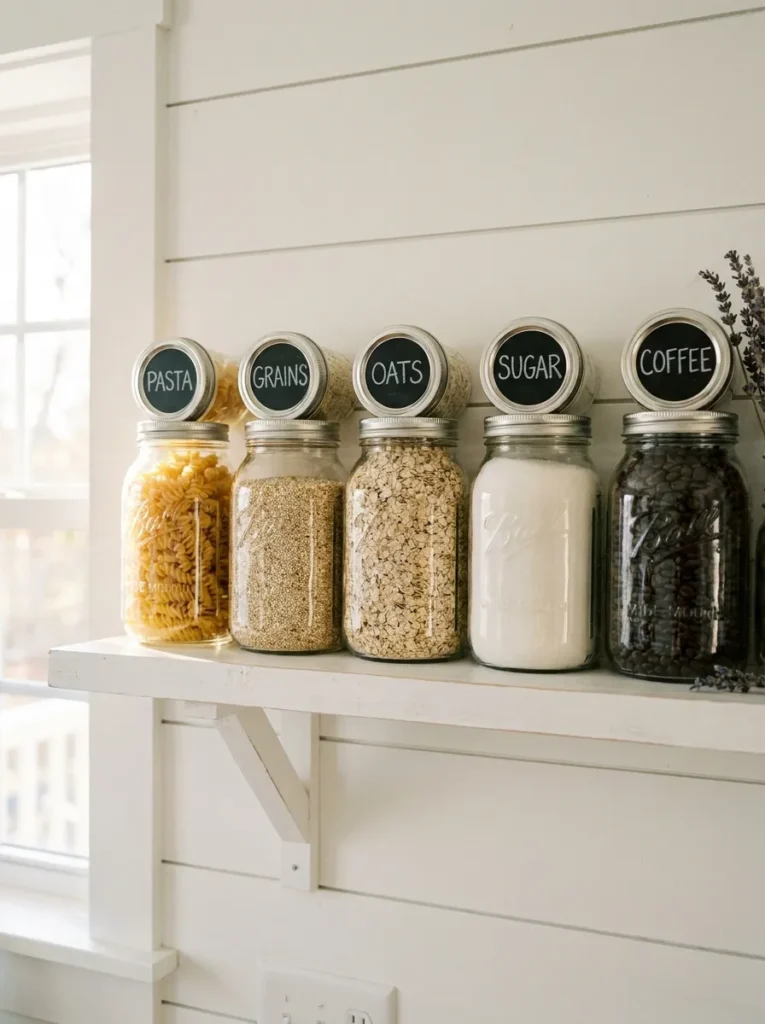
Mason Jar Storage
- Mason jars transform everyday pantry staples into a beautiful open-storage display
- The clear glass allows contents to be seen at a glance, reducing waste and saving time
- Hand-lettered chalkboard labels add a personal, artisan touch to the whole arrangement
- Uniform jar sizes create a clean, organized visual rhythm on shelves or countertops
- Wide-mouth mason jars are easy to fill, clean, and reuse indefinitely
Mason jar storage is one of those farmhouse kitchen ideas that makes perfect practical sense while also looking completely beautiful on display. Replacing mismatched plastic containers and paper bags with a coordinated row of glass jars immediately transforms a pantry shelf or open kitchen surface into something that feels organized, intentional, and genuinely lovely. I’ve noticed that once people switch to mason jar storage, they rarely go back — the combination of visual clarity, easy access, and aesthetic reward is simply too satisfying to abandon. The jars keep dry goods fresher longer, reduce packaging waste, and turn the simple act of reaching for oats or pasta into a small but pleasant daily experience.
The styling possibilities with mason jars extend well beyond basic pantry organization. Large wide-mouth jars work beautifully for bulk dry goods on open shelving. Smaller jars can hold fresh herb cuttings on a windowsill, homemade salad dressings in the refrigerator, or a collection of baking spices on the countertop. That’s why many designers recommend building your mason jar collection gradually across multiple sizes and using them throughout the kitchen rather than confining them to a single shelf. Tied together with consistent labeling — whether hand-lettered chalk tags or simple printed labels — a mason jar collection brings a cohesive, handcrafted quality to farmhouse kitchen storage that feels both functional and quietly beautiful every day.
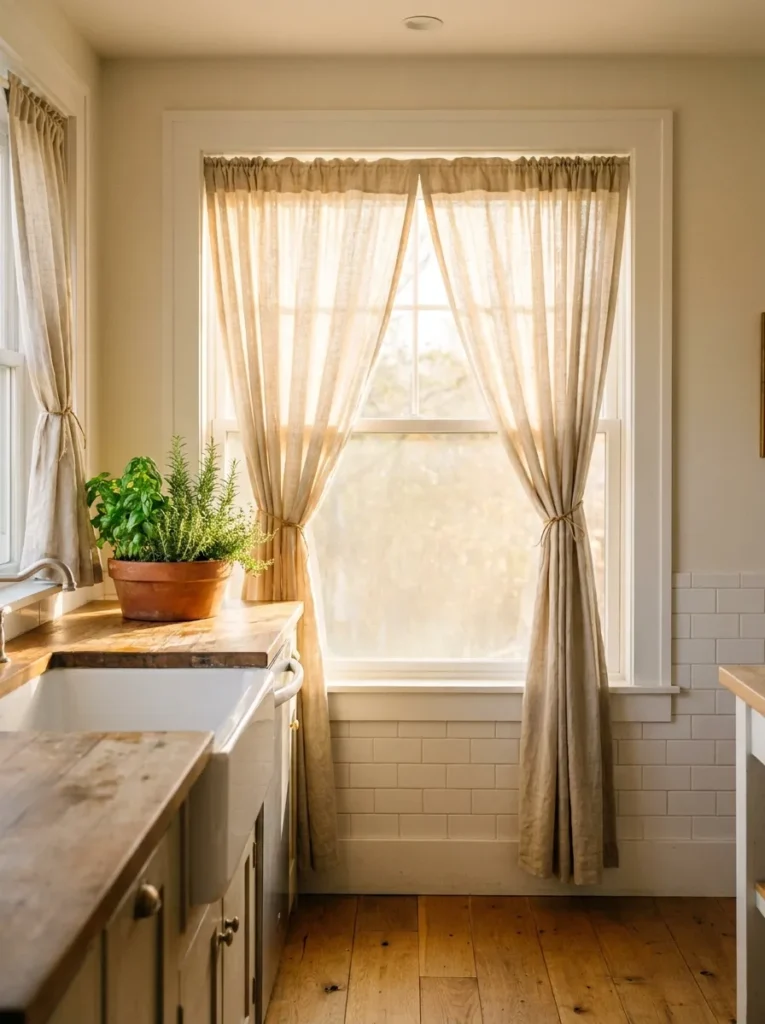
Farmhouse Window Treatments
- Natural linen curtains add softness and warmth to a kitchen dominated by hard surfaces
- Oatmeal, cream, or faded stripe patterns complement farmhouse color palettes beautifully
- Loosely tied-back panels allow maximum natural light while maintaining a relaxed, lived-in look
- Roman shades in ticking stripe or grain sack fabric are a clean, tailored farmhouse alternative
- A simple windowsill herb garden styled beneath the curtains completes the cottage farmhouse scene
Window treatments are one of the most overlooked finishing touches in farmhouse kitchen design, yet they carry remarkable power to soften, warm, and complete a space that might otherwise feel slightly unfinished. A bare kitchen window, however beautiful its view, lacks the layered warmth that fabric naturally introduces into a room full of hard surfaces. In my experience, the right curtain panels or Roman shades instantly make a kitchen feel more intentional and more inviting, adding color, texture, and a gentle sense of enclosure that transforms the window from a practical opening into a genuine design feature worth noticing and appreciating every single morning.
The fabric choice matters enormously when dressing a farmhouse kitchen window. Natural linen in undyed or oatmeal tones is the most authentic and versatile option, offering softness without heaviness and a relaxed drape that suits the casual farmhouse spirit perfectly. Grain sack stripe fabric or ticking cotton brings a more vintage, country-inspired character. That’s why many designers recommend avoiding synthetic sheers or heavily patterned fabrics in farmhouse kitchens, as these tend to clash with the natural, organic materials that define the style. Keep the hardware simple — a wooden curtain rod with iron brackets or basic black metal rings — and let the fabric itself carry the warmth and personality that every well-finished farmhouse kitchen genuinely deserves.

Antique or Vintage Accessories
- Vintage accessories introduce genuine history, texture, and soul into a farmhouse kitchen
- A worn wooden bread board, antique crock, or old kitchen scale adds instant character
- Grouping vintage pieces in odd numbers creates a visually balanced and naturally styled arrangement
- Mixing different materials — wood, ceramic, wire, and iron — adds depth and tactile richness
- Thrift stores, estate sales, and online vintage markets are excellent affordable sources for authentic pieces
Antique and vintage accessories are what separate a farmhouse kitchen that feels genuinely authentic from one that simply looks like a staged catalog photo. Real farmhouse style was never about perfection — it was about accumulation, usefulness, and the beauty of objects that carry visible history and honest wear. I’ve noticed that the kitchens people fall most deeply in love with on Pinterest are almost always the ones where a handful of imperfect, well-chosen vintage pieces sit alongside the newer elements, creating a sense of layered time that no brand-new accessory collection can manufacture or replicate regardless of budget or careful planning and effort.
The art of using vintage accessories well lies in restraint and intentional grouping. A cluttered collection of mismatched old items simply looks messy. But three or five carefully chosen pieces — a ceramic crock, a worn cutting board, a small antique scale — arranged with breathing room between them create a vignette that feels curated, personal, and visually satisfying. That’s why many designers recommend starting with one strong vintage anchor piece and building outward slowly rather than filling every surface at once. Visit estate sales, flea markets, and thrift stores with an open mind and a specific material palette in mind — warm wood, aged ceramic, and weathered iron will guide you naturally toward pieces that belong together in a beautiful farmhouse kitchen.
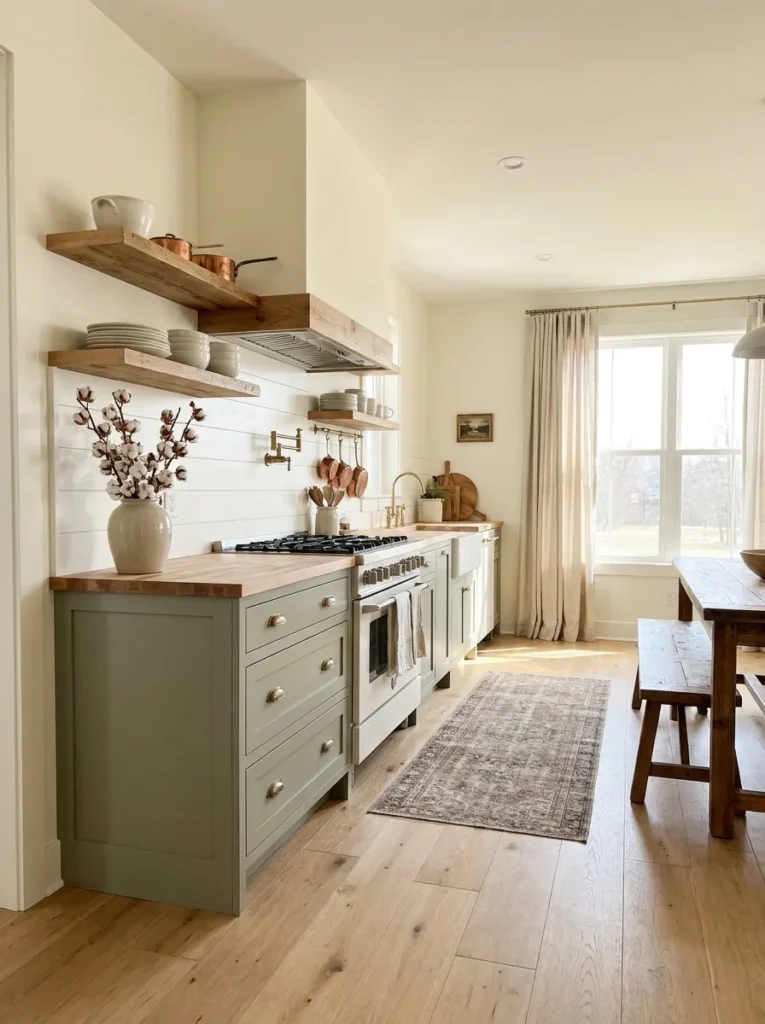
Farmhouse Color Palette
- A farmhouse color palette built on warm whites, soft creams, and muted naturals creates instant visual harmony
- Sage green, dusty blue, or warm grey cabinetry adds quiet color without disrupting the relaxed mood
- Pairing light upper cabinets with a slightly deeper lower cabinet color adds dimension and visual grounding
- Warm undertones in white paint — cream, linen, or ivory — feel far more natural in farmhouse kitchens than stark cool whites
- Natural wood, aged brass, and matte black accents tie a farmhouse color palette together with effortless cohesion
Color is the invisible architecture of a farmhouse kitchen — it sets the emotional tone of the entire space before a single piece of furniture or accessory is even noticed. The most successful farmhouse kitchens are built on palettes that feel warm, calm, and quietly layered rather than stark or aggressively colorful. In my experience, the single most common mistake homeowners make when designing a farmhouse kitchen is choosing a paint white that reads too cool or too blue-grey under natural light, creating a clinical feeling that works against every warm wood, vintage textile, and ceramic accessory placed within the space throughout the day.
Warm white walls paired with a soft muted cabinet color — sage green, dusty blue, or warm putty — create the kind of gentle color contrast that defines modern farmhouse kitchens beautifully. These colors feel fresh without being bold, distinctive without being demanding, and they age gracefully as trends shift around them. That’s why many designers recommend investing significant time in testing paint samples on actual kitchen walls across different lighting conditions before committing to a final choice. A color that looks perfect on a small chip card can read entirely differently across an entire cabinet run or wall. Take your time with the palette — it is the single decision that most powerfully shapes how your finished farmhouse kitchen feels every day.
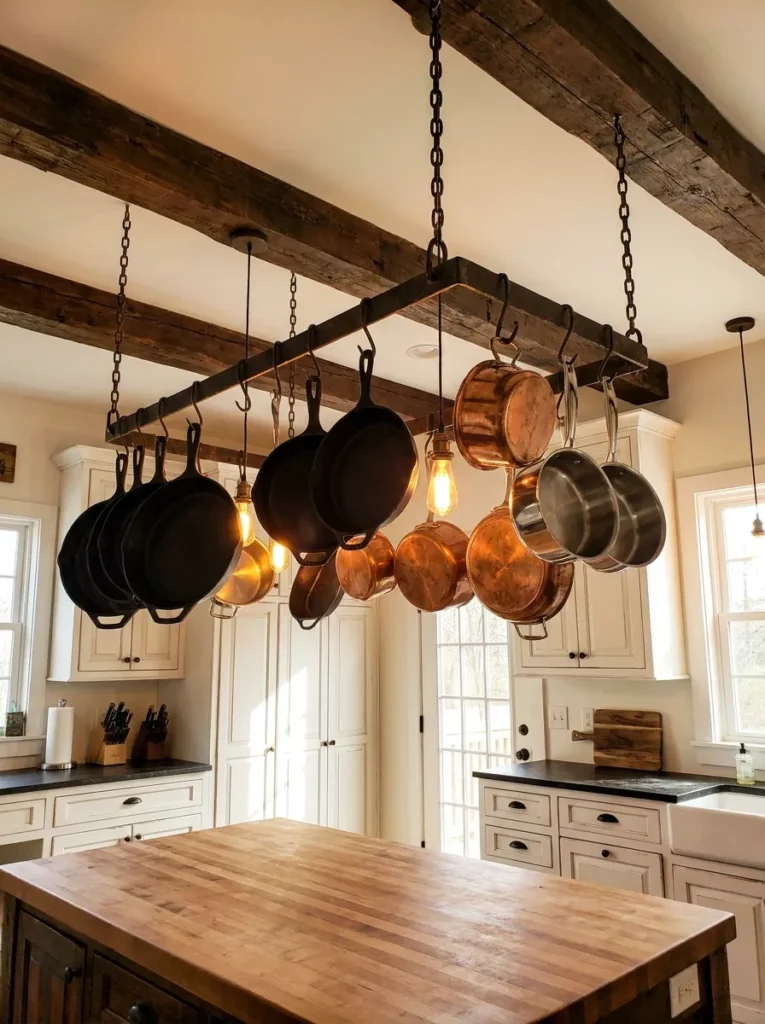
Pot Rack Above Island
- A hanging pot rack frees up valuable cabinet storage while putting beautiful cookware on display
- Wrought iron or black metal rectangular racks suit farmhouse kitchens with particular authenticity
- Suspending the rack from exposed ceiling beams reinforces the rustic architectural character overhead
- Mixing copper, cast iron, and stainless cookware on the rack creates a rich, varied visual display
- S-hooks allow easy rearranging and immediate access to the most frequently used pots and pans
A pot rack above the kitchen island is one of those farmhouse design ideas that earns its place on both practical and aesthetic grounds simultaneously. From a purely functional perspective, it liberates an enormous amount of cabinet storage by relocating bulky cookware to overhead display. From a design perspective, it fills the often-neglected vertical space above the island with something visually rich, textured, and deeply characteristic of authentic working farmhouse kitchens. I’ve seen pot racks transform kitchens that felt slightly bare and unfinished overhead into spaces that suddenly feel complete, layered, and full of the kind of purposeful character that defines truly great farmhouse kitchen design at every level.
The cookware you choose to display on a farmhouse pot rack matters as much as the rack itself. A collection of well-seasoned cast iron skillets, warm copper saucepans, and simple stainless stockpots hanging together creates a visually satisfying mix of tones, textures, and shapes that no purely decorative element could replicate. That’s why many designers recommend treating your cookware collection as a deliberate display rather than simply a storage solution. Invest gradually in pieces that are genuinely beautiful as well as functional — a quality cast iron skillet or a copper sauté pan ages magnificently and rewards display in a way that basic non-stick cookware simply never will, regardless of how well it performs during everyday cooking.
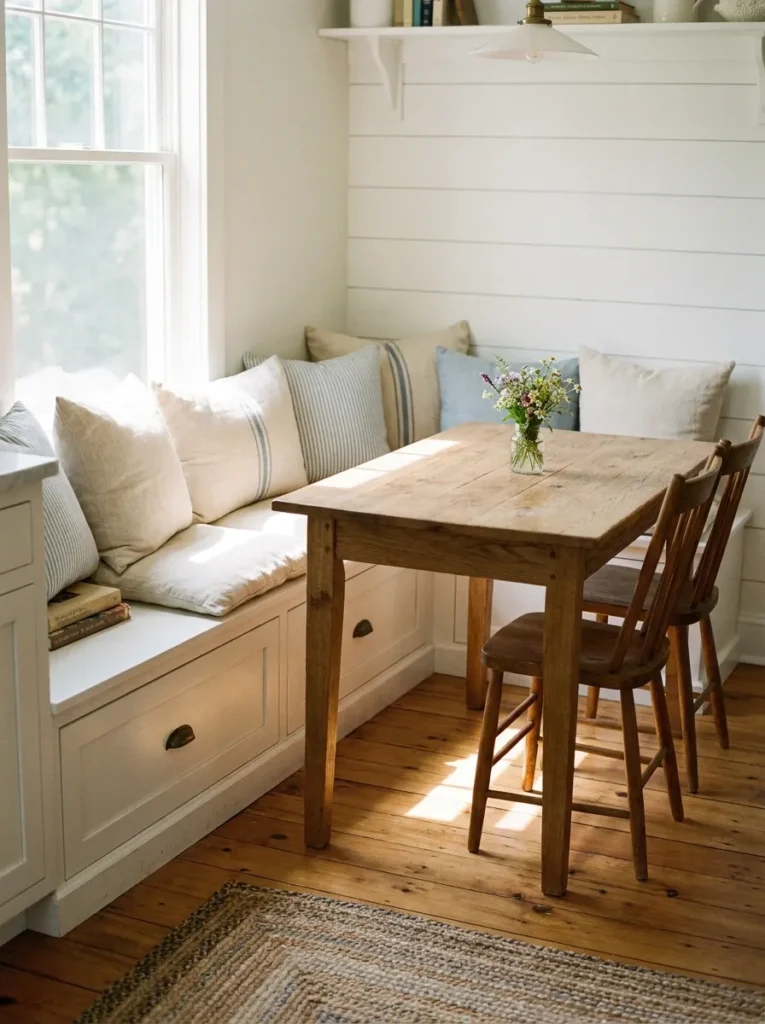
Farmhouse Kitchen Nook
- A built-in kitchen nook creates an intimate dining space that feels cozy, purposeful, and completely farmhouse
- Bench storage drawers beneath the seat maximize space in smaller kitchen layouts efficiently
- Linen or ticking stripe cushions add softness, color, and farmhouse textile character to the seating
- A shiplap wall behind the bench anchors the nook visually and reinforces the overall design theme
- The nook naturally becomes the most used and most loved corner of the entire kitchen over time
A farmhouse kitchen nook is one of those design features that people often describe as the reason they fell in love with a home. There is something deeply human about a tucked-away corner with a cushioned bench, a small table, and warm morning light filtering in from nearby — it invites you to sit longer, eat slower, and feel genuinely at home in your own kitchen. In my experience, families who add a built-in breakfast nook consistently report using it far more than a standard dining table setup, because the enclosed, cozy nature of the space creates a sense of comfort and belonging that open dining arrangements simply cannot replicate in quite the same way.
Building a kitchen nook into an unused corner is one of the smartest spatial decisions a farmhouse homeowner can make. The built-in bench provides hidden storage below — perfect for table linens, seasonal items, or children’s activity supplies — while the fixed seating arrangement creates a defined dining zone that feels architecturally intentional. That’s why many designers recommend the kitchen nook as a priority feature in smaller homes where a separate formal dining room is not practical or possible. Style the bench with layered cushions and a couple of relaxed linen pillows, place a small ceramic vase of seasonal flowers on the table, and the nook becomes an instant Pinterest-worthy corner that earns its place in the heart of every farmhouse kitchen.
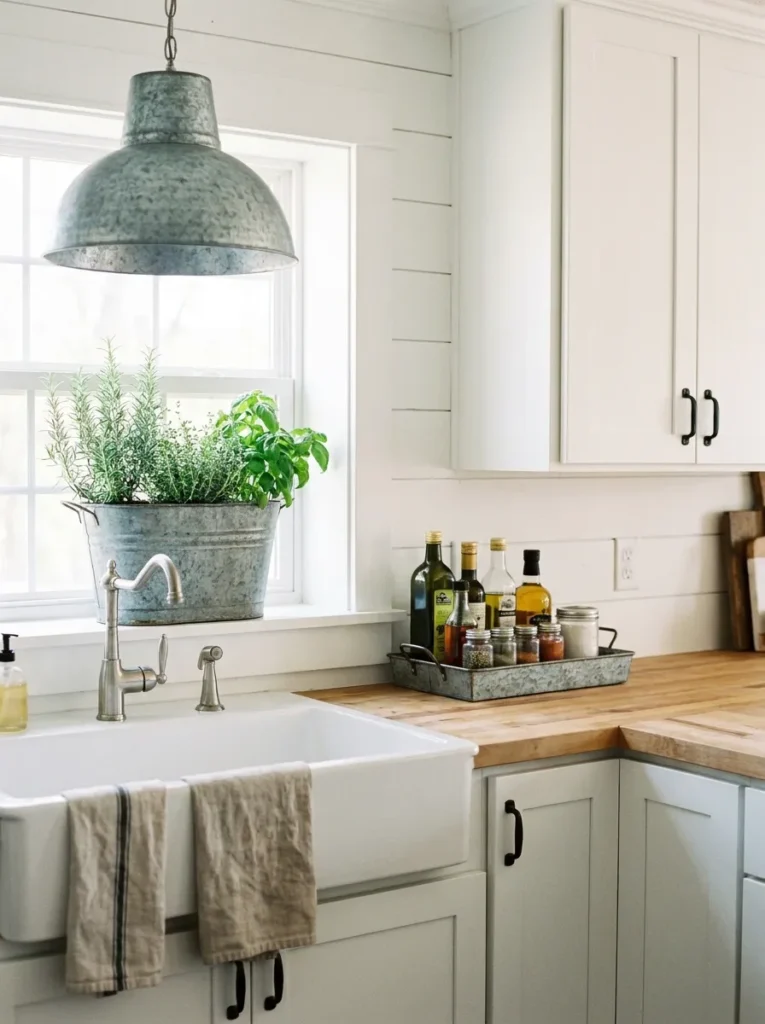
Galvanized Metal Accents
- Galvanized metal adds an industrial-farmhouse edge that feels authentic to working farm aesthetics
- Its cool silver-grey tone contrasts beautifully against warm wood, white walls, and natural textiles
- Galvanized buckets, trays, and planters are widely available, highly affordable, and endlessly versatile
- Using galvanized metal as a tray or organizer on countertops corrals clutter with style and purpose
- The matte, slightly rough texture of galvanized steel adds material contrast in kitchens with many smooth surfaces
Galvanized metal accents bring a rugged, working-farm authenticity to kitchen design that feels genuinely rooted in the farmhouse tradition. Unlike purely decorative accessories, galvanized pieces carry a sense of honest utility — they look like objects that were chosen because they work, not simply because they look appealing on a shelf. I’ve noticed that galvanized metal integrates particularly well into farmhouse kitchens that already feature warm wood tones and white walls, where its cool grey finish provides just enough material contrast to keep the overall palette feeling varied, grounded, and visually interesting without introducing a jarring or competing element into the established design scheme.
The versatility of galvanized metal in a farmhouse kitchen is one of its greatest strengths as a design material. A single galvanized tray on the countertop can organize oils, vinegars, and salt cellars into a cohesive display that looks intentional rather than cluttered. A galvanized bucket planter on the windowsill becomes a charming home for fresh herbs. A galvanized pendant light above the sink adds industrial character overhead. That’s why many designers recommend introducing galvanized metal in small, functional pieces first — trays, planters, buckets, and canisters — before committing to larger fixtures. This layered approach allows the material to feel naturally woven into the kitchen’s character rather than deliberately themed or overly coordinated.
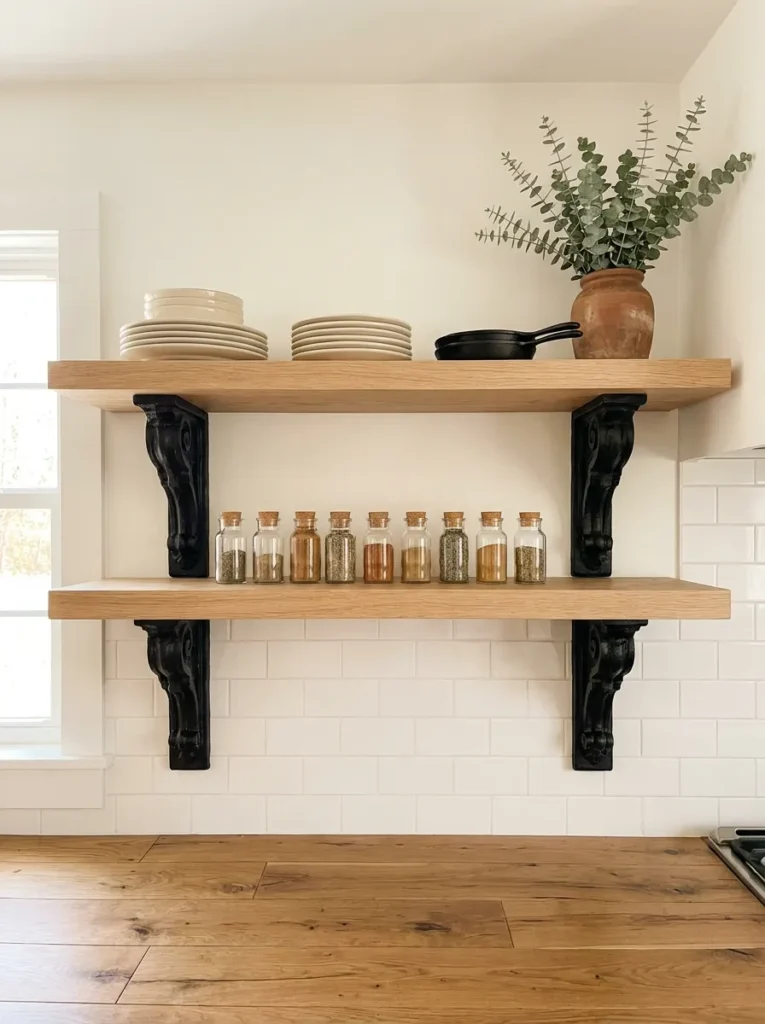
Farmhouse Floating Shelves with Brackets
- Decorative iron corbel brackets add bold farmhouse character that standard floating shelf hardware cannot match
- Thick solid wood shelves with visible grain feel more authentic and substantial than thin MDF alternatives
- Styling shelves with a mix of functional and decorative items creates a naturally balanced display
- Black iron brackets against white walls deliver one of the strongest visual contrasts in farmhouse design
- Corbel bracket shelves work beautifully in kitchens, dining areas, and open-plan living spaces alike
Floating shelves with decorative iron corbel brackets are a farmhouse kitchen detail that manages to feel both structurally impressive and effortlessly casual at the same time. The substantial bracket hardware communicates solidity and craft, while the open shelf surface invites relaxed, personal styling that evolves naturally over time. In my experience, shelves mounted on large corbel brackets consistently attract more attention and admiration than standard floating shelves, because the bracket itself becomes a visible design element rather than something hidden or minimized. The combination of thick wood and bold black iron is one of the most reliably beautiful material pairings in the entire farmhouse design vocabulary.
What distinguishes a truly well-styled farmhouse shelf from a simply well-stocked one is the deliberate mix of object types, heights, and textures arranged across its surface. Stacking ceramic plates vertically rather than horizontally, leaning a small cutting board against the wall, tucking a trailing plant over one edge, and grouping spice jars in a loose cluster rather than a rigid line — these small decisions collectively create a shelf that feels curated and alive rather than simply organized. That’s why many designers recommend approaching shelf styling as an ongoing creative exercise rather than a one-time arrangement. Swap seasonal items in and out, introduce new pieces gradually, and allow the shelf to reflect the natural rhythm of your kitchen life authentically.
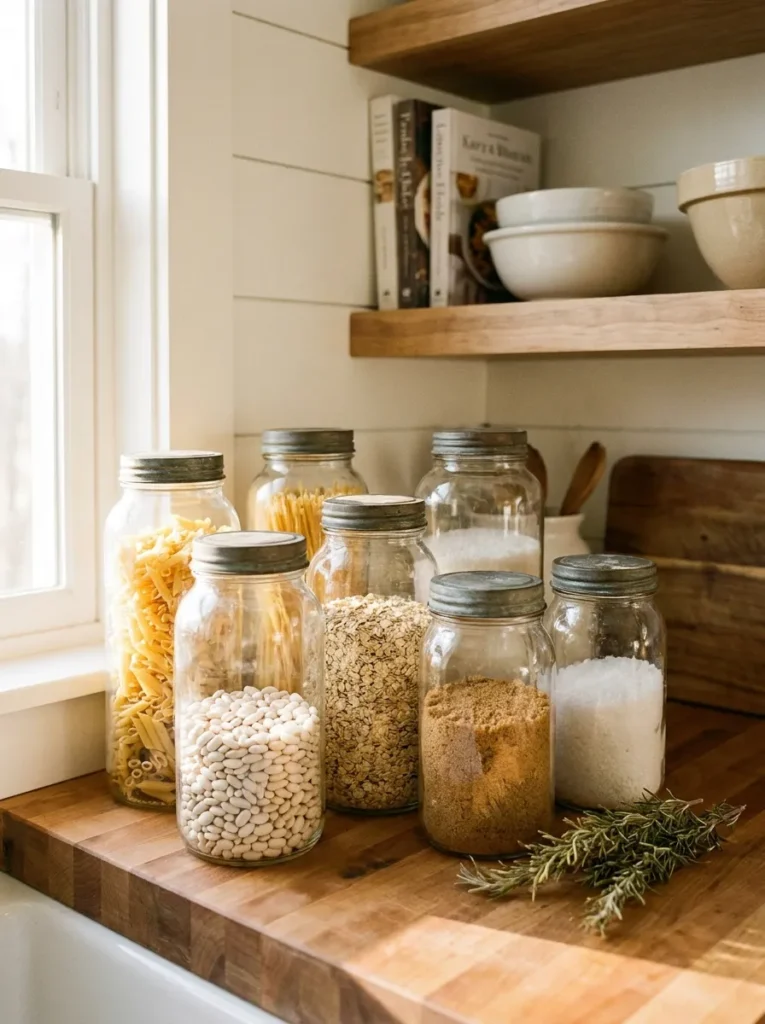
Farmhouse Apothecary Jars
- Apothecary jars add a refined, vintage-apothecary character that elevates everyday pantry storage beautifully
- Tall glass jars with metal lids create strong vertical visual interest on countertops and open shelves
- The clear glass transforms ordinary dry goods into an attractive and organized countertop display
- Grouping jars in varying heights adds natural visual rhythm without requiring additional accessories
- Aged or antique-style metal lids reinforce the vintage farmhouse aesthetic more effectively than plain plastic alternatives
Apothecary jars bring a sense of quiet elegance and vintage charm to farmhouse kitchen storage that no standard container can replicate. Their tall, cylindrical silhouettes create beautiful vertical lines on a countertop, drawing the eye upward and adding a sense of height and architectural interest to surfaces that might otherwise feel flat and one-dimensional. I’ve noticed that kitchens styled with a coordinated collection of apothecary jars consistently photograph with a particularly satisfying clarity and order, because the uniform glass material and consistent lid finish create a visual cohesion that makes even a simple countertop arrangement look intentional, considered, and genuinely beautiful from every angle.
Beyond their considerable aesthetic appeal, apothecary jars are a genuinely practical farmhouse kitchen storage solution. Their wide mouths make filling and scooping easy, their airtight lids keep dry goods fresh for longer periods, and their clear glass construction means you can assess quantities at a glance without opening every container during busy cooking sessions. That’s why many designers recommend transitioning to apothecary jar storage gradually, beginning with the dry goods you reach for most frequently — pasta, oats, sugar, and coffee — and expanding the collection over time as budget allows. A complete set of well-filled apothecary jars on open shelving or a kitchen countertop is one of the most visually rewarding and practically satisfying upgrades in any inspiring farmhouse kitchen setup.
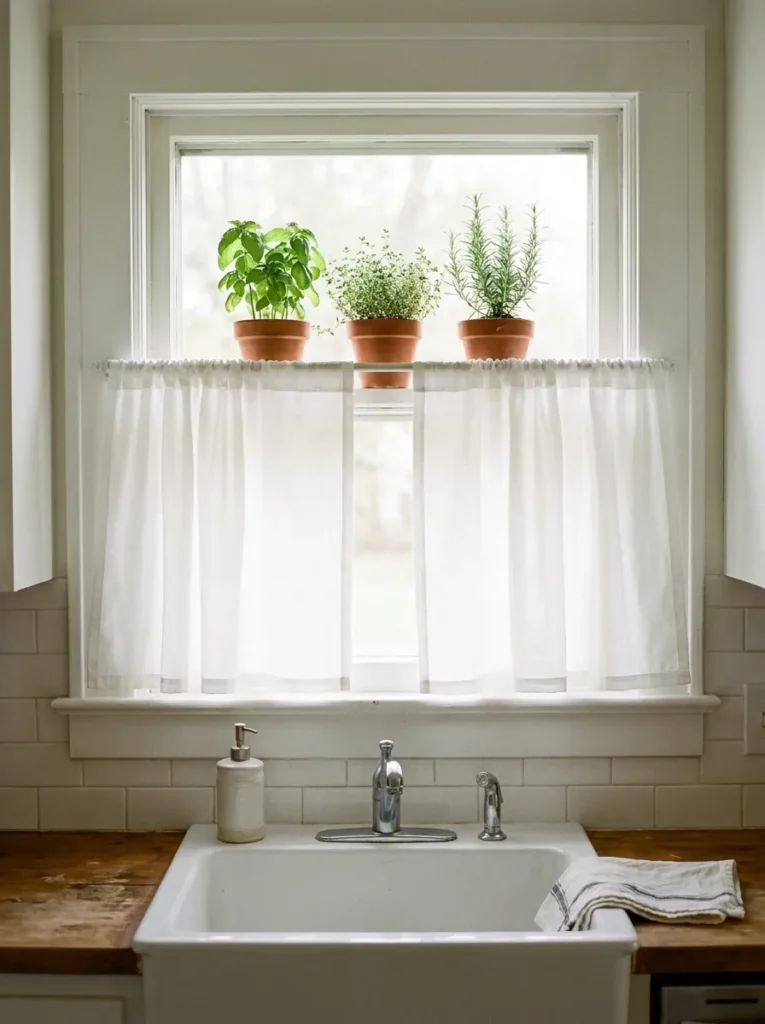
Farmhouse Kitchen Curtains
- Café curtains covering only the lower window half maintain privacy while allowing maximum natural light above
- White cotton or linen fabric keeps the look light, airy, and perfectly suited to farmhouse kitchens
- A simple tension rod or thin wooden dowel rod keeps the hardware minimal and unobtrusive
- Pairing café curtains with a small windowsill herb garden creates an instantly charming farmhouse vignette
- Lightweight cotton café curtains are easy to wash, swap seasonally, and replace affordably as styles evolve
Café curtains are one of the simplest and most charming window treatments available for farmhouse kitchens, and their enduring popularity is entirely deserved. By covering only the lower portion of the window, they solve the practical problem of street-level privacy without sacrificing the natural light that makes a kitchen feel bright, welcoming, and alive throughout the day. I’ve noticed that café curtains have a particular ability to make a kitchen window feel dressed and intentional without the heaviness or formality that full-length curtains can sometimes introduce into a space that is meant to feel relaxed, casual, and genuinely comfortable for everyday family life and cooking.
The fabric and color you choose for farmhouse kitchen curtains shapes the entire mood of the window area significantly. Crisp white cotton reads as clean, fresh, and timeless. Natural undyed linen feels softer, warmer, and more relaxed. A simple ticking stripe in cream and soft blue adds a gentle vintage character without being overly themed or costume-like. That’s why many designers recommend keeping farmhouse kitchen curtain fabric as simple and natural as possible, allowing the texture of the weave itself to carry the visual interest rather than relying on bold prints or elaborate patterns. Finish the look with a small collection of potted herbs on the windowsill above, and the entire kitchen window becomes one of the most quietly beautiful and genuinely farmhouse corners in the room.
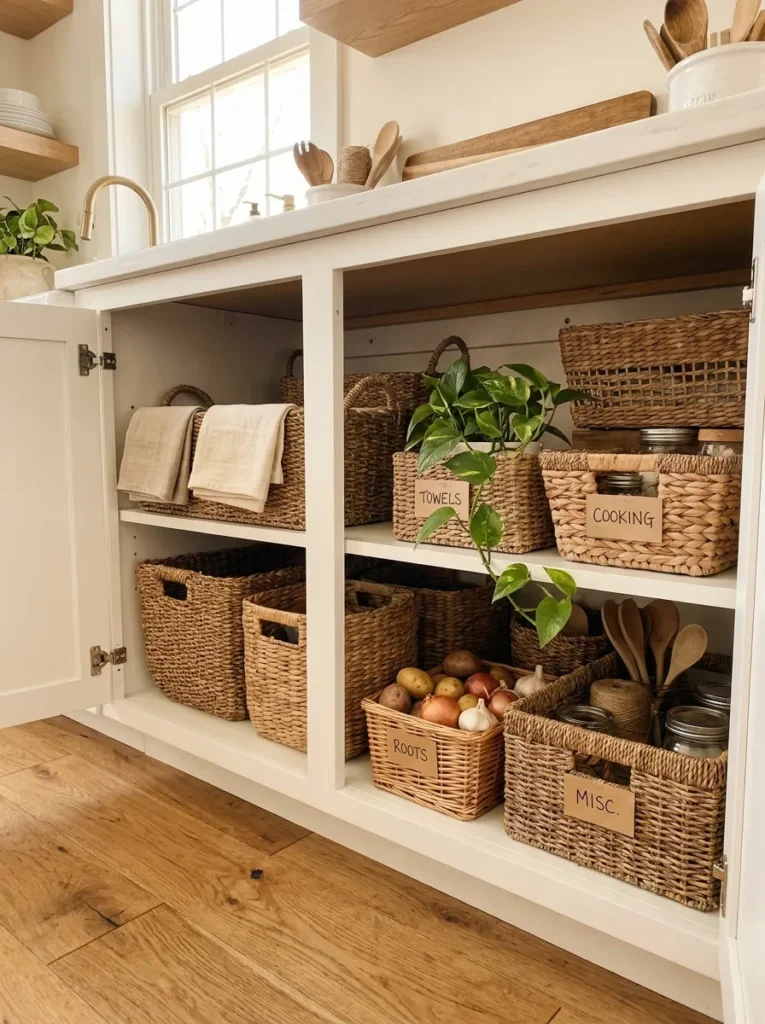
Woven Baskets for Storage
- Woven baskets add natural texture, warmth, and organic material contrast to kitchen storage areas
- Using baskets inside open lower cabinet shelves conceals clutter while maintaining a relaxed, styled appearance
- Varying basket sizes and weave patterns creates a naturally layered and visually interesting storage display
- Simple hand-written labels on baskets maintain organization without sacrificing the casual farmhouse aesthetic
- Seagrass, rattan, and water hyacinth baskets are affordable, widely available, and naturally beautiful
Woven baskets are among the hardest-working and most visually rewarding accessories in a farmhouse kitchen. They perform the essential organizational function of containing and concealing everyday clutter while simultaneously introducing natural texture, warmth, and an organic quality that no plastic bin or wire basket can replicate. In my experience, the transformation that happens when plain open shelving or lower cabinet cubbies are filled with a coordinated collection of woven baskets is immediate and genuinely impressive — the space shifts from looking unfinished and potentially messy to feeling deliberately styled, warmly organized, and completely at home within the farmhouse aesthetic.
The natural materials used in woven baskets — seagrass, rattan, water hyacinth, and wicker — complement every other organic element in a farmhouse kitchen with effortless harmony. They sit comfortably alongside butcher block countertops, reclaimed wood shelving, linen textiles, and ceramic accessories without competing for visual attention or disrupting the overall palette. That’s why many designers recommend building a basket collection that mixes two or three complementary weave textures and natural tones rather than purchasing perfectly matching identical pieces. The slight variation between different natural baskets creates the kind of relaxed, collected feeling that defines authentic farmhouse style — organized enough to feel intentional, imperfect enough to feel genuinely lived-in and beautifully real.
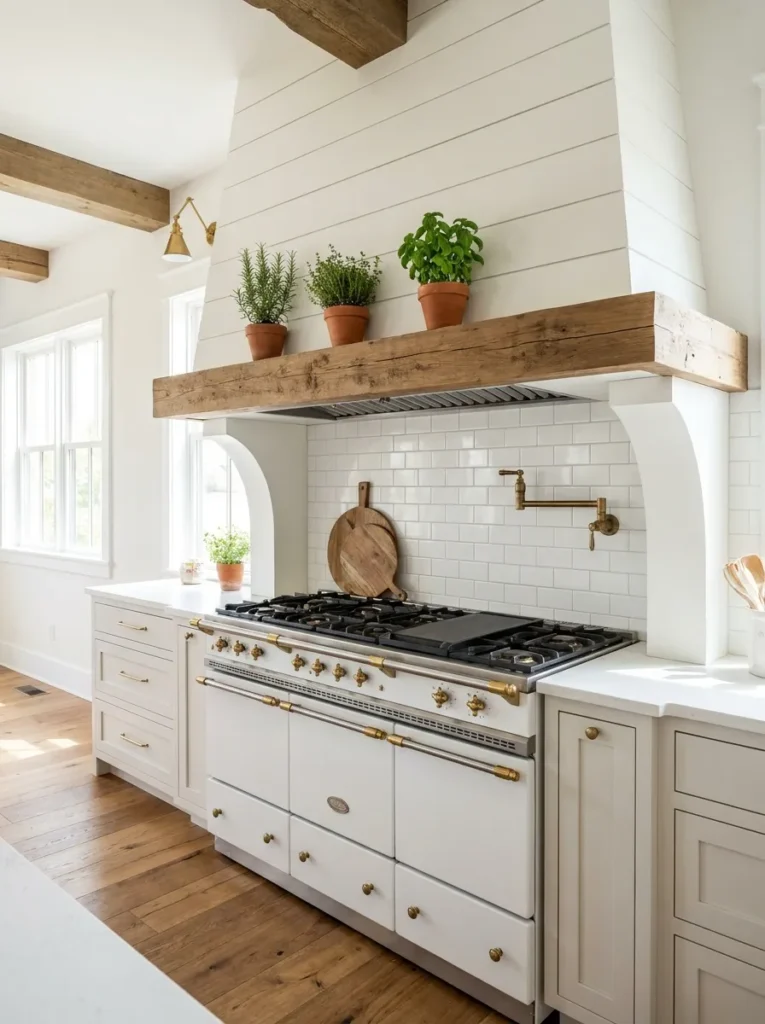
Farmhouse Stove and Range Hood
- A statement range hood instantly becomes the strongest architectural focal point in any farmhouse kitchen
- Shiplap or wood-paneled hood construction reinforces the farmhouse material story beautifully
- A thick wooden mantel shelf above the hood provides a natural display surface for seasonal accessories
- White enamel ranges with cast iron grates and colored knobs deliver authentic farmhouse character alongside professional cooking performance
- A wall-mounted pot filler beside the range adds both genuine convenience and striking visual detail
A beautifully designed stove and range hood combination is arguably the single most powerful focal point available in farmhouse kitchen design. When executed well, this pairing commands the entire kitchen visually — drawing every eye toward the cooking wall and communicating a sense of warmth, craft, and culinary seriousness that no other kitchen element can quite replicate. I’ve noticed that kitchens built around a statement range hood consistently feel more architecturally complete than those without one, because the hood fills the critical vertical space above the stove with something substantial, intentional, and deeply characteristic of the farmhouse aesthetic at its most confident and well-realized best.
The design details surrounding the range hood matter enormously in achieving an authentic farmhouse result. A shiplap-clad hood with a thick wooden mantel shelf above creates a fireplace-like quality that anchors the cooking wall with genuine architectural weight. Subway tile wrapping the surrounding backsplash area adds clean contrast and easy maintenance. A brass or aged bronze pot filler mounted on the adjacent wall introduces both practical function and a refined decorative detail that elevates the entire cooking zone. That’s why many designers recommend treating the stove wall as a complete architectural composition rather than a collection of individual elements, ensuring every component — hood, tile, hardware, and accessories — works together as a unified and beautifully considered farmhouse kitchen statement.
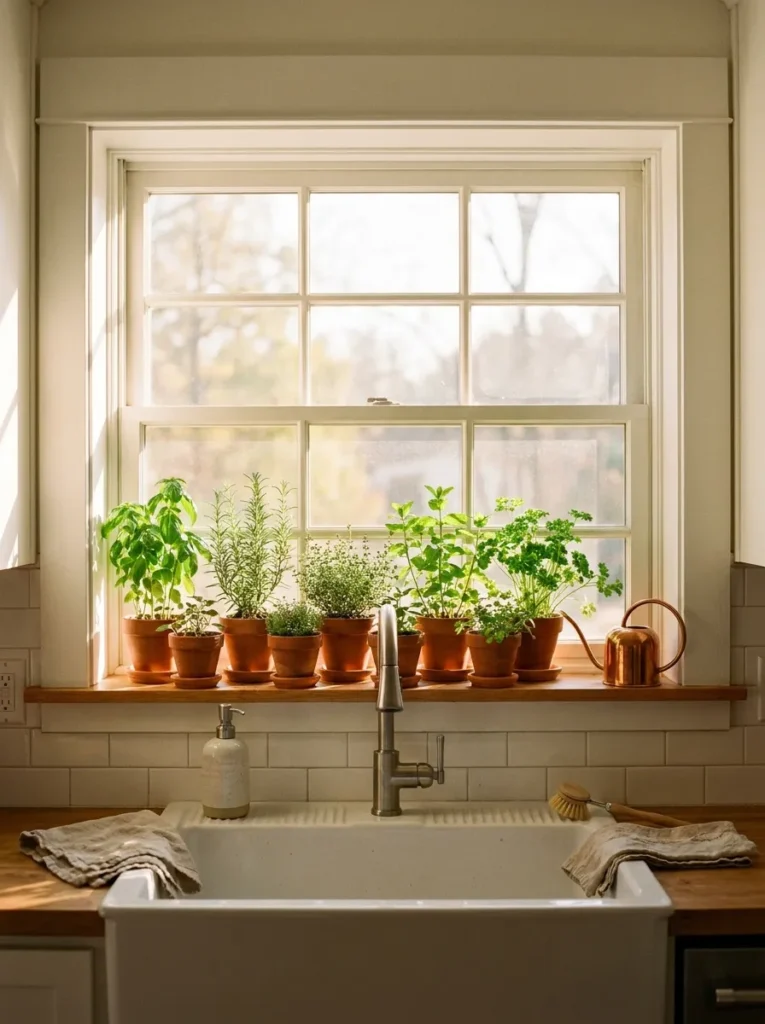
Farmhouse Herb Garden Window
- A windowsill herb garden brings living color, fragrance, and genuine daily usefulness into the kitchen
- Terracotta pots complement farmhouse materials naturally with their warm, earthy, unglazed texture
- Growing herbs directly in the kitchen reduces food waste and encourages more intuitive, creative cooking
- Arranging pots in varying heights and grouping by use or color creates a naturally pleasing windowsill display
- The combination of natural light, green plants, and terracotta against white tile is one of the most beloved farmhouse kitchen vignettes
A farmhouse herb garden window is one of those kitchen details that engages all the senses simultaneously and makes a space feel genuinely alive in a way that purely decorative elements simply cannot. The sight of fresh green herbs catching morning sunlight, the subtle fragrance released when a rosemary stem is brushed in passing, and the immediate practical pleasure of snipping fresh basil directly into a simmering pan — these small sensory experiences collectively make a kitchen feel like a place of real nourishment and daily joy. I’ve noticed that even a modest collection of three or four herb pots on a sunny windowsill transforms the entire feeling of a kitchen from purely functional to warmly, meaningfully inhabited.
The windowsill above an apron front sink is the single most iconic location for a farmhouse herb garden, and for very good reason — it receives consistent natural light, stays conveniently accessible during cooking, and creates a living vignette that frames the sink area with color, texture, and organic life. Terracotta pots are the ideal container choice, aging beautifully with each watering and developing a soft, salt-dusted patina that adds character over time. That’s why many designers recommend starting with the herbs you actually cook with most frequently — basil, thyme, rosemary, and flat-leaf parsley — rather than filling the sill with varieties that look beautiful but rarely get used. A working herb garden that is genuinely used and tended is always more beautiful and more farmhouse in spirit than a purely decorative one.
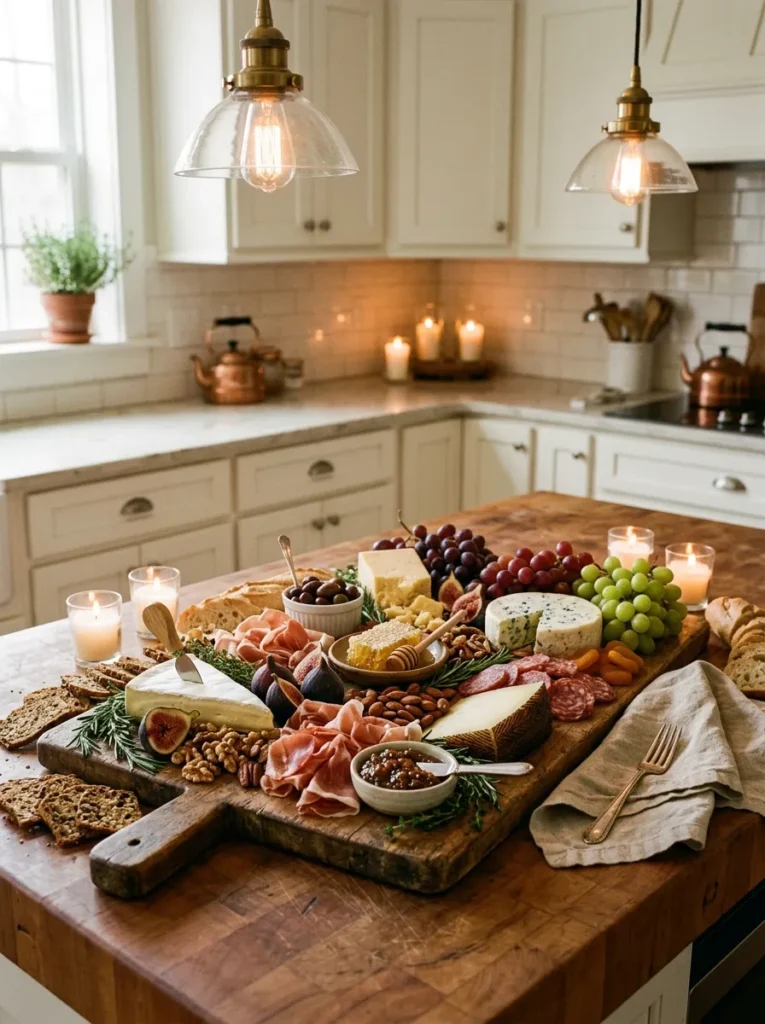
Farmhouse Kitchen Charcuterie Display
- A styled charcuterie board on the kitchen island transforms everyday entertaining into a genuine farmhouse moment
- Using a large worn wooden bread board as the base immediately establishes rustic, authentic farmhouse character
- Small ceramic ramekins, linen napkins, and fresh herb garnishes elevate the display with natural farmhouse materials
- Warm candlelight combined with pendant lighting creates the most flattering and inviting ambiance for entertaining
- The kitchen island becomes a natural gathering and entertaining focal point when styled with an abundant board display
A beautifully styled charcuterie display on a farmhouse kitchen island communicates something deeply welcoming about a home — that this is a space where people gather, linger, and feel genuinely cared for. The farmhouse kitchen has always been about nourishment in the broadest sense, and a generously arranged board of cheeses, cured meats, fresh fruit, and honeycomb captures that spirit with remarkable completeness. In my experience, no single styling moment photographs more beautifully or creates more immediate warmth during entertaining than a well-assembled charcuterie display on a butcher block island surface, surrounded by the warm glow of pendant lighting and a few flickering candles placed thoughtfully nearby.
What makes a charcuterie display feel authentically farmhouse rather than simply elegant is the deliberate choice of vessels, surfaces, and organic garnishes surrounding the food itself. A large, worn wooden bread board with visible knife marks and natural aging carries far more farmhouse character than a pristine slate or marble serving board. Small handmade ceramic ramekins holding olives or fig jam add artisan texture. Fresh rosemary sprigs and dried lavender tucked between food groupings introduce living color and fragrance. That’s why many designers and entertaining enthusiasts recommend building your farmhouse charcuterie display from the board outward, letting the natural shapes and colors of quality ingredients guide the arrangement rather than forcing a rigid, overly symmetrical layout that loses the relaxed, abundant spirit that makes this display so universally and enduringly beloved.
Conclusion
Your dream farmhouse kitchen is closer than you think. Every idea in this article — from shiplap walls and apron sinks to woven baskets and vintage accessories — is designed to help you build a space that feels warm, personal, and genuinely beautiful every single day. I’ve seen how small, intentional changes like these can completely transform a kitchen from a purely functional room into the heart of a home. These inspiring farmhouse kitchen design ideas prove that great design is about feeling as much as appearance. Save this post on Pinterest, share it with someone planning a kitchen refresh, and start with just one idea today.