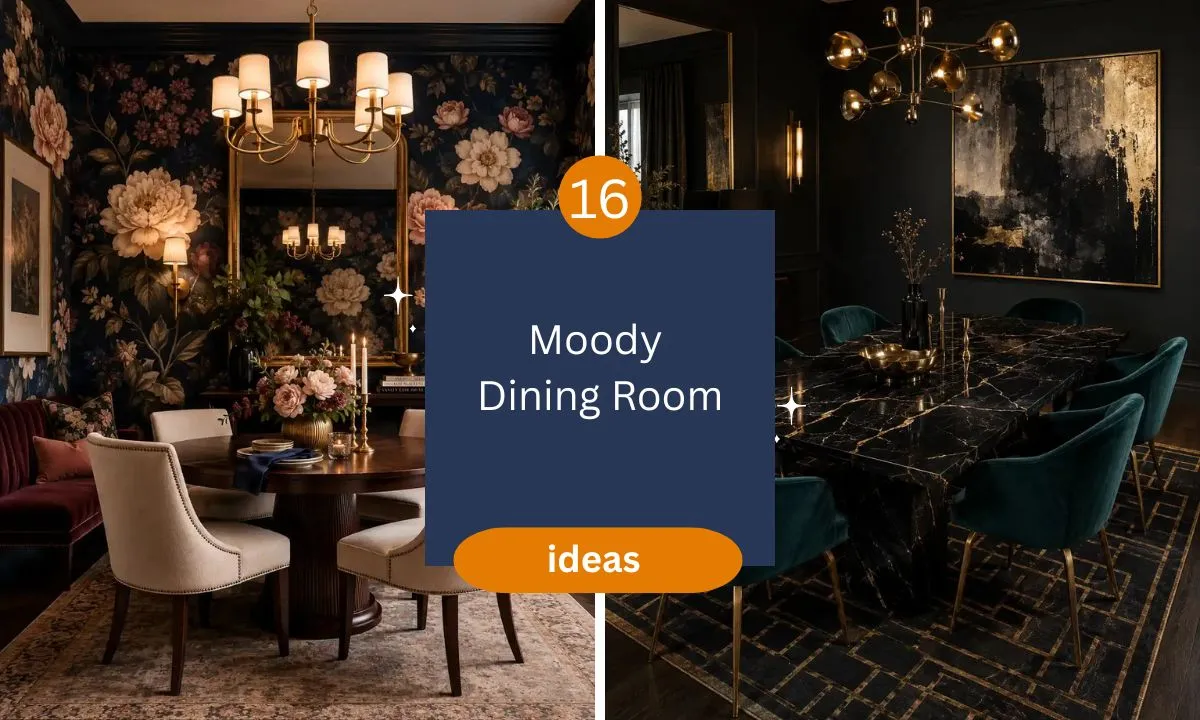
16 Moody Dining Room Ideas for an Elegant and Eclectic Vibe
Introduction
Your dining room deserves to feel like somewhere truly special, not just a place to eat, but a space that draws people in and makes them want to stay. If you have ever scrolled through Pinterest and felt instantly captivated by a dark, dramatic, candlelit dining room dripping with personality and elegance, you already understand the magnetic pull of moody dining room ideas elegant eclectic design brings to life.
This style is not about following rigid rules, it is about layering rich colors, warm textures, curated lighting, and personal touches that together create an atmosphere unlike anything a standard beige dining room could ever achieve. I’ve noticed that even small, budget-conscious changes to a dark paint color here, a velvet chair there, a cluster of candles on the table can completely shift how a dining room feels and functions.
Whether you are starting from scratch or refreshing an existing space, these 16 ideas will give you the inspiration, confidence, and practical direction to create a dining room that feels deeply intentional, visually stunning, and genuinely yours.
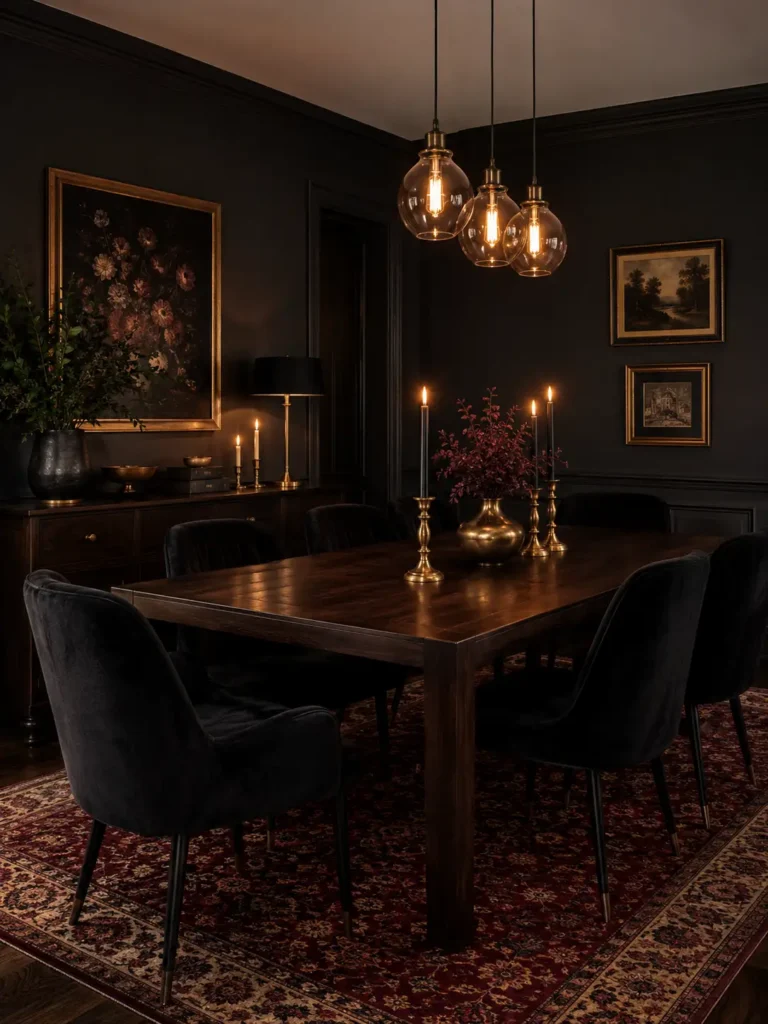
Deep Charcoal Walls
- Deep charcoal walls instantly create a cozy, cave-like atmosphere that feels both dramatic and sophisticated
- The dark backdrop makes warm metallic accents like gold or brass pop beautifully
- This wall color pairs naturally with rich wood tones, velvet textures, and layered lighting
- It works surprisingly well in smaller dining rooms the darkness creates intimacy rather than making the space feel cramped
- I’ve noticed that charcoal walls make artwork and statement lighting look far more curated and intentional
Dark charcoal walls are one of the most powerful moves you can make in a dining room transformation. Unlike pale neutrals, charcoal absorbs light softly and creates a rich, layered backdrop that makes everything in the room look intentional and elevated. The depth this single color adds is remarkable: furniture looks more grounded, candlelight glows warmer, and the entire space shifts into something that feels genuinely special. In my experience, even budget-friendly furniture reads as luxurious against a deep charcoal wall, which makes this one of the most cost-effective upgrades available.
What makes this idea work so well is how versatile charcoal actually is in practice. It pairs effortlessly with warm brass fixtures, deep jewel-toned soft furnishings, natural wood, and even bold patterned rugs. The result never feels flat or cold instead, the room develops a personality that lighter walls simply cannot achieve. Many designers recommend this shade specifically for dining rooms because the space is used primarily in the evening, when dim lighting and dark tones create exactly the kind of atmosphere people want around a dinner table. The moody dining room’s elegant eclectic aesthetic truly begins with this foundational color choice.
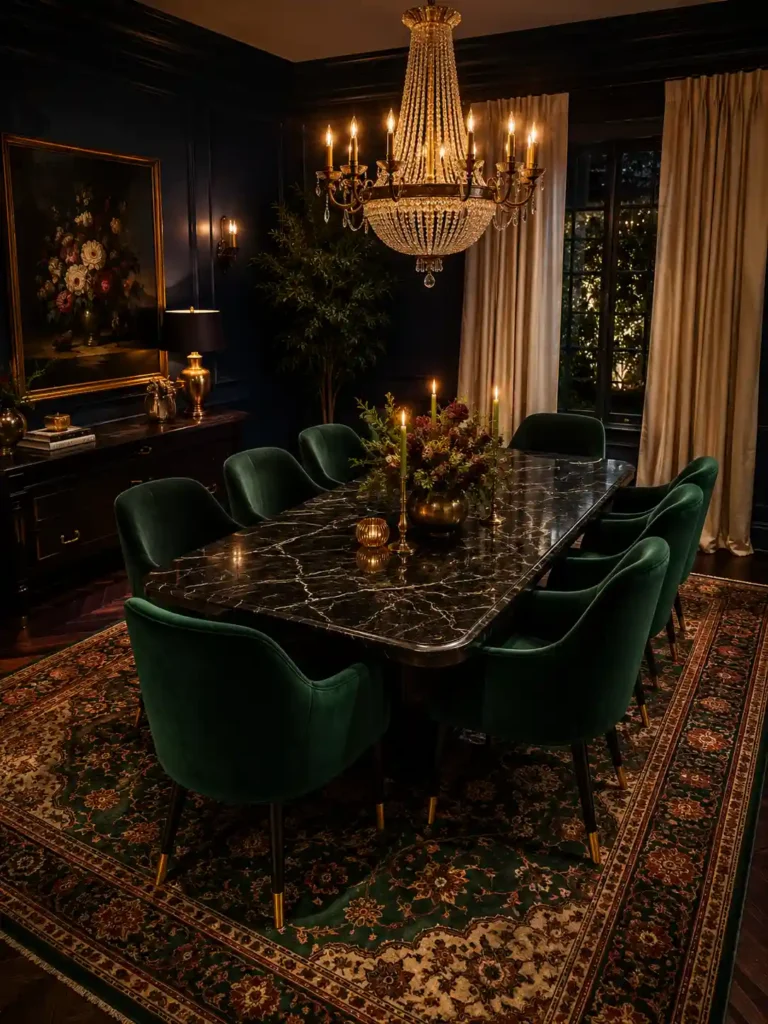
Velvet Chair Seating
- Velvet dining chairs immediately add a layer of richness and tactile luxury to any dining space
- Deep jewel tones like emerald, sapphire, or burgundy velvet work especially well against dark moody walls
- The soft texture of velvet absorbs light beautifully, contributing to a warm and intimate room atmosphere
- Velvet chairs are surprisingly practical modern velvet fabrics are durable, easy to wipe clean, and hold shape well
- Mixing velvet chairs with a marble or dark wood table creates a high-contrast, editorial-style dining setup
Velvet chairs are one of those design choices that completely change how a dining room feels the moment you walk in. The texture alone signals comfort, luxury, and intention qualities that are hard to achieve with standard upholstered or wooden seating. Deep-toned velvets in jewel shades like forest green, inky navy, or wine red add visual weight and drama that feels layered and considered. I’ve seen this work beautifully in homes where everything else is fairly simple. The velvet chairs become the statement piece that ties the whole room’s mood together without requiring major renovation or investment.
Beyond aesthetics, velvet seating also contributes something genuinely functional to the dining experience. Guests tend to linger longer at a table when the seating is comfortable and inviting, which is exactly what a moody, elegant dining space should encourage. The plush surface softens the harder lines of dining tables and pendant lights, creating a sense of balance in the room. Pairing deep velvet with warm overhead lighting enhances the richness of the fabric’s color, making the room feel like a private, intimate setting rather than just a place to eat. That shift in feeling is precisely what elegant eclectic interiors aim for.
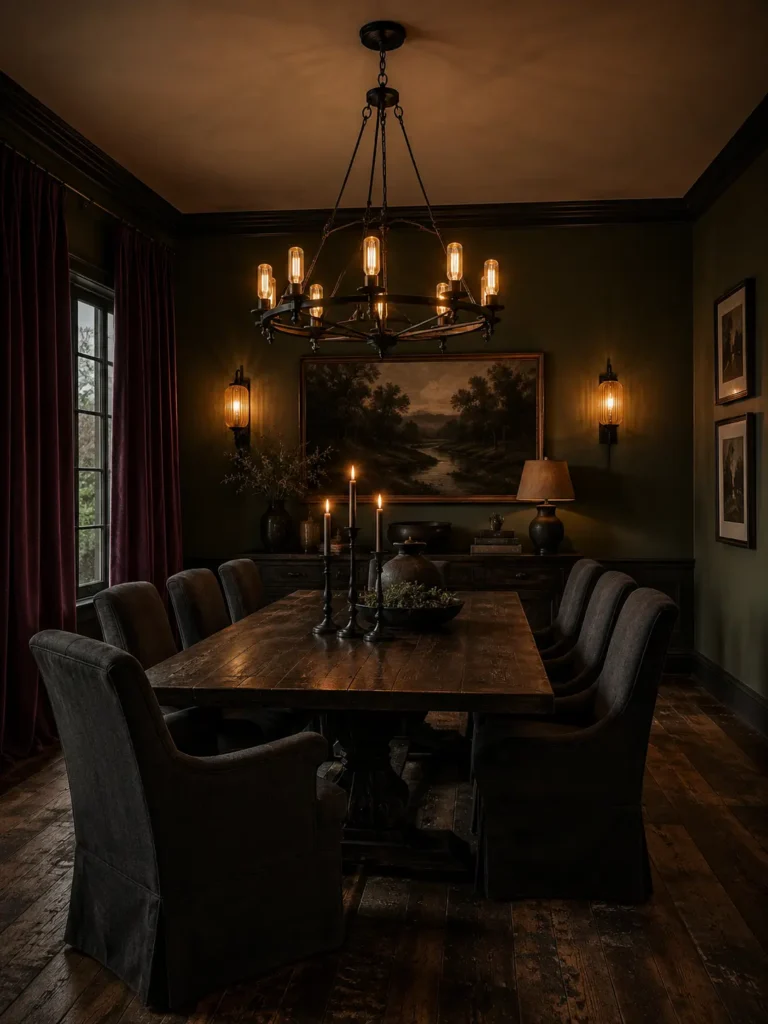
Layered Ambient Lighting
- Layered lighting is the single most effective way to shift a dining room from ordinary to atmospheric and dramatic
- Combining overhead chandeliers with wall sconces and candles creates depth that no single light source can achieve
- Warm-toned bulbs in the 2700K range enhance moody, intimate dining room aesthetics significantly
- Dimmer switches are a simple upgrade that allows the same room to serve casual dinners and special occasions equally well
- That’s why many designers recommend building at least three layers of light into any dining room design
Lighting is arguably the most underrated element in creating a moody, atmosphere-rich dining space. Most people focus entirely on furniture and wall color while overlooking the fact that lighting is what actually controls how all those other elements are perceived. A dark velvet chair looks flat and lifeless under harsh overhead lighting, but under a warm amber glow it looks rich, intentional, and deeply elegant. Layering your light sources with an overhead pendant or chandelier, wall-mounted sconces, and candles or table lamps allows you to control the mood of the room at every level and for every occasion throughout the day and evening.
The key to making layered lighting feel intentional rather than excessive is choosing fixtures that share a visual language. Mixing black iron, aged brass, or antique bronze finishes across your chandelier and sconces creates cohesion even when the fixture styles differ slightly. Candlelight adds something no electric source can replicate: a flicker, a softness, and a warmth that immediately makes people feel relaxed and present at the table. In my experience, rooms that include real candles as part of the lighting plan always feel more alive and inviting than those relying entirely on fixed electrical fixtures. This is a small detail that creates a genuinely noticeable impact.
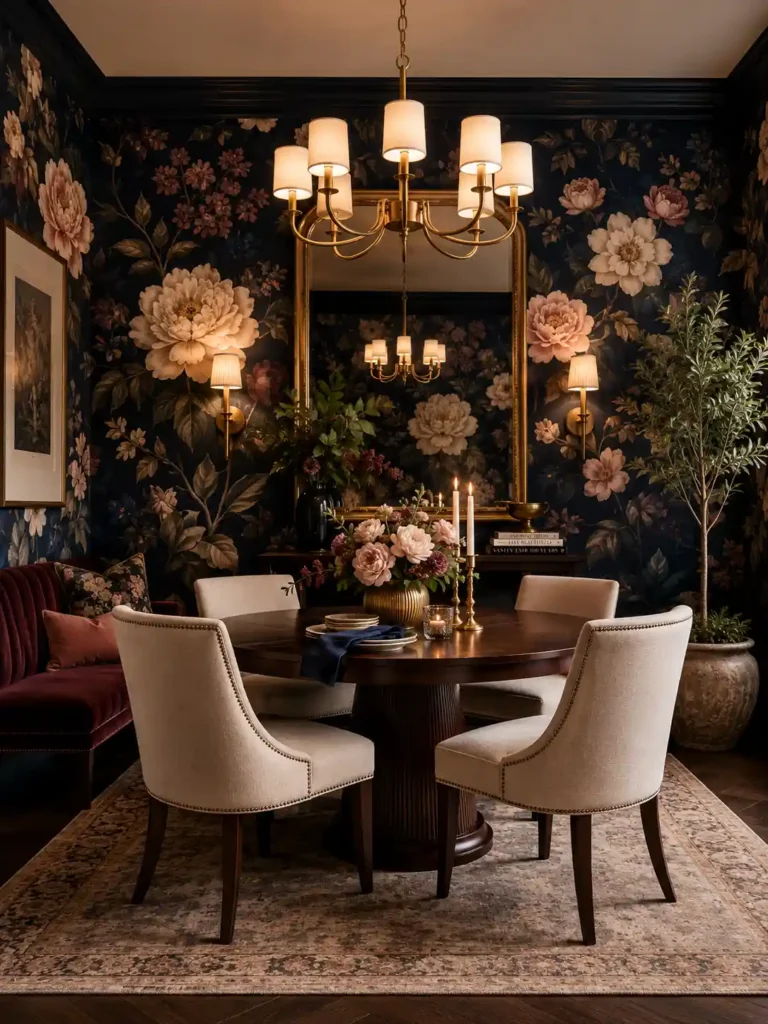
Dark Floral Wallpaper
- Dark floral wallpaper instantly transforms a plain dining room into a rich, garden-inspired sanctuary
- Oversized botanical prints on dark backgrounds create a dramatic focal point without requiring additional wall decor
- The pattern adds visual texture and depth that painted walls simply cannot replicate
- Florals in deep navy, forest green, or charcoal backgrounds work beautifully with warm brass and gold accents
- I’ve noticed that even one wallpapered accent wall completely changes the energy of an otherwise simple dining space
Dark floral wallpaper is one of those design choices that feels bold in theory but absolutely stunning in practice. The combination of a deep, moody background color with intricate botanical or floral patterns creates a sense of lushness and romance that is immediately Pinterest-worthy and visually unforgettable. Unlike solid dark walls, wallpaper introduces layer upon layer of visual interest texture, pattern, color variation that gives the eye something beautiful to explore. In real homes, this kind of wallpaper works particularly well in dining rooms because the space is typically used for shorter periods, making bold pattern choices feel exciting rather than overwhelming.
Choosing the right scale of pattern matters enormously with dark floral wallpaper. Large, oversized botanical prints on a deep background feel editorial and dramatic, while smaller repeat patterns create a more intimate, vintage-inspired atmosphere. Both approaches work beautifully within the moody dining room ideas and elegant eclectic style direction, depending on the overall look you are building. Pairing the wallpaper with simple, clean-lined furniture prevents the room from feeling too busy, while warm metallic accents in brass or gold pick up the lighter tones within the floral design. The result is a room that feels layered, intentional, and deeply personal.
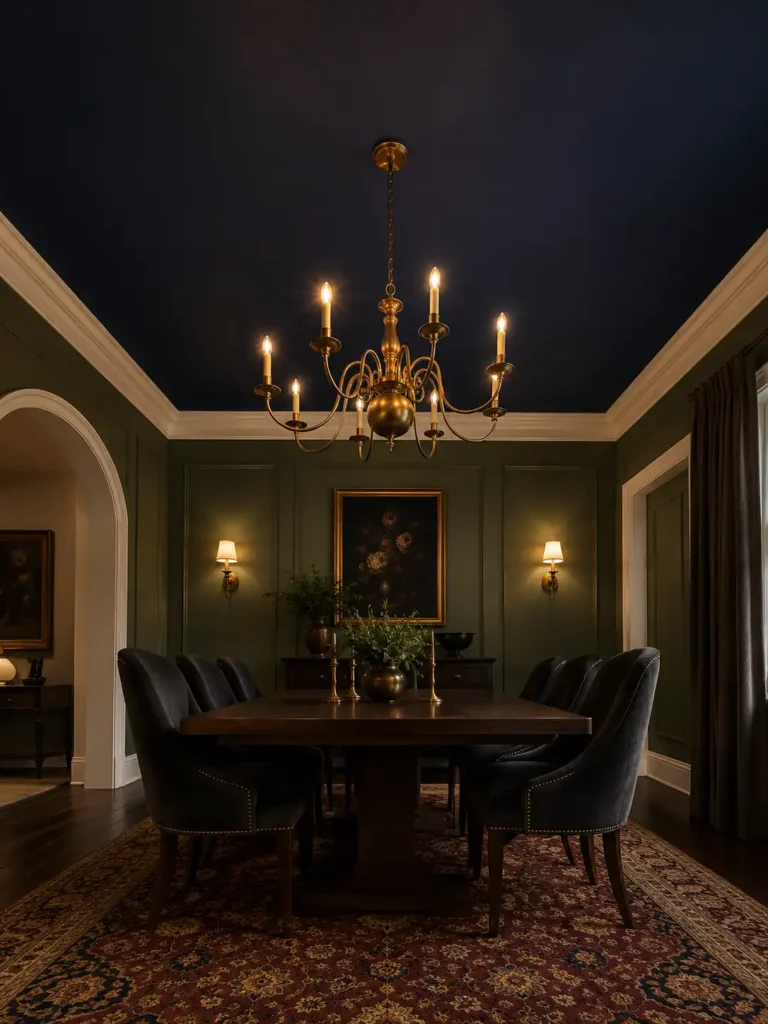
Statement Ceiling Treatment
- Painting the ceiling a deep, moody color draws the eye upward and creates an unexpectedly dramatic canopy effect
- A dark ceiling makes the room feel more enclosed and intimate, which is ideal for evening dining experiences
- Deep navy, forest green, or matte black ceilings pair beautifully with warm brass or antique gold light fixtures
- Crown molding between a dark ceiling and lighter walls adds architectural definition and a polished, high-end finish
- That’s why many designers refer to the ceiling as the fifth wall it deserves as much attention as any other surface
Most people never think to paint their ceiling anything other than white, which means a dark or richly colored ceiling immediately sets a dining room apart from the ordinary. When the ceiling is treated as a design element rather than an afterthought, the entire room changes character. A deep navy or charcoal ceiling creates a cocoon-like feeling that makes the dining area feel intentional and intimate as if the room was specifically designed for long, unhurried evenings around the table. This effect is especially powerful when paired with a statement chandelier, because the dark background makes the fixture appear even more dramatic and deliberate.
The practical side of a dark ceiling is equally worth considering. Unlike dark walls, a dark ceiling does not make a room feel smaller in the same way, instead it creates height compression that reads as warmth rather than claustrophobia. White or light-toned walls below the ceiling line help maintain brightness and balance, preventing the space from feeling too enclosed. Molding details at the ceiling-wall junction add a layer of architectural sophistication that elevates the look further. I’ve seen this treatment work beautifully in both large formal dining rooms and smaller, more casual spaces. The drama it creates is genuinely impressive regardless of room size.
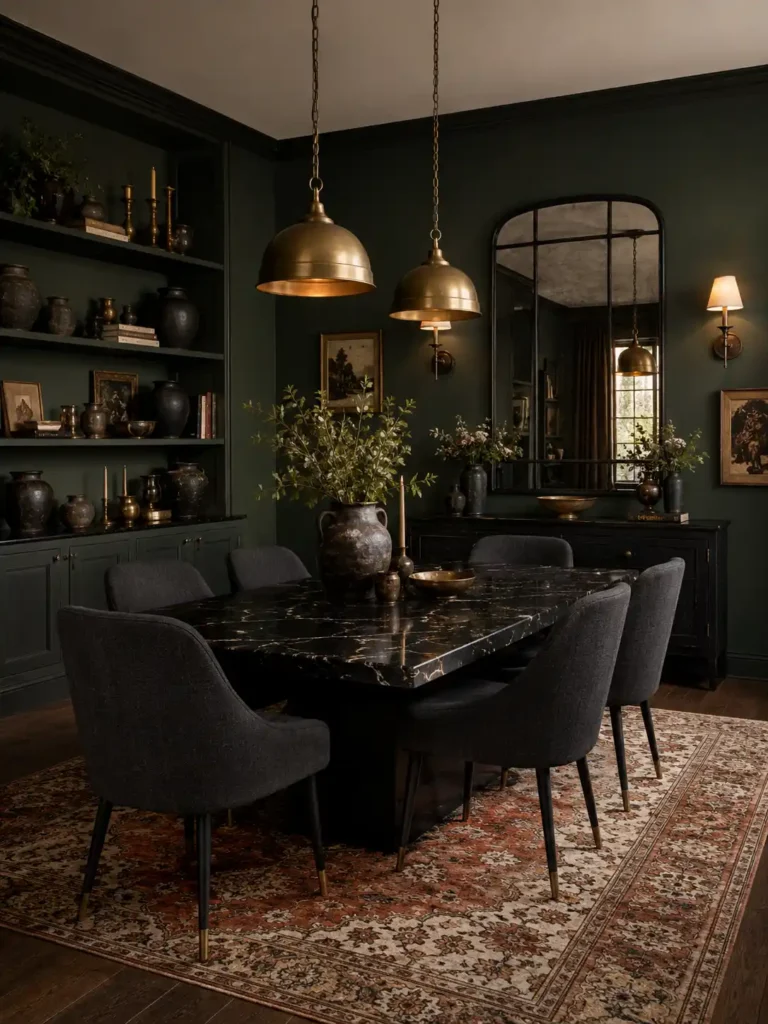
Mixed Metal Accents
- Mixing metals like brass, bronze, and matte black creates a curated, collected look that feels intentional rather than accidental
- The key is choosing one dominant metal and using the others as supporting accent tones throughout the space
- Warm metals like brass and aged bronze naturally complement dark moody walls and deep jewel-toned soft furnishings
- Mixed metals add visual complexity without requiring additional furniture, artwork, or decorative accessories
- I’ve noticed that spaces using only one metal finish often feel flat and showroom-like compared to thoughtfully mixed alternatives
Mixed metal accents are one of the most effective ways to add depth and personality to a moody dining room without making any major structural changes. The old design rule that all metals in a room must match has largely been replaced by a more sophisticated understanding that thoughtful mixing of metal finishes creates a layered, collected atmosphere that feels far more interesting and liveable than perfectly matched sets. Brass warms a space, matte black grounds it, and aged bronze adds a sense of history and patina. Used together with intention, these finishes build a visual richness that elevates every other element in the room.
The most important principle when mixing metals is establishing a clear hierarchy. Choose one primary metal finish for your largest fixtures typically the chandelier or pendant light and then introduce one or two complementary metals through smaller accents like cabinet hardware, mirror frames, candle holders, and chair leg details. This approach creates cohesion while still delivering the layered, eclectic quality that defines the elegant eclectic aesthetic. Deep, moody wall colors serve as the perfect backdrop for mixed metal arrangements because the dark background allows each metallic finish to catch light independently, creating a room that genuinely glimmers and shifts as the light changes throughout the day.
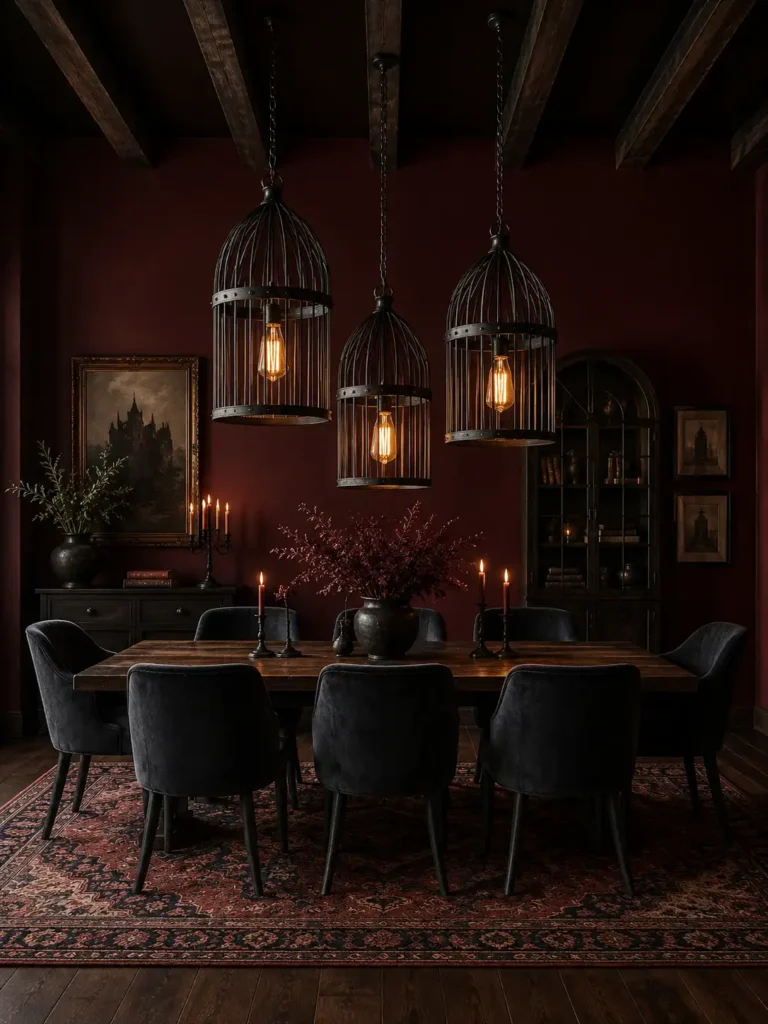
Dramatic Pendant Lights
- Oversized pendant lights instantly become the visual anchor of a moody dining room without requiring any wall changes
- Hanging pendants at varying heights creates a dynamic, sculptural effect above the dining table
- Black iron, dark bronze, or smoked glass pendant styles reinforce a dramatic and atmospheric room aesthetic
- The quality and warmth of the bulb matters as much as the fixture itself always choose warm Edison or amber-toned bulbs
- That’s why many designers treat the pendant light as the first furniture decision in a dining room, not an afterthought
A dramatic pendant light does something no other single element in the room can replicate; it defines the entire visual center of the space and sets the tone for everything else. In a moody dining room, the pendant is not just functional lighting but a sculptural statement that anchors the table below and draws the eye immediately upon entering the room. Oversized fixtures work particularly well because they create a sense of architectural presence, making even a modestly decorated room feel designed with confidence and purpose. The scale, finish, and bulb warmth all work together to deliver an atmosphere that transforms an ordinary dinner into something genuinely memorable.
Choosing the right pendant style for an elegant eclectic dining space means looking beyond standard catalog options toward fixtures with character exposed cage frames, smoked or amber glass shades, industrial iron arms, or organic sculptural forms. These styles bring personality and visual weight that simpler fixtures cannot provide. Hanging a cluster of pendants at slightly different heights above a long dining table creates movement and drama that a single centered fixture rarely achieves. I’ve seen this approach work beautifully in narrow dining rooms especially, where a pendant cluster running along the table length becomes the defining architectural feature of the entire space.
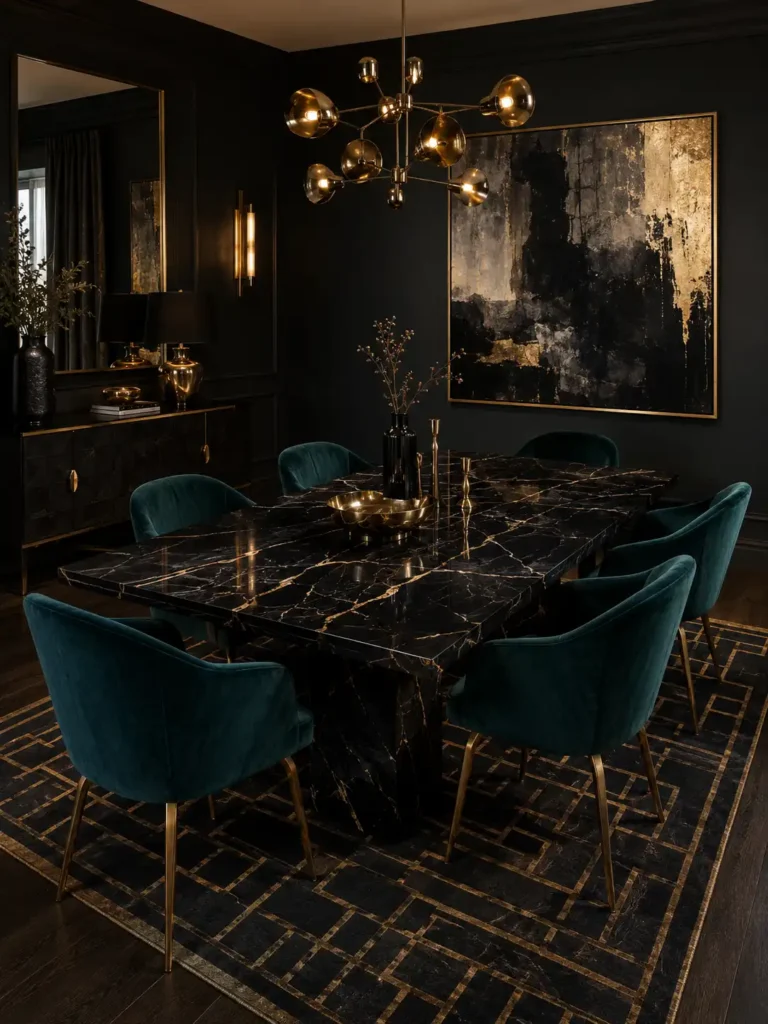
Dark Marble Dining Table
- A dark marble dining table is the single most impactful furniture upgrade for achieving a luxurious moody aesthetic
- Black or dark green marble with natural gold or white veining creates a built-in artwork effect at the center of the room
- Dark marble reflects ambient lighting subtly, adding a luminous quality that solid wood tables cannot deliver
- The natural veining pattern means every dark marble table is genuinely unique, adding authenticity to the space
- Pairing dark marble with warm metallic chair legs creates a cohesive high-contrast look that photographs beautifully
A dark marble dining table carries a presence in a room that no other material quite matches. The combination of depth, natural pattern, and subtle reflectivity makes dark marble simultaneously grounding and visually dynamic; it absorbs the mood of the room while contributing its own quiet drama. Nero marquina, black marquina, or dark green emperador marble varieties feature bold natural veining in gold, white, or grey that functions as living artwork built directly into the table surface. In my experience, a well-chosen dark marble table immediately elevates every other element around it, making even simple chairs and basic lighting look far more considered and intentional.
Beyond pure aesthetics, dark marble is a genuinely practical choice for dining tables. Its surface is naturally resistant to staining when properly sealed, easy to clean, and remarkably durable over years of daily use. The weight and solidity of a marble table also contributes to the overall feeling of permanence and quality that characterizes truly well-designed dining spaces. For rooms pursuing the moody dining room ideas and elegant eclectic direction, dark marble introduces a layer of natural luxury that synthetic or painted alternatives simply cannot replicate. The material itself tells a story of quality, geological time, and natural beauty that resonates with people on an instinctive level.
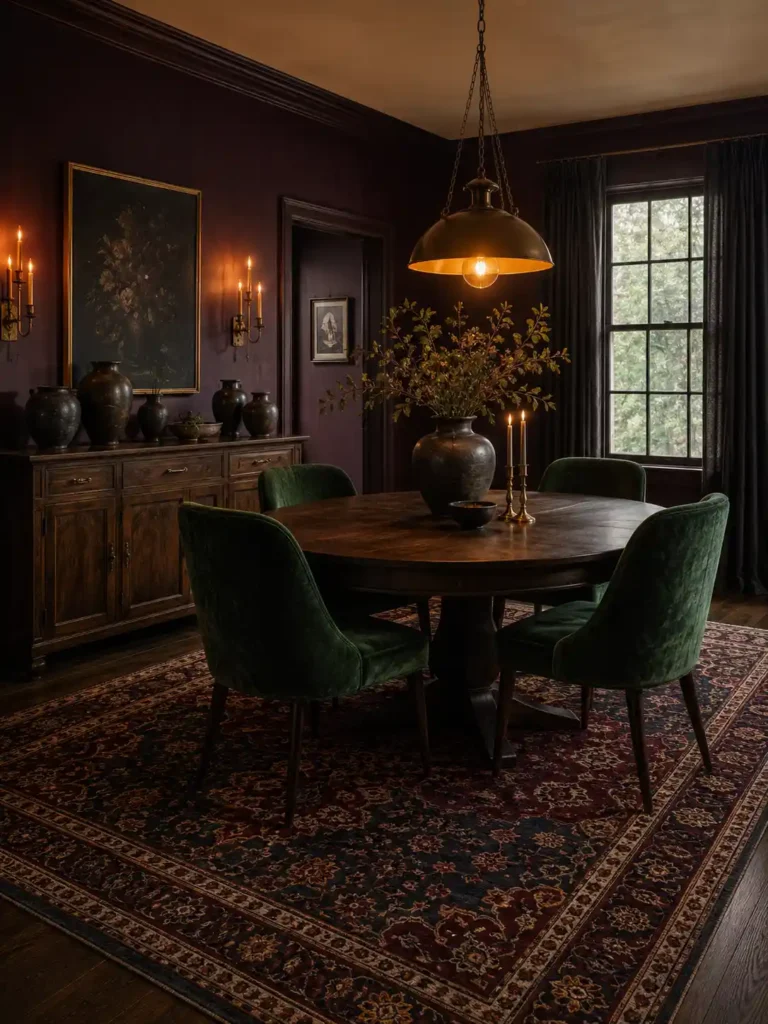
Vintage-Style Area Rug
- A vintage or Persian-style rug instantly adds pattern, warmth, and visual complexity to a moody dining room floor
- Deep jewel-toned rugs in burgundy, navy, and gold complement dark walls and warm metallic accents beautifully
- The rug defines and anchors the dining area within an open-plan space, giving the table its own distinct zone
- Layering a rug over dark hardwood floors adds acoustic softness and physical warmth underfoot during long dinners
- I’ve noticed that rooms without rugs under the dining table always feel slightly unfinished regardless of how well decorated the rest of the space is
A well-chosen vintage-style area rug is one of the most transformative additions you can make to a moody dining room, and it is often one of the most overlooked. While walls, lighting, and furniture receive most of the design attention, the floor covering quietly does some of the heaviest visual lifting in the room. A richly patterned rug in deep, saturated tones adds a layer of complexity and warmth that painted floors or bare hardwood simply cannot provide. The intricate geometry or floral motifs typical of Persian and vintage-style rugs introduce an organic, collected quality that reinforces the eclectic character of a well-styled dining space.
Sizing matters enormously when selecting a rug for the dining room. The rug should be large enough that all chair legs remain on the rug even when pulled out from the table. A common mistake is choosing a rug that is too small, which creates a visually awkward floating effect. For dark, moody dining rooms specifically, choosing a rug with a deep jewel-toned background allows the pattern to integrate with the overall color story of the room rather than competing with it. That’s why many designers recommend selecting the dining rug after the wall color and primary furniture are in place, ensuring the pattern and tones complement rather than clash with everything already established in the space.
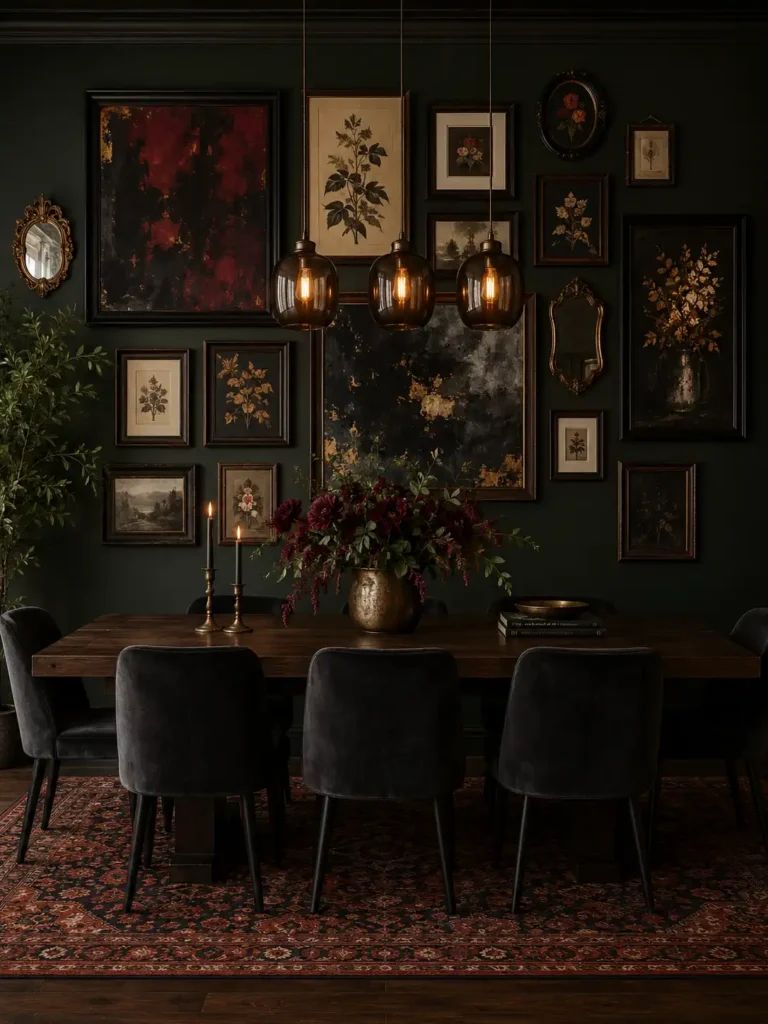
Moody Gallery Wall
- A moody gallery wall creates a rich, museum-like focal point that makes the dining room feel deeply personal and curated
- Mixing artwork sizes, frame finishes, and art styles within a dark color palette creates cohesion through tone rather than matching
- Dark or antique gold frames against deep wall colors add a layered, collected quality that single large artworks rarely achieve
- Including a small mirror within the gallery arrangement reflects light and adds dimensional interest to the overall composition
- Abstract paintings, botanical prints, and vintage portraits work especially well together within a moody eclectic aesthetic
A gallery wall in a moody dining room does something genuinely special: it transforms a blank wall into a visual story that guests instinctively want to explore and discuss. Unlike a single large artwork, a thoughtfully arranged gallery collection creates movement and layered interest that grows richer the longer you look at it. The key to making this work in a dark, atmospheric space is choosing artwork that shares a tonal language rather than a matching style. Deep burgundies, charcoal blacks, muted golds, and forest greens across varied pieces create a cohesive mood even when the individual artworks are entirely different in subject and style.
Arranging a gallery wall successfully requires more planning than most people expect, but the payoff is extraordinary. Starting with the largest piece as the visual anchor and building outward with progressively smaller frames creates a natural hierarchy that feels balanced without being rigid or symmetrical. In my experience, the most compelling gallery walls always include at least one unexpected element: a small antique mirror, an oversized botanical print, or a piece of textile art that breaks the predictability and adds genuine personality. Against deeply colored walls in a moody dining room setting, each framed piece catches the warm ambient light differently, creating a living, shifting display that looks different by candlelight than it does during the day.
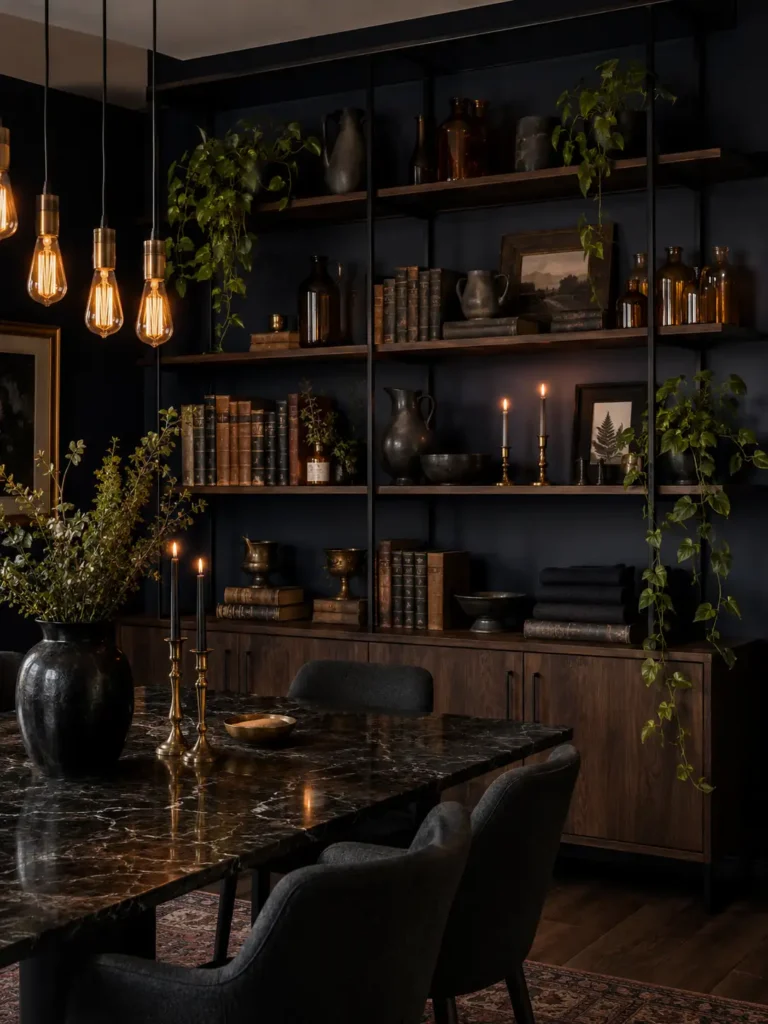
Open Dark Shelving
- Open dark shelving turns an entire dining room wall into a styled, functional display that adds enormous visual depth
- Styling shelves with a mix of ceramics, plants, books, and candles creates a lived-in, collected atmosphere instantly
- Matte black or dark walnut shelving against a deep wall color creates a tonal, layered look that feels intentional and rich
- Open shelving also serves practical storage for dining essentials while keeping the display curated and visually interesting
- That’s why many designers prefer open shelving in eclectic dining rooms over closed cabinetry it adds personality rather than hiding it
Open dark shelving in a dining room offers something that no other single design element provides: the combination of functional storage, personal display, and dramatic architectural presence all in one installation. When built or styled floor to ceiling, dark shelving creates a wall of visual texture and depth that transforms the entire atmosphere of the room. The styling possibilities are genuinely limitless, from dark ceramic vessels and trailing greenery to amber glass collections, stacked books, and sculptural candle holders. Each shelf becomes its own small composition, and together they create a layered backdrop that makes the dining space feel genuinely inhabited and personally meaningful.
The secret to making open shelving look intentional rather than cluttered lies entirely in editing. Every object on display should earn its place through color, texture, or form random accumulation of mismatched items destroys the moody, curated aesthetic immediately. Grouping objects in odd numbers, varying heights within each shelf, and maintaining consistent tonal ranges across the display keeps the arrangement feeling considered. I’ve noticed that the most visually successful shelf styling always includes negative space areas deliberately left empty which allows the eye to rest and makes the displayed objects stand out more powerfully. Against a deep, dark wall, this carefully edited approach creates a dining room backdrop that is genuinely extraordinary.
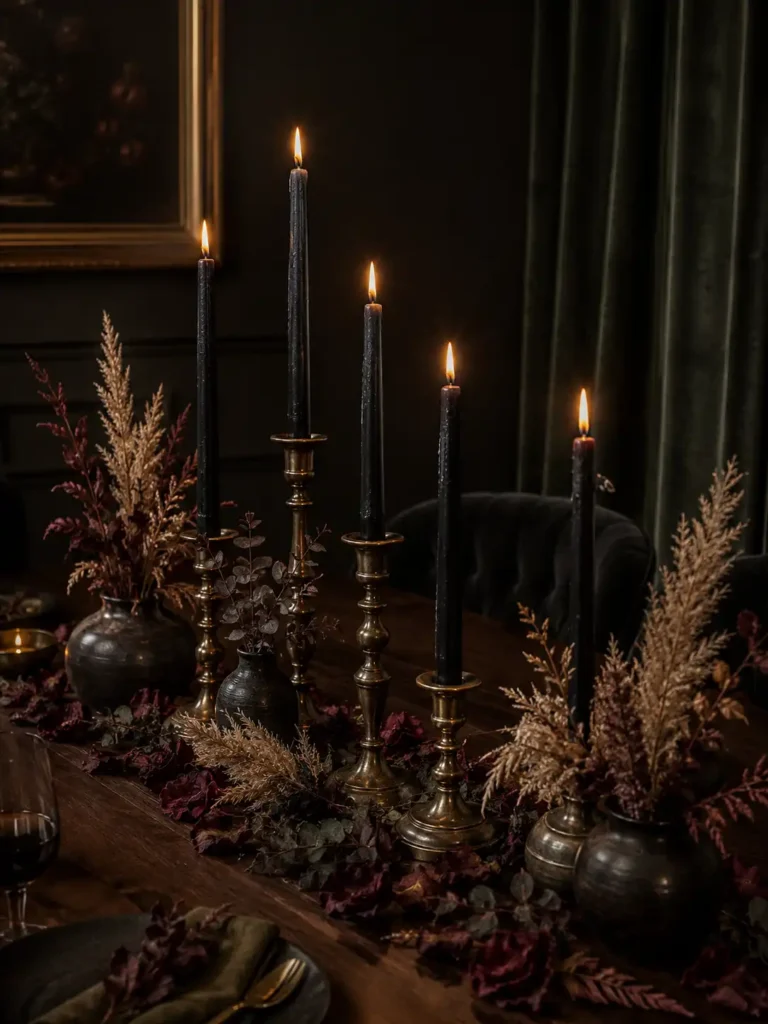
Candlelight Centerpiece Styling
- Candlelight is the single most affordable and immediately effective way to establish a moody dining atmosphere
- Grouping candles at varying heights creates a dynamic, editorial centerpiece that looks effortlessly styled
- Black taper candles in aged brass or matte black candlesticks reinforce the moody eclectic aesthetic beautifully
- Combining candles with dried botanicals like pampas grass, eucalyptus, or dark dried florals adds organic texture
- I’ve tried many centerpiece arrangements and nothing creates the same warmth and intimacy as real candlelight at a dinner table
Candlelight centerpiece styling is one of the most powerful and accessible tools available for creating a genuinely moody dining experience, and it requires almost no investment to execute beautifully. The flickering warmth of real candles does something that no fixed lighting source can replicate; it creates movement, softness, and an intimate glow that makes every face at the table look more beautiful and every conversation feel more meaningful. Grouping candles of varying heights along the center of the dining table builds a visual landscape that draws the eye without blocking sightlines, keeping the table feeling open and inviting while still delivering maximum atmosphere and visual drama.
The styling details around the candles matter just as much as the candles themselves. Pairing black taper candles with aged brass or oxidized bronze candlesticks introduces the warm metallic tones that complement moody dining room interiors so naturally. Adding dried botanical elements, trails of eucalyptus, clusters of dried pampas grass, or small bundles of dark dried florals grounds the arrangement and adds organic texture that softens the formality of the candlesticks. That’s why many designers treat the table centerpiece as an extension of the room’s overall design story rather than a separate decorating decision. When the centerpiece shares the same color language and material palette as the rest of the room, the entire space feels cohesive and deeply considered.
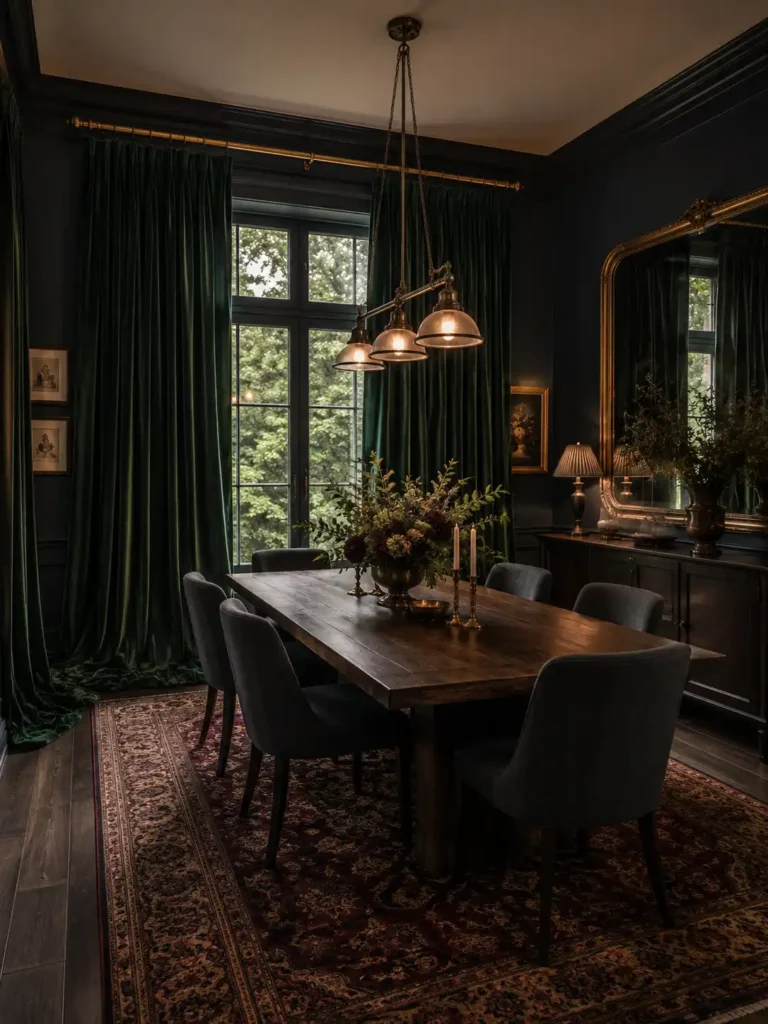
Dark Drapery Framing
- Floor-to-ceiling dark drapery instantly adds architectural height and dramatic visual weight to any dining room
- Heavy velvet or linen curtains in deep jewel tones frame windows like stage curtains, making the entire room feel theatrical
- Allowing curtains to pool slightly on the floor creates a luxurious, romantic effect that elevates the overall atmosphere
- Dark drapery also serves a practical purpose by absorbing sound and adding warmth during evening dining occasions
- That’s why many interior designers consider window treatment the most underestimated finishing element in a moody dining space
Floor-to-ceiling dark drapery transforms a dining room window from a simple architectural opening into a dramatic design feature that anchors the entire wall. Heavy fabrics like velvet, thick linen, or woven chenille in deep forest green, inky navy, or rich burgundy bring an undeniable sense of luxury and intention to the space. The sheer vertical scale of full-length curtains draws the eye upward, creating an illusion of greater ceiling height while simultaneously making the room feel more enclosed, cocooned, and intimate. In my experience, swapping out standard curtains for floor-length dark drapery is one of the fastest single upgrades that produces genuinely dramatic before-and-after results in a dining room.
Beyond the visual impact, dark drapery performs important functional roles that contribute to the overall dining experience. Heavy curtain fabric absorbs ambient sound, reducing echo and creating a quieter, more conversation-friendly atmosphere at the table. During evening dining, drawn curtains eliminate cold drafts and create a sealed, warm environment that enhances the intimacy of the space significantly. Choosing curtain rods and finials in aged brass or dark bronze that coordinate with other metallic accents in the room ties the window treatment into the broader design narrative. When drapery shares the same material and color language as the upholstered seating and soft furnishings, the room develops a layered, cohesive richness that feels genuinely considered and complete.
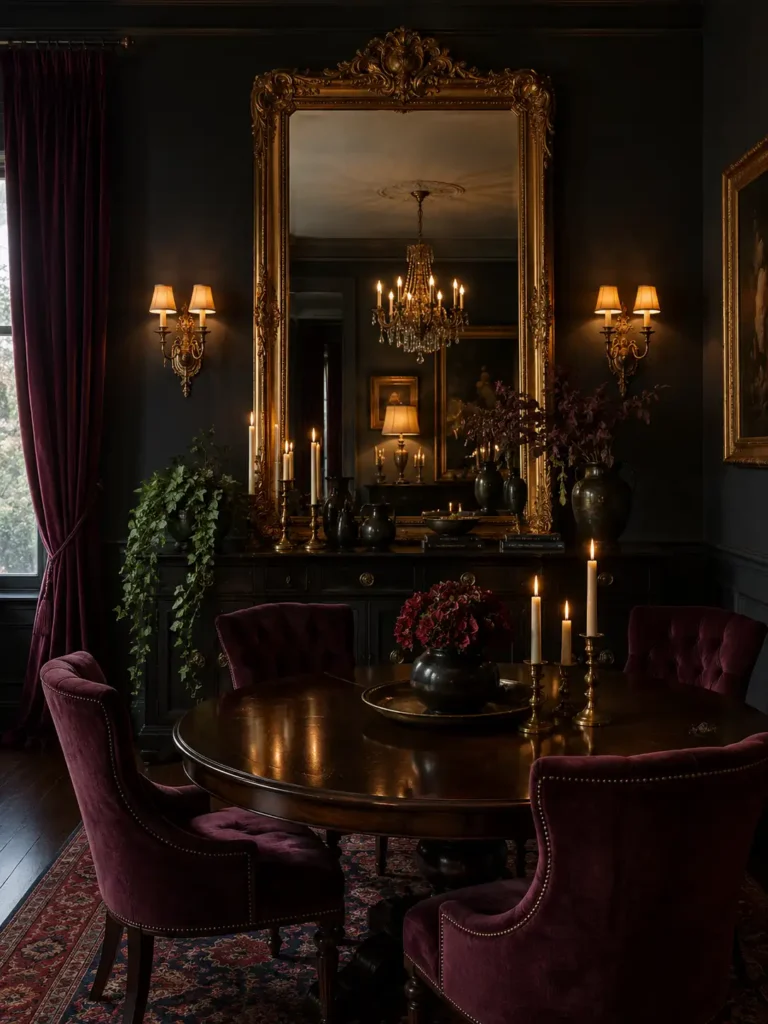
Antique Mirror Feature
- A large antique mirror visually doubles the depth of a moody dining room while reflecting warm ambient light beautifully
- Ornate gold or aged silver frames complement dark walls and warm metallic accents with an air of old-world elegance
- Leaning a large mirror against the wall rather than hanging it creates a relaxed, editorial quality that feels modern yet timeless
- Mirrors positioned to reflect candlelight or pendant lighting multiply the warmth and glow throughout the entire space
- I’ve noticed that antique mirrors with slightly foxed or aged glass surfaces add far more character than new clear-glass alternatives
An antique mirror is one of the most strategically valuable additions to a moody dining room because it accomplishes several design goals simultaneously. It adds decorative presence through its ornate frame, expands the perceived size of the room through reflection, and multiplies the effect of every light source in the space: candlelight, pendant glow, and sconce warmth all become richer and more atmospheric when reflected back through an aged mirror surface. Positioned behind a sideboard or console table, a large leaning mirror creates a layered vignette that looks deliberately styled and deeply elegant, adding a focal point to walls that might otherwise feel bare and underutilized.
The choice of frame style matters enormously in a moody, eclectic dining space. Ornate carved gold frames reference classical European interior traditions and pair beautifully with jewel-toned walls and velvet furnishings. Darker aged silver or oxidized bronze frames feel slightly more contemporary while still carrying the same sense of history and patina. What distinguishes a truly exceptional antique mirror from a standard decorative piece is the quality of the glass itself; slightly foxed, aged, or subtly distorted glass surfaces catch light differently across their surface, creating a living, atmospheric quality that modern mirrors completely lack. That’s why many designers specifically seek out genuine antique or vintage mirrors rather than reproduction alternatives when styling moody dining room ideas and elegant eclectic interiors.
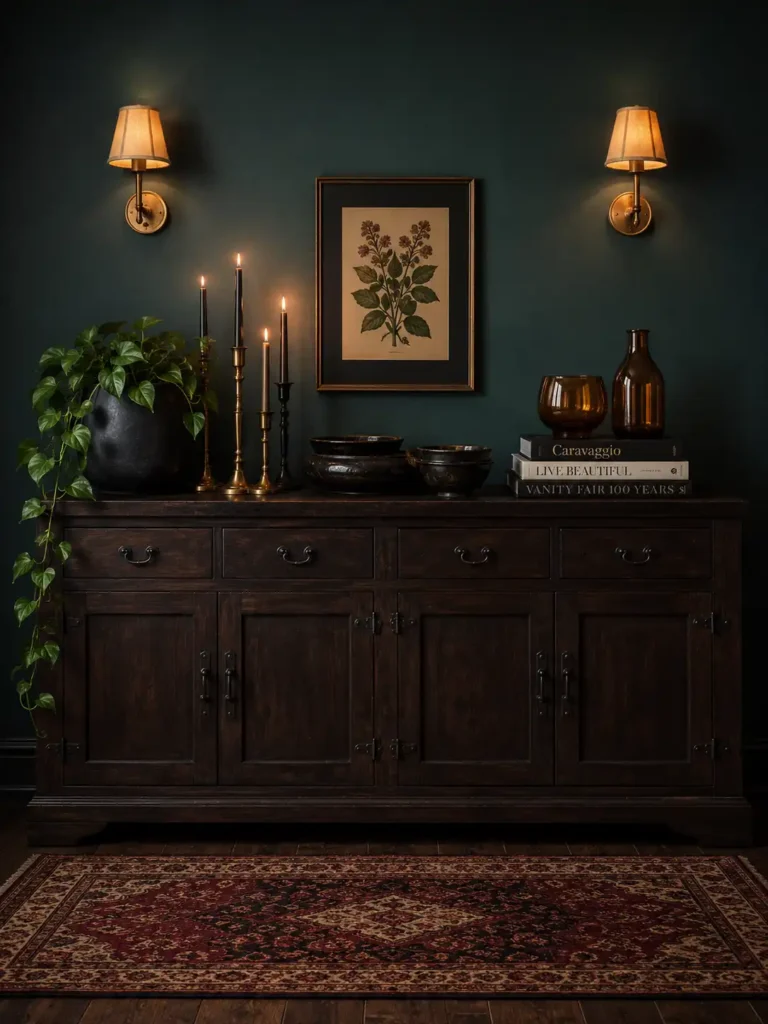
Dark Sideboard Styling
- A well-styled dark sideboard creates a secondary focal point that gives the dining room visual balance and functional storage
- Layering objects at varying heights across the sideboard surface builds a collected, editorial vignette effect
- Mixing organic elements like trailing plants with metallic and ceramic objects adds life and texture to the display
- Dark wood or painted sideboards in espresso, black, or deep walnut tones anchor the room’s color story effectively
- Mounting wall sconces directly above the sideboard creates a dedicated lighting zone that highlights the styling below
A dark sideboard is one of the most hardworking pieces of furniture in a moody dining room it provides essential storage while simultaneously offering the perfect surface for creating a styled vignette that anchors an entire wall. The styling approach matters just as much as the piece itself. Building height variation across the surface by combining tall candleholders, medium-sized ceramic vessels, and low stacked books creates a landscape of objects that feels naturally composed rather than rigidly arranged. Trailing plants introduce organic movement and life that softens the formality of harder decorative objects, while warm metallic accents in brass or bronze tie the vignette into the room’s broader material palette.
Choosing the right sideboard for a moody dining space means prioritizing pieces with character dark stained hardwoods, painted finishes in deep tones, or antique pieces with natural wear and patina all contribute more personality than flat-pack alternatives. Hardware details like black iron pulls, aged brass knobs, or hammered bronze handles make a significant visual difference at close range and reinforce the room’s overall aesthetic language. I’ve seen beautifully styled sideboards completely transform the feeling of a dining room that had otherwise felt incomplete. The combination of functional storage, curated display, and dedicated lighting above creates a zone within the room that feels as considered and intentional as the dining table itself. This layered approach is central to achieving the moody dining room ideas and elegant eclectic aesthetic at its fullest.
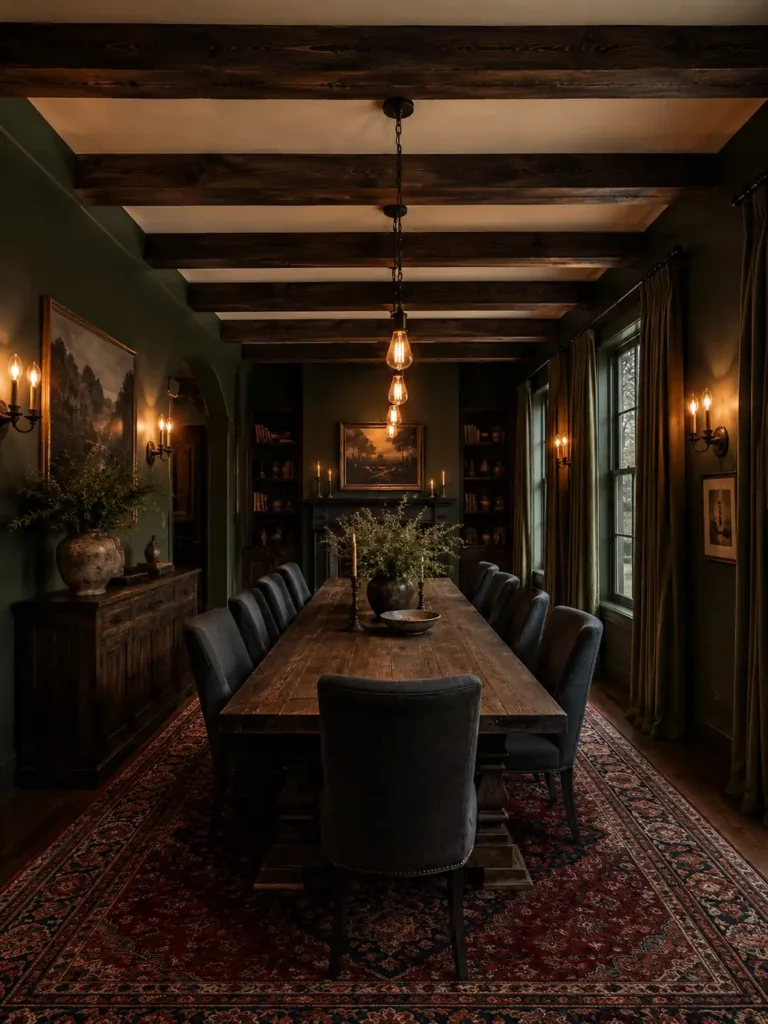
Exposed Dark Wood Beams
- Exposed dark wood ceiling beams add raw architectural character that instantly makes a dining room feel more substantial and layered
- Dark stained beams against a lighter ceiling create a striking contrast that draws the eye upward and adds visual height
- Beams work equally well in rustic farmhouse settings and more sophisticated eclectic interiors depending on styling choices
- Pendant lights hung between or below exposed beams create a perfectly integrated lighting solution that feels architectural
- That’s why many designers consider exposed ceiling beams one of the highest-value architectural upgrades available in a dining space
Exposed dark wood ceiling beams bring a quality to a dining room that no paint color or furniture choice can replicate genuine architectural presence. The visual weight of dark stained timber overhead creates a grounding effect that makes the room feel more substantial, more permanent, and more intentionally designed. Whether original to the home or added as decorative installations, dark beams introduce a layer of organic texture and historical reference that elevates the entire space. They work with remarkable versatility across different interior styles, feeling equally at home in rustic farmhouse dining rooms and in more refined, eclectic spaces depending entirely on how the surrounding elements are styled and selected.
The relationship between exposed beams and lighting deserves particular attention when designing a moody dining room. Pendant lights hung at carefully considered intervals between or below the beams create an integrated look that feels architectural rather than decorative as if the lighting was always meant to exist in that relationship with the structural elements above. Warm Edison bulbs in this configuration cast a honeyed, amber glow that interacts beautifully with dark wood grain, creating shadows and highlights that bring the ceiling to life. In my experience, dining rooms with exposed dark beams and warm pendant lighting feel genuinely timeless; the combination references centuries of gathered dining traditions while feeling completely relevant and desirable in contemporary interiors.
Conclusion
Creating a moody, atmospheric dining room is less about a complete renovation and more about making intentional choices that layer together beautifully over time. Every idea in this collection from dark velvet seating and dramatic pendant lighting to botanical styling and antique mirrors is designed to be approachable, practical, and genuinely transformative in real homes.
I’ve seen how small changes like these can completely shift the energy of a space, turning an ordinary dining room into something people remember long after the meal is over. If these moody dining room ideas of elegant eclectic style lovers will appreciate have inspired you, save this article to your Pinterest board, try one idea this week, and share it with someone ready to transform their own space.